Author: Omobolaji Durojaiye

  • What is permaculture?

    What is permaculture?

    Permaculture, a contraction of “permanent agriculture,” was developed in Australia in the 1970s by Bill Mollison and David Holmgren. It’s a design system for sustainable land use and living, grounded in ecological principles and three key ethics: care of the Earth, care of people, and fair share. Permaculture is a global movement dedicated to creating a sustainable future through the application of permaculture design principles. Inspired by nature, it seeks to develop self-sufficient and sustainable farming systems that prioritize natural productivity, resilience, crop diversity, and overall sustainability.

    Understanding the Ethos of Permaculture

    At the core of permaculture is a deep respect for nature and a strong grasp of ecological principles. The three key ethics—Earth Care, People Care, and Fair Share—guide every aspect of permaculture design and practice.

    Earth Care values all living beings and ecosystems, focusing on rebuilding natural resources and restoring ecological balance. This involves promoting soil health, conserving water, protecting biodiversity, and reducing environmental impact.

    People Care highlights the connection between human well-being and the natural world. It aims to meet human needs while promoting resilience, fairness, and community unity. Providing access to necessities like food, water, and shelter, as well as nurturing social connections and emotional health, are key aspects of people’s care.

    Fair Share promotes fairness by distributing resources equally and sharing any surplus. It encourages responsible consumption, sustainable resource management, and collective efforts to address inequalities and create a fairer and more sustainable society.

    These principles, influenced by various cultural traditions and indigenous knowledge, are the basis of permaculture. They help individuals and communities develop a balanced and respectful connection with the Earth and with one another.

    The Essence of Permaculture Design

    Permaculture design is a dynamic and multidisciplinary method for developing sustainable systems that imitate the strength and variety of natural ecosystems. It combines ecological principles, social dynamics, and cutting-edge technologies to create productive, resilient, and self-sufficient landscapes, habitats, and human settlements.

    Permaculture design is based on a set of principles that are inspired by observing natural patterns and processes. These principles, developed by Mollison and Holmgren, provide a foundation for creating systems that are efficient, diverse, and harmonious while reducing waste and reliance on external resources.

    Some key principles of permaculture design include:

    • Observation and Interaction: Take the time to carefully observe and understand the patterns and dynamics of natural systems before taking action. This will help make informed decisions and create responsive designs.
    • Catch and Store Energy: Utilize renewable energy sources like sunlight, wind, and water, and store them for future use. This can be done through methods like collecting rainwater, harnessing solar power, and implementing passive heating and cooling techniques.
    • Use and Value Renewable Resources and Services: Give priority to using renewable resources and ecological services instead of finite or non-renewable alternatives. This involves utilizing natural processes like nutrient cycling, pollination, and soil regeneration.
    • Apply Self-Regulation and Accept Feedback: Design systems that can regulate themselves and adapt to feedback from the environment and stakeholders. This includes promoting resilience, diversity, and redundancy within the systems to withstand disturbances and shocks.
    • Produce No Waste: Minimize waste by designing systems that use all outputs as inputs for other components. Permaculture focuses on creating zero-waste systems that are efficient and productive.
    • Integrate Rather Than Segregate: Create interconnected systems where each element serves multiple functions to enhance resilience and productivity. This fosters symbiotic relationships between different components.
    • Use Small and Slow Solutions: Opt for small-scale, decentralized interventions over large-scale, centralized solutions for greater adaptability and resilience in uncertain conditions.
    • Diversity: Enhance resilience and ecosystem health by promoting biodiversity and genetic diversity within systems. Incorporating a wide range of species and functional groups helps systems withstand pests, diseases, and environmental changes.

    By applying these principles in conjunction with the ethics of Earth Care, People Care, and Fair Share, permaculture designers can create thriving ecosystems and communities that benefit both people and the planet.

    Applications of Permaculture

    Permaculture principles and techniques are used in various areas, such as agriculture, agroforestry, urban planning, and community development. Some notable examples of permaculture practices include:

    • Regenerative Agriculture: Permaculture takes a comprehensive approach to farming that focuses on the health of the soil, biodiversity, and the resilience of ecosystems. Methods like agroforestry, polyculture, composting, and no-till farming are commonly used to increase productivity while minimizing harm to the environment.
    • Water Management: Permaculture offers innovative solutions for sustainable water management, such as collecting rainwater, creating swales and ponds, and using water-efficient irrigation systems. By effectively capturing, storing, and utilizing rainwater, permaculturists can combat droughts, prevent erosion, and replenish underground water sources.
    • Ecological Building Design: Permaculture principles are applied in the design and construction of eco-friendly buildings that reduce energy consumption, utilize natural materials, and promote healthy indoor air quality. Techniques like passive solar design, natural ventilation, and green roofs are integrated to create comfortable and energy-efficient living spaces.
    • Community Resilience: Permaculture promotes community resilience by encouraging local self-sufficiency, social unity, and collaborative decision-making. Initiatives like community gardens, cooperative housing, tool-sharing networks, and skill-building workshops empower individuals and communities to meet their needs sustainably.
    • Habitat Restoration: Permaculture methods help restore damaged ecosystems like farmland, deforested areas, and urban brownfields. By bringing back native plants, improving soil quality, and establishing wildlife corridors, permaculture experts aid in conserving biodiversity and rejuvenating ecosystems.
    • Waste Management: Permaculture focuses on reducing, reusing, recycling, and composting to manage both organic and non-organic waste. Methods like vermicomposting, biochar production, and upcycling are used to reduce landfill waste and produce beneficial resources for soil health and plant development.

    These are just a few examples of how permaculture principles can be applied to create sustainable, resilient, and regenerative systems across various scales and contexts.

    The Environmental Impact of Permaculture

    Permaculture holds immense potential to mitigate environmental degradation, restore ecosystems, and build resilience in the face of climate change. By promoting biodiversity, enhancing soil health, conserving water resources, and reducing greenhouse gas emissions, permaculture practices contribute to a more sustainable and ecologically balanced world.

    • Biodiversity Preservation: Permaculture designs prioritize the integration of various plant and animal species, creating habitats that support a wide range of native plants and animals. By imitating natural ecosystems, permaculture systems help protect biodiversity and endangered species.
    • Soil Revitalization: Permaculture techniques like composting, mulching and cover cropping improve soil health and fertility, increasing its ability to store carbon, retain water, and support plant growth. Healthy soils are crucial for agriculture, carbon storage, and ecosystem resilience.
    • Water Conservation: Permaculture emphasizes water conservation and efficient use through methods like rainwater harvesting, contour bunding, and greywater recycling. By collecting and storing rainwater, permaculture systems reduce the need for irrigation, alleviate water scarcity, and mitigate the impacts of droughts and floods.
    • Carbon Storage: Permaculture practices contribute to carbon storage by enhancing vegetation cover, promoting agroforestry, and increasing organic matter in soils. By storing carbon in plants and soil, permaculture systems help combat climate change and improve climate resilience.
    • Erosion Prevention: Permaculture techniques such as contour ploughing, terracing, and windbreaks help prevent soil erosion and land degradation. By stabilizing slopes, improving ground cover, and reducing runoff, permaculture systems protect soil health and maintain the integrity of ecosystems.
    • Pollution Reduction: Permaculture promotes organic farming practices, non-toxic pest control methods, and closed-loop nutrient cycles, reducing the use of synthetic inputs and minimizing pollution of air, water, and soil. By adopting regenerative agricultural practices, permaculture systems mitigate environmental pollution and promote the health of ecosystems.

    To sum up, permaculture provides a comprehensive and interconnected approach to addressing environmental degradation, food insecurity, social inequity, and climate change. By following the principles of Earth Care, People Care, and Fair Share, permaculture enables individuals and communities to establish regenerative systems that support the land, livelihoods, and thriving ecosystems for future generations.

    In conclusion, permaculture goes beyond mere techniques or practices; it encompasses a mindset and lifestyle that harmonizes with nature. By embracing Earth Care, People Care, and Fair Share, we can utilize the transformative potential of permaculture to build a sustainable, fair, and resilient world for everyone.
  • Celebrating International Permaculture Day: In Support of Soil

    Celebrating International Permaculture Day: In Support of Soil

    On May 5, 2024, people worldwide will come together to commemorate International Permaculture Day (IPD), a day devoted to recognizing and encouraging sustainable living methods influenced by nature. Originating in Australia, permaculture has grown into a global initiative, promoting the balanced relationship between humans and the environment through intentional planning and responsible management of natural resources.

    This year, the theme “In Support of Soil” aligns closely with the core principles of permaculture, highlighting the crucial importance of fertile soil in maintaining life on our planet. While pressing issues like climate change, diminishing biodiversity, and food shortages are pressing, permaculture provides a promising path forward with its emphasis on creating sustainable communities and restoring ecosystems.

    Permaculture is centred around three fundamental ethics: taking care of the earth, taking care of people, and sharing resources. These ethics serve as a compass for practitioners as they design regenerative systems that fulfil human needs while also preserving the planet for the well-being of future generations. By imitating the patterns and functions of natural ecosystems, permaculture promotes biodiversity, improves soil health, preserves water, and reduces waste.

    The commemoration of IPD serves as evidence of the lively worldwide community of permaculture enthusiasts who unite to disseminate knowledge, exchange thoughts, and ignite constructive transformation. Through practical workshops and virtual assemblies, the events organized during IPD provide a platform for individuals from diverse backgrounds to acquire insights into permaculture and its capacity to bring about positive change.

    Celebrating International Permaculture Day, we renew our commitment to permaculture values and the urgent task of rejuvenating the Earth. By connecting with nature, we can boost prosperity and harmony in our lives and society. Together, we have the power to create a sustainable and equitable world where every living being thrives.

    So please mark your calendars and join us on May 5th as we celebrate International Permaculture Day, honouring the wisdom of the land and the promise of a brighter, more resilient future.

  • 130 whales rescued from mass beach stranding in Western Australia

    130 whales rescued from mass beach stranding in Western Australia

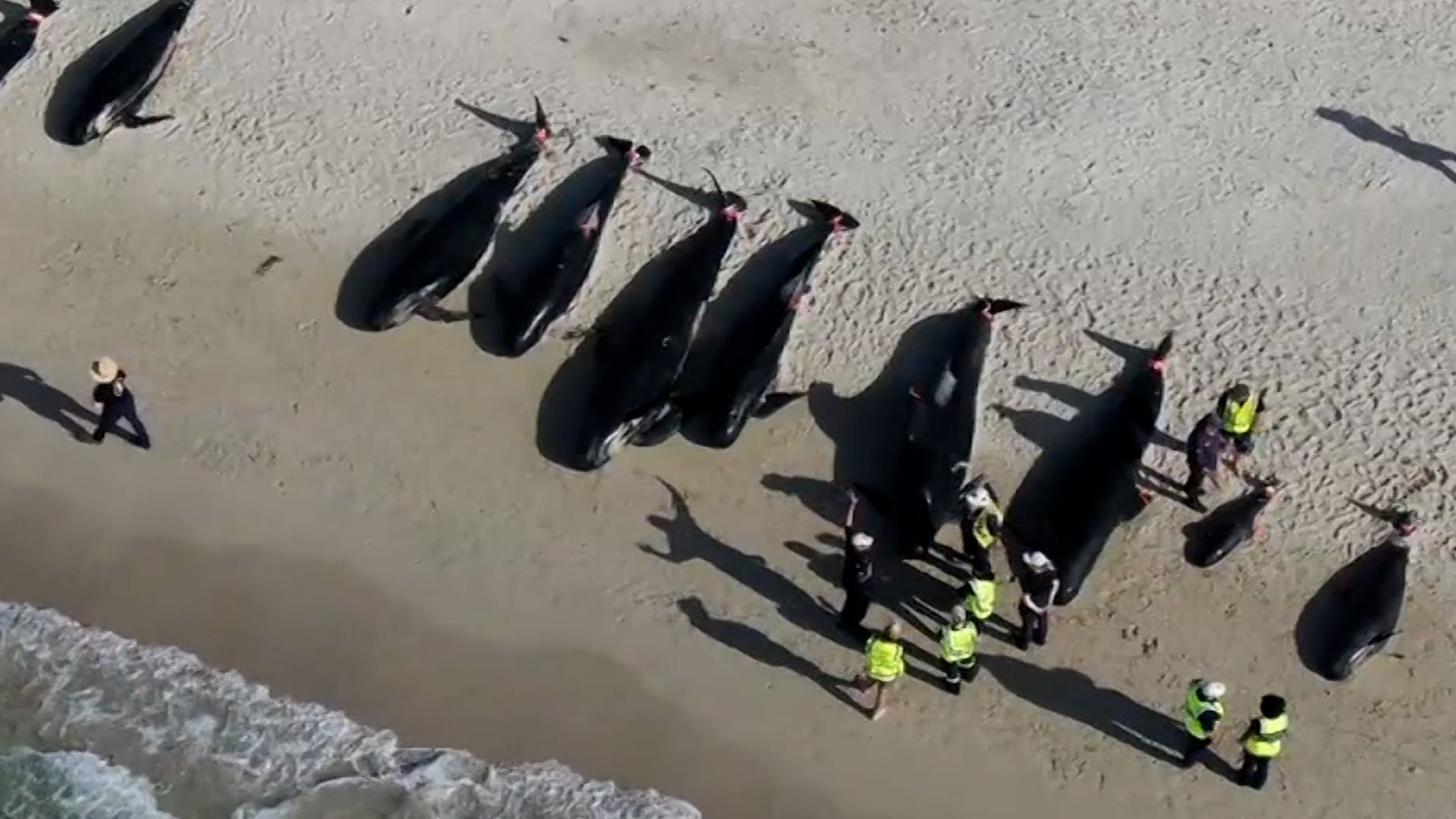
    In a touching demonstration of teamwork and resolve, more than 130 pilot whales were successfully guided back to the ocean after a tragic mass stranding incident in Western Australia. This event took place on April 25, 2024, near Dunsborough, and involved the dedicated efforts of wildlife officials, marine researchers, veterinarians, and countless volunteers who united to save these stranded marine creatures.

    At first, over 150 whales were discovered stuck on the beach, highlighting the urgency of the situation. Despite valiant efforts, 28 whales perished. However, the majority were successfully guided back to the sea, highlighting the significance of prompt and well-coordinated rescue operations.

    The beach scene was characterised as disorderly and overpowering, as the whales were densely clustered together, highlighting the urgent necessity for prompt intervention. The dedicated volunteers, comprising wildlife authorities and seasoned veterinarians, exerted ceaseless efforts to maintain the whales’ upright position and ensure unobstructed blowholes (openings through which they breathe air), which are vital for survival.

    The remarkable social unity displayed by pilot whales, with the group’s surviving members actively assisting and aiding their distressed companions, is truly awe-inspiring. However, the imminent danger of the whales getting stranded once more led to ongoing efforts of monitoring by spotter planes and boats, to prevent any more tragedies.

    The reasons behind these large-scale strandings are still unknown, but specialists hypothesize about different factors such as navigation mistakes, diseases, or disruptions in their environment. Even though we have made progress in comprehending marine behaviour, the enigmas surrounding these incidents endure, emphasizing the importance of ongoing research and conservation endeavours.

    Preserving marine ecosystems and safeguarding species like pilot whales is extremely important. This rescue mission demonstrates the vital role that every individual, regardless of their expertise or background, plays in reducing the impact of these emergencies.

    It is important to consider ways to avoid future occurrences of large-scale strandings and enhance procedures for dealing with such events after they happen. Taking proactive steps for conservation requires educating the public, running awareness campaigns, and constantly monitoring vulnerable coastal areas.

    The unwavering dedication shown during this rescue mission to protect wildlife showcases the unstoppable human spirit and brings hope for our planet’s fragile ecosystems. Let’s draw inspiration from these efforts as we continue to work towards a harmonious balance between humans and the environment.

  • Extraordinary Sahara dust engulfs Greece

    Extraordinary Sahara dust engulfs Greece

    Athens, Greece, witnessed a strange sight as a mysterious orange haze covered the city, hiding the famous Acropolis and creating a spooky atmosphere with dusty surroundings. This event, similar to the landscapes of Mars, is one of the worst instances of Saharan dust clouds in Greece since 2018, causing concern among officials and citizens.

    Dust blown in from the Sahara desert has caused poor visibility and health worries nationwide. Due to dangerous air quality, people with respiratory issues are urged to stay inside, wear masks, and avoid outdoor activities until the dust clears.

    The environmental impacts go beyond just being an inconvenience. Every year, the Sahara desert releases huge amounts of mineral dust, with a good portion reaching Europe. While bigger particles fall fast, the smallest ones can travel far, covering faraway areas in a thin layer of dust.

    The combination of dust and high temperatures has made the conditions worse, making the air very hot, especially in southern Greece. Meteorologist Kostas Lagouvardos accurately compared the situation to the barren landscapes of Mars, emphasizing the strange and unreal nature of the event.

    Moreover, the environmental consequences go beyond just being uncomfortable. The mix of dusty winds and extremely hot weather has raised concerns about wildfires, and Greece has already experienced a significant increase in fire incidents. The recent occurrence of 25 wildfires in just 24 hours, including one near a naval base on Crete, highlights the urgent danger caused by these circumstances. As a result, evacuations have become necessary, forcing homes and even a kindergarten to be emptied due to the approaching flames.

    Greece’s susceptibility to destructive wildfires is worsened by its historical vulnerability as well as ongoing drought and increasing temperatures. The country faced its largest wildfire in over 20 years last year, leading to urgent demands for improved firefighting strategies.

    Greece is taking quick action to enhance its firefighting abilities. They are updating their water tanker fleet and setting up an AI-powered sensor network to detect fires early. However, the authorities are facing a challenge as they need immediate solutions to reduce the upcoming wildfire risk.

    Greece is preparing for the aftermath of an environmental crisis as the dusty skies start to clear. The country faces the challenge of protecting its environment and communities from the increasing risk of climate-related disasters, especially wildfires.

  • Nigeria and Cameroon unite to protect wildlife and natural resources across borders

    Nigeria and Cameroon unite to protect wildlife and natural resources across borders

    Nigeria and the Republic of Cameroon have achieved a significant milestone by collaborating to sign a crucial agreement aimed at safeguarding wildlife and effectively managing natural resources that span their borders.

    The agreement signed by Nigeria’s Environment Minister, Alhaji Balarabe Lawal, and Cameroon’s Forestry and Wildlife Minister, Jules Ndongo, marks a big step in safeguarding both famous wildlife and the lesser-known small creatures that are important in their environments.

    The agreement is designed to address the widespread illegal trade in wildlife and forest products, an urgent problem emphasized by the 2023 wildlife section of the United Nations Office on Drugs and Crime’s Organized Crime Threat Assessment for Nigeria. This report emphasized the crucial role of Nigeria as a transit point for illegal trades such as pangolin, ivory, and rosewood, which come from Nigeria and neighbouring countries like Cameroon.

    Lawal highlighted the importance of Nigeria and Cameroon working together to protect their natural resources. This is especially crucial due to the environmental challenges worsened by social issues such as overpopulation and poverty. He emphasized that relying solely on individual efforts is not enough and called for collaborative approaches at both bilateral and multilateral levels to effectively manage and conserve resources across borders.

    Ndongo reiterated Lawal’s views, underscoring the necessity for collaborative endeavours in tackling illicit practices such as poaching and logging, which pose a significant threat to the sustainable administration of forest reserves. He implored the signatories of the agreement to exhibit resolute dedication towards its execution.

    The agreement received praise from global allies, who acknowledged its importance in the fight against wildlife trafficking and the preservation of ecosystems. Tunde Morakinyo, the executive director of the Africa Nature Investors Foundation, commended the pact as a crucial measure for safeguarding shared biodiversity, particularly endangered species such as chimpanzees and elephants.

    Mary Rice, the executive director of the Environmental Investigation Agency of the United Kingdom, stressed the significance of international collaboration in addressing the transnational problem of wildlife trafficking, which necessitates coordinated actions across borders.

    The proactive approach of Nigeria to wildlife conservation has been praised by Peter Knights OBE, the CEO of the Wildlife Africa Fund. He highlighted the Nigeria-Cameroon Agreement on Transboundary Conservation as a testament to the country’s dedication to safeguarding biodiversity. This agreement serves as a crucial step in the worldwide battle against wildlife crime and establishes a model for future collaborative endeavours aimed at preserving our planet’s invaluable natural legacy for future generations.

  • Planet vs. Plastics: Earth Day 2024’s Urgent Call to Action

    Planet vs. Plastics: Earth Day 2024’s Urgent Call to Action

    Every year on April 22nd, World Earth Day reminds us of our duty to care for our planet. In 2024, the focus is on plastic pollution, urging us to address this urgent threat to our ecosystems under the theme “Planet vs. Plastics.” Let’s take action to protect the Earth for generations to come.

    Plastic pollution has reached alarming levels, with millions of tons of plastic overflowing our oceans, contaminating landscapes, and endangering wildlife. The consequences of this pervasive pollution are dire, as plastic waste not only mars the beauty of our natural environments but also poses significant health risks to both humans and animals. In response, EARTHDAY.ORG has issued a bold demand for a 60% reduction in the production of all plastics by 2040—a necessary step towards creating a plastic-free planet.

    This year’s Earth Day focuses on the importance of spreading awareness about the harmful impact of plastic pollution and taking immediate action to address it. Getting rid of disposable plastics, supporting a strong UN Treaty on Plastic Pollution, and confronting the fast fashion industry are essential measures in this effort. By working together to reduce plastic waste, we can build a better and more sustainable world for everyone.

    Earth Day is not just a one-day event, but a call for worldwide collaboration in tackling environmental issues. The urgency to take collective action has never been greater, with climate change, biodiversity loss, and other threats on the horizon. Earth Day serves as a reminder that we all have a part to play in shaping the future of our planet. It encourages individuals, communities, businesses, and governments to take significant measures towards environmental stewardship.

    The United Nations General Assembly declared April 22nd as International Mother Earth Day to emphasize the connection between humans and the natural world. We must acknowledge the Earth as our shared home and work towards safeguarding its ecosystems, biodiversity, and resources. There are numerous ways to support environmental conservation, such as fighting against deforestation, addressing land-use changes, and combating the illegal wildlife trade.

    Let’s respond to Mother Earth’s call and transition to a sustainable economy that values the well-being of people and the planet. Protecting the Earth is not just a duty, but a shared responsibility that goes beyond borders, ideologies, and interests. On Earth Day and beyond, let’s renew our dedication to creating a healthier and stronger world for current and future generations.

    When it comes to the planet versus plastics, the decision is obvious. We should opt for conservation, sustainability, and stewardship to protect the Earth and ensure a better future for all living beings on our planet.

  • What you should know about the Landmark vs Lagos Calabar Coastal Highway saga

    What you should know about the Landmark vs Lagos Calabar Coastal Highway saga

    Recently, Nigeria has seen a heated battle between development goals and current infrastructure, highlighted by the Landmark Beach Resort versus Lagos-Calabar Coastal Highway issue. This dispute shows the complex relationship between economic growth, environmental issues, and land ownership.

    The Landmark Beach Resort

    Located on the beautiful Victoria Island in Lagos, Landmark Beach Resort is a luxurious and relaxing destination. Since its establishment in 2007, this beachfront oasis has been an important part of Nigeria’s tourism scene, attracting visitors from near and far. With a variety of businesses and over 4,000 jobs, Landmark is a cornerstone of the local economy.

    The Ambitious Lagos-Calabar Coastal Highway Project

    The ambitious Lagos-Calabar Coastal Highway project, initiated by the Nigerian government, aims to boost connectivity and economic growth. Stretching over 700 kilometres, this coastal route will connect Lagos, the economic capital, with Calabar, a busy port city near the Cameroonian border. Drawing parallels to famous coastal roads like the Wild Atlantic Highway in Ireland and the Pacific Coastal Highway in the United States, this project shows great potential for Nigeria’s transportation sector.

    Collision Course: The Conflict Opens Up

    Progress is often met with obstacles. The conflict between Landmark Beach Resort and the Lagos-Calabar Coastal Highway project showcases the challenges of big development projects. The government’s move to fill sand on Landmark’s property led to protests from the resort’s staff and management. Signs with messages like ‘#SaveLandmarkBeachResort’ and ‘Save Our Jobs’ were powerful symbols of opposition to what was seen as a threat to their jobs and investments.

    The disagreement centres around property rights and compensation. Paul Onwuanibe, the founder of Landmark Beach Resort, claims he acquired the land before the coastal highway project was even planned. The resort’s management is aware of the upcoming demolition orders and has been working with federal and Lagos State officials to discuss the issue and push for changes to the highway’s route to protect their interests.

    Government’s Perspective and Environmental Concerns

    The government sees the coastal highway as a big step in Nigeria’s infrastructure development. Minister of Works, David Umahi, promises to find a balance between progress and preservation. He acknowledges the need for land acquisition but assures that efforts will be made to minimize negative effects on businesses and communities.

    The Landmark versus Lagos-Calabar Coastal Highway issue is causing a dilemma for stakeholders. Economic reasons support the coastal highway project, but worries about property rights and environmental impact is also important. The key is to have discussions, consider other route options, and focus on the well-being of everyone involved.

    In Nigeria’s complex development scene, the conflict between Landmark Beach Resort and the Lagos-Calabar Coastal Highway project highlights the struggle between advancement and conservation. Balancing economic goals with environmental protection, while considering the interests of all parties, is crucial for Nigeria’s sustainable and inclusive growth. Collaboration and mutual understanding are key to navigating these challenges and moving towards a brighter future.

  • Nigeria’s Ecotourism Potential: Preserving Nature, Cultures, and Communities

    Nigeria’s Ecotourism Potential: Preserving Nature, Cultures, and Communities

    Nigeria is renowned for its vibrant cultures, diverse ecosystems, and rich history, making it an ideal location for ecotourism enthusiasts. Ecotourism, a sustainable form of travel, not only provides visitors with unforgettable experiences but also plays an important role in preserving the environment, supporting local communities, and safeguarding cultural heritage. Let us explore the significance of ecotourism in Nigeria and why it is more important now than ever.

    What is ecotourism?

    Ecotourism goes beyond mere sightseeing; it involves a conscientious way of travelling that emphasizes sustainability and preservation. It includes discovering natural marvels, engaging with indigenous cultures, and making a beneficial contribution to the environment and local communities. Nigeria offers a diverse range of ecotourism spots, from the bustling streets of Lagos to the tranquil scenery of Badagry and beyond, all waiting to be explored.

    Why does ecotourism matter?

    In a world facing environmental deterioration and cultural uniformity, ecotourism stands out as a ray of hope. It presents a sustainable alternative to traditional tourism methods, which frequently result in carbon footprints and cultural disrespect. Through the adoption of ecotourism, we protect the valuable ecosystems of our planet and honour the variety of cultures that contribute to Nigeria’s distinctiveness.

    Nigeria’s natural wonders, ranging from majestic waterfalls to dense rainforests, are not only visually stunning but also serve as crucial ecosystems brimming with diverse life forms. Ecotourism serves as a means to safeguard these habitats by fostering an understanding of their ecological significance and encouraging sustainable tourism practices. Whether exploring the green forests of Cross River National Park or admiring the magnificence of Erin-Ijesha Waterfalls, each ecotourist assumes the role of a guardian of Nigeria’s invaluable natural legacy.

    Nigeria boasts a diverse cultural landscape, comprising more than 250 ethnic groups, each with its own language, customs, and stories. Ecotourism serves as a means to delve into this vibrant mix of cultures, promoting intercultural comprehension and admiration. Whether engaging in traditional dances in Benin City or relishing local delicacies in Kano, eco-tourists can deeply experience the diverse culture of Nigeria.

    Ecotourism is centred around empowering local communities. Through the adoption of sustainable tourism practices, ecotourists play an important role in boosting the economy of communities living in ecotourism spots. Whether it’s backing local craftsmen or choosing eco-conscious accommodations, each dollar spent by tourists on ecotourism serves as a driver for beneficial transformations, fostering job prospects, and enhancing the quality of life.

    Nigeria’s ecotourism industry, despite its vast potential, is hindered by various obstacles, such as insufficient infrastructure, environmental damage, and socio-political unrest. Nevertheless, with cooperation among the government, private sector, and local communities, these challenges can be overcome, paving the way for the industry to flourish.

    As we find ourselves on the brink of a new age, the significance of ecotourism in Nigeria is paramount. It goes beyond being just a recreational pursuit; it is a deliberate decision to protect the natural beauty of our planet, honour our cultural legacy, and support our local communities. Embracing ecotourism means embarking on a path of exploration, sustainability, and harmony—a path that offers to enhance our existence and protect Nigeria’s riches for the future.

    In summary, ecotourism is not merely a temporary trend; it represents a significant change in perspective—a transition towards a more sustainable and balanced connection between mankind and the environment. As we set out on our ecotourism journeys throughout Nigeria, let us be mindful of our impact, leaving behind nothing but footprints and carrying with us memories that will endure. Welcome to Nigeria—a country of stunning landscapes, rich cultural heritage, and boundless opportunities for ecotourism discovery.

  • Differences Between Alligators and Crocodiles

    Differences Between Alligators and Crocodiles

    Do you sometimes get confused as to the differences between alligators and Crocs? You can’t differentiate between them? While they share striking similarities, these creatures have distinct features that set them apart. From their habitats to behaviour and anatomy, discerning between an alligator and a crocodile requires a keen eye and a wealth of knowledge. At the end of this article, we’re going to know the differences between both creatures. Let’s start with

    Snout Shape

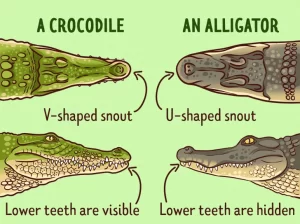
    One of their most discernible features is the shape of their snouts (the protruding part of an animal’s face, which includes the nose, mouth, and jaw).  Alligators have a wide, U-shaped snout, which is perfect for their life in freshwater. On the other hand, crocodiles have a more streamlined, V-shaped snout, which helps them survive in saltwater. This difference in snout shape is one unique feature that helps us tell the two apart when we see them.

    Image courtesy of brightside.me

    Teeth and Bite

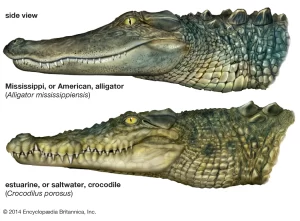
    Apart from just looks, you can also tell the difference between alligators and crocodiles from their dental architecture. Alligators have an overbite (you can’t see their lower teeth when they close their jaws). However, crocodiles give a sneak peek of their sharp lower teeth even when their mouths are shut. This gives a warning about the strong bite they can deliver, showing off their hunting skills.

    Image courtesy of usatoday.com

    Colour and Habitat

    Nature dresses each species in unique colours, showing where they prefer to live. Alligators usually have grey or black skin, which helps them stand out in freshwater areas. On the other hand, crocodiles are often olive or tan in colour, helping them blend in perfectly with the brackish waters they live in. These different colours give us a clue about where they like to hang out, helping us understand their habitats better.

    Behaviour

    The way alligators and crocodiles behave also sets them apart. Alligators are usually seen as calmer and less likely to attack. They tend to be shy and will often back away from a conflict rather than get into a fight. On the other hand, crocodiles are known for their aggressiveness. They’re top predators, always ready to strike with precise skill. These different behaviours affect how they interact with people and their environments, showing the complex patterns in nature’s design.

    Size

    Size is another way to distinguish between alligators and crocodiles, and it tells us about how they grow. Adult alligators can grow up to 14 feet long, while crocodiles are even bigger, reaching up to 19 feet in length.

    Image courtesy of quora.com


    In nature, every detail matters. Alligators and crocodiles, while similar in some ways, have their unique traits that make them who they are. They survive in different environments, from calm freshwater rivers to more turbulent saltwater. As caretakers of our planet, it’s our responsibility to appreciate and safeguard these amazing creatures, ensuring they continue to exist for future generations to marvel at.

  • UN warns against rising illegal wildlife trade in Nigeria

    UN warns against rising illegal wildlife trade in Nigeria

    The United Nations has spoken out against the unlawful trafficking of wildlife and forest goods, citing inadequate awareness, ineffective laws, and poor enforcement as obstacles to successfully prosecuting wrongdoers.

    At this year’s World Wildlife Day commemoration in Abuja on Tuesday, Oliver Stolpe, the Country Representative for the United Nations Office on Drugs and Crime (UNODC), delivered a presentation. The event focused on the theme ‘Connecting People and Planet: Exploring Digital Conservation’ and included the unveiling of the International Consortium on Combating Wildlife Crime (ICCWC) Toolkit Report for Nigeria, presented in collaboration with the UNODC and the UN Food and Agricultural Organization (FAO).

    In his statement, he acknowledged the Nigeria Customs Service for their effective work in raising border point seizures, yet highlighted that most seizures related to Nigeria originated from other country’s authorities. He emphasised the importance of improved sharing of information and cooperation with relevant authorities in the countries of origin, transit, and destination. This can lead to intelligence-based operations and potential joint or simultaneous investigations to uncover and dismantle trafficking networks. However, it is also important to enhance interception capabilities. While acknowledging the effective efforts of the Nigeria Customs Service in increasing border point seizures, it was noted that a considerable number of these seizures were linked to authorities in other countries.

    According to his remarks, the 2023 UNODC Organized Crime Threat Assessment for Nigeria exposed how Nigeria serves as a major hub for illegal trade in wildlife and forest products, with a focus on pangolin, ivory, and rosewood.

    Furthermore, he noted that these products are acquired not only from Nigeria but also from other countries in the region, such as Cameroon, Gabon, the Central African Republic, the Democratic Republic of Congo, Liberia, Cote d’Ivoire, and the Benin Republic. In alignment with data from the UNODC’s World Wildlife Seizures Database spanning the years 2011 to 2020, there are over a thousand records indicating Nigeria’s involvement as a source, transit, or destination country, or where the offender was.

    Stolpe highlighted another significant discovery from the research, indicating a rising trend of armed groups engaging in the illicit harvesting and trafficking of rosewood. This disturbing development has led to the tragic loss of nine park rangers’ lives during violent encounters with individuals involved in illegal logging within the Gashaka-Gumti National Park. In a broader context, the findings suggest that illegal logging activities persist, even in the face of the 2018 trade suspension of rosewood from Nigeria.

    The UN body urged religious and traditional leaders to collaborate with the government to raise awareness among Nigerians about preserving and safeguarding the country’s diverse biodiversity.

    In observance of the World Wildlife Day celebration, Minister of Environment Balarabe Abbas Lawal underscored the crucial role of digital innovation in the conservation of biodiversity and the protection of wildlife.