Author: ConservationsNG

  • New consortium to reduce environmental footprint of rice production

    New consortium to reduce environmental footprint of rice production

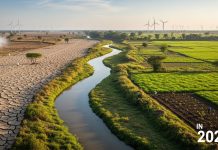
    A new global consortium, the Sustainable Rice Landscapes Initiative, will bring together expertise from international organizations, research institutions and business groups with significant market influence to tackle the enormous environmental footprint of rice production, members of the partnership announced today.

    The new consortium will introduce sustainable approaches to farming practices, incentivise production and demand for sustainable rice with market-based instruments, deliver policy support to governments, and improve knowledge sharing and collaboration on sustainable rice solutions.

    Rice is a leading cause, as well as a victim, of climate change, and its production impacts many natural systems. Rice is responsible for about the same greenhouse gas emissions as Germany, particularly from methane, which is emitted from rotting vegetation in inundated paddy fields.

    At the same time, rice yields and nutritional values are significantly reduced by rising temperatures, and production must increase by 25% by 2050 to meet global demand.

    Practices such as removing rice straw can reduce methane emissions by up to 70%, but farmers currently lack awareness, training, policy and market support.

    The founding members of the Sustainable Rice Landscapes Initiative represent the range of partners needed to make these practices commonplace, namely UN Environment, the Food and Agriculture Organization, the Sustainable Rice Platform, the World Business Council for Sustainable Development, the International Rice Research Institute and the German Agency for International Cooperation (GIZ).

    “UN Environment is proud to be a member of the Sustainable Rice Landscapes Consortium. Sustainable rice production is one remedy that can fix a host of issues,” said Dechen Tsering, Regional Director of UN Environment’s Asia and the Pacific Office. “It can help us fight climate change, protect biodiversity and restore landscapes and simultaneously safeguard rice farming communities and the billions of people that rely on them.”

    The Initiative is particularly targeting a number of Asian countries, where rice is one of the most important crops and the economic backbone for millions of farmers, and will seek changes in national policy, farming practices, and improvements in the supply chain. To achieve scale, the Initiative is calling upon governments and international funding bodies to support their efforts.

  • Women cry out over diseases in Ogoni land

    Women cry out over diseases in Ogoni land

    Ogoni land women leaders in Rivers State have said the activities of the Hydrocarbon Pollution Remediation Project (HYPREP) has resulted in high level of diseases in their land instead of alleviating the problem.

    The women made the revelation at a one-day media interactive session on the implementation of the United Nations Environment Programme (UNEP) report on the emergency measures at Kebetkache Women Development and Resource Centre in Port Harcourt.

    According to the Ogoni women leaders, HYPREP has not provided potable water and health initiatives even after it was reported as an emergency measure by UNEP.

    The representative of Kegbara Dere community, Gokana Local Government Area, lamented the bad state of the community, saying women suffered the most.

    “My community has 56 oil wells and so the pollution level is high. However, HYPREP’s effort to clean up the land is not going well because it did not provide the emergency measures needed, especially for the safety of women,” she said.

    She added that women are exposed to a higher risk of diseases like
    heart attacks, breast cancer, skin diseases, tuberculosis, leading to premature death because they are the ones who use water the most.

    “When the provision of health care, food, and good water was mentioned we were happy, but now the promises have gone with the wind. We don’t understand why they would jump the most important issue that has to do with health and good water supply,” the representative added.

    “We have not seen anything that shows that the clean up is on. Whenever they visit, it is to meet with the chiefs and elders and they cover their eyes with money.

    “We bury our children and relatives daily, and if anyone becomes pregnant, you automatically become a prayer warrior until the person puts to bed. HYPREP is not doing anything to save Ogoni Land; they are not concerned about the people’s health, but only interested in what they will gain.”

    The representative of Kwawa community, Khana Local Government Area, Eucharia Brownson, doubted the existence of HYPREP because they have not seen anything to justify their presence in the community.

    “We have not even seen anyone from HYPREP before, it’s as if we do not exist, the suffering is too much,” she said.

    Responding to the women’s claims, HYPREP said that it was working towards providing potable water for the people while carrying out the clean-up of the Ogoniland.

    HYPREP Project Coordinator, Dr. Marvin Dekil, said during a radio program,
    View Point, on Rhythm 93.7 FM, that studies had been carried out towards ensuring the filtering and treating of water for the affected communities to drink.

    He explained that HYPREP was aware of the needs of the communities and that nothing would be left unaddressed.

    “As government, it means we must carry out necessary studies and also have the sort of capacity that will filter and treat the water as such that water going out to the public is of acceptable standard,” Dekil said.

    “That means that even the facilities as we currently have in place, we need to study them and look at the quality they generate and we need to apply the necessary treatment where applicable. This is what we have been doing over this period.”

    He noted that the companies on HYREP’s website are categorised into.

    “The ones that will do consultancy in relation to existing facilities, the ones that will provide consultancy in relation to putting in new water facilities and the ones that will install new facilities,” he said.

    “Now, we will also have to look at some projections beyond today so that we may be able to provide services that will give us water for today and for years to come.

    “Every contract has a serious component that deals with the young people as security within the community. A whole bulk of work we are doing has to do with training the scientists we have today. Over 90 per cent of Hydrocarbon Pollution Remediation Project’s scientists are indigenous Ogoni scientists.”

  • Standard, Chartered Bank DFSA align to fight illicit wildlife trade

    Standard, Chartered Bank DFSA align to fight illicit wildlife trade

    The Dubai Financial Services Authority (DFSA) recently hosted senior executives from Standard Chartered Bank to discuss how financial institutions and regulators can work together to help curb illegal wildlife trade and disrupt the flow of illegal funds arising from this predicate crime.

    David Fein, Group General Counsel at Standard Chartered and Vice-Chair of the Financial Taskforce of the UK Royal Foundation of ‘United for Wildlife’ campaign which is under The Duke of Cambridge’s presidency along with Sunil KaushalRegional Chief Executive Officer for Africa and Middle East visited the DFSA with their teams to highlight the measures being taken by global entities, including Standard Chartered, to combat illegal wildlife trade as part of an overall financial crime prevention framework.

    The illegal trade in elephant ivory, rhino horns, pangolin scales, tiger bones, bear bile and rosewood are reported as leading to the extinction of some of the world’s magnificent and sometimes lesser-known species. Illegal wildlife trade also impacts the financial services sector as the unwitting conduit for the movement of proceeds of illegal wildlife trade.

    In addition to being a major risk to endangered wildlife species, illegal wildlife trade impacts economies by destroying natural and human resources and eroding society’s social capital. Illegal wildlife trade also creates a false economy of dependence based on illegal activities making it more difficult to combat in poverty stricken jurisdictions.

    As of 2017, the global value of illegal wildlife trade was quoted at $26 billion according to data published by the United Nations (UN). The UN considers wildlife crime as one of the largest transnational organised criminal activities alongside drug, arms and human trafficking. Illegal wildlife trafficking is now one of the world’s top criminal activities, ranked alongside drugs, arms, and human trafficking.

    The DFSA’s support of the worldwide campaign against illegal wildlife trade builds on Dubai’s concerted efforts to combat the illegal wildlife trade. Over the years, several Dubai Government entities have initiated programmes to raise awareness and counter the illegal practice.

    Bryan Stirewalt, Chief Executive of the DFSA, commented: “The discussion led by Mr. Fein was insightful and provided a well-rounded view on the global efforts to curb illegal wildlife trade. As a government entity committed to promoting sustainable practices and preserving our natural environment, we are keen to partner in campaigns against illegal wildlife trade. Since our inception, we have identified financial crime as a top risk and have continuously assigned resources and efforts to fight it. Through our support to programmes such as this, we want to raise awareness about the practice in financial circles and highlight that we have a zero-tolerance policy to any act that supports the illicit trade. We all have a role to play and no one’s contribution to this fight is too small.”

    Rola Abu Manneh, Chief Executive Officer of Standard Chartered Bank, UAE, commented: “For too long, illegal wildlife trafficking has been viewed solely as a conservation issue. In reality, it’s a transnational organised crime with links to the trades in narcotics and arms. The UAE is well positioned to play a leading role in fighting the illegal wildlife trade and we, as an international bank that is deeply rooted in this country, are committed to supporting this fight By following the money, financial institutions can help map the criminal networks and provide law enforcement with vital intelligence to support their investigations and prosecutions. We are pleased to be in dialogue with the DFSA about what more can be done, as an industry, to tackle this crime.” she added.

    The DFSA’s dialogue with Standard Chartered also highlights the social responsibility of individuals and organisations to contribute to the well-being of humanity and the natural environment.

  • Two arrested with fresh buffalo head in Yankari

    Two arrested with fresh buffalo head in Yankari

    Two yet to be named men were on Tuesday apprehended at the Yankari Game Reserve in Bauchi State for killing a buffalo.

    The suspects said to be from Mai Ari area in the state were caught by rangers at the game reserve with the buffalo’s head.

    It is expected that the suspects will be charged to court.

    Yankari National Park is a large wildlife park located in the south-central part of Bauchi State, in northeastern Nigeria. It covers an area of about 2,244 square kilometres and is home to several natural warm water springs, as well as a wide variety of flora and fauna. Hunting is strongly prohibited within the reserve.

  • Group questions Nigerian Government over Ogoni cleanup process

    Group questions Nigerian Government over Ogoni cleanup process


    Civil society groups are questioning the process being adopted by the federal authorities to remedy the sites of massive oil spillage in Ogoni, Rivers State, Nigeria.


    A group, Civil Society Legislative Advocacy Centre (CISLAC), said that the status of Hydrocarbon Pollution Remediation Project (HYPREP) in terms of its structure, independence, funding, effectiveness, capacity as well of perception of sluggishness due to bureaucracy, politicization, low responsiveness has affected the cleanup exercise.

    CISLAC holds that the exercise is now bugged with identity crisis, procedures, processes and overheads. Perception of corruption, lack of transparency and accountability, complex decision making, internal crisis of choice between Ogoni and the Niger Delta.

    Kolawole Banwo, programme manager for CISLAC who provided an overview of the UNEP report on Ogoniland at an interaction in Lagos, that HYPREP is now seen as a HY-BRID, made up a project and agency, rather than a specific programme for the Ogoniland clean up. He also noted lack of no sequence of action and prioritization of activities and cost management as well as adherence to original in the process.

    The United Nations Environment Programme (UNEP) released its Environmental Assessment of Ogoniland in August 2011 after series of protests of oil spillage in the community that culminated to the death of Ken Sarowiwa and eight others.

    The report commissioned by Federal Government of Nigeria, made recommendations to the government, the oil and gas industry and communities to begin a comprehensive cleanup of Ogoniland, restore polluted environments and put an end to all forms of ongoing oil contamination in the region

    Findings in the Report underline that there are, in a significant number of locations, serious threats to human health from contaminated drinking water to concern over the viability and productivity of ecosystems.

    In addition that pollution has perhaps gone further and penetrated deeper than many may have previously supposed. Pollution of soil by petroleum hydrocarbons in Ogoniland is extensive in land areas, sediments and swampland.

    In 49 cases, UNEP observed hydrocarbons in soil at depths of at least 5 metres. At 41 sites, the hydrocarbon pollution has reached the groundwater at levels in excess of the Nigerian standards permitted by National Laws at Nisisioken Ogale, in Eleme LGA, close to a NNPC product pipeline where an 8 cm layer of refined oil was observed floating on the groundwater, which serves the community wells.

    Banwo said that the fatalities occasioned by pollution in Niger Delta, particularly Ogoni had called for serious attention to save lives and property.According to him, there is need to re-visit, and where necessary remediate identified sites.“We are already eight years behind after the report itself was first launched in 2011 and 63 years late after the first oil spill happened in Oloibiri in 1953.

    “The Federal Government flagged off the remediation of contaminated sites in Ogoni Land in 2016.“But since then, not much has been done in that direction. The wellbeing of the people in Ogoni and the Niger Delta at large is to say the least pathetic.“Life expectancy has dropped to 40, livelihoods destroyed, inhabitants consume contaminated water 900 times above the World Health Organisation (WHO) standards.

    “Festival of funerals in the region has become very worrisome, all due to pollution and exposure to environmental hazards.“This calls for the urgent need to review the remediation techniques, repair, maintain and decommission non-producing facilities.“The duty of care point of view upon which the emergency measures are based imposes not just a moral but a legal obligation to prevent harm or compensate victims.

    “The 25-year long journey and struggle for the clean up of Ogoniland and the Niger Delta Region is a challenge to our shred humanity.
    “It is about the lives of real people whose only offence is that petroleum resources which drives our economy are found in their land. We must keep asking right questions, applying the right pressure and speaking out.

    “With the professionalism, courage and persistence of the press we will achieve more and faster. We must do more to get our government to Clean Up Ogoni now”, he said.

    Also the Programme Manager, Defence and Security of CISLAC, Mr. Salaudeen Hashim, attributed the slow pace of cleanup and remedial exercise at Ogoni Land to weak institutional and regulatory framework.Hashim said that companies’ collusion, bad governance and corruption were factors, which needed to be addressed to record significant result from the situation in Ogoni. He urged the government to intensify more efforts in ensuring effective institutional and regulatory framework for the region.

    Hashim enjoined the Ogoni communities to take proactive stance against theft and illegal refining.He said: “The Ogoni Community is exposed to petroleum hydrocarbons in outdoor air and drinking water, sometimes at elevated concentrations.

    “Hydrocarbon contamination is found in water taken from 28 wells at 10 communities adjacent to contaminated sites; and without an adequate regulation framework in tackling the menace, it will continue to multiply”, he added.

  • 445 million trees planted in China’s desert-fighting region since 2012

    445 million trees planted in China’s desert-fighting region since 2012

     Inner Mongolia Autonomous Region, lying at the forefront of China’s fight against desertification, has mobilized 76.6 million volunteers to plant trees over the past seven years, local authorities said Monday.

    The campaign has planted 445 million trees to guard north China against sandstorms and desert encroachment in the period, the autonomous region’s forestry and grassland bureau said ahead of China’s Arbor Day on March 12.

    The bureau said Inner Mongolia has since 2012 beefed up its tree-planting efforts with measures such as assigning afforestation targets to local officials and encouraging volunteer participation.

    The autonomous region has planted over 1.7 billion trees on about 400,000 hectares of lands since 1981, when China started to encourage the public to plant trees.

    Inner Mongolia is home to several large deserts such as Badain Jaran, Tengger, Ulan Buh and Kubuqi. Its success in taming desertification in recent decades has been credited to the decrease of sandstorms in northern China.

    Xinhuanet

  • Nigeria’s environmental problems — The ringworm and leprosy

    By Mate Kolawole

    Battling ringworm while leaving leprosy untreated is but one of the numerous extended metaphorical languages employed by an African tribe to highlight the futility of bending efforts toward the least important task. And since human needs are endless while means of satisfying them are scare and limited there evolves the need to prioritize activities on a scale of preference. The barrage of environmental woes besetting the Nigeria nation as highlighted in the media includes but not limited to Crude oil contamination in the deltaic region, intensification of aridity in the Sahelian north and massive erosion in the eastern hinterland. Other environmental issues that receive less attention yet impinge human existence include wastes-municipal, industrial and electronic, gas flaring, climate change and species invasion and extinction. Which should be on the front burner?

    Nigeria’s environmental problems — The ringworm and leprosy

  • Nigeria’s environmental problems – The ringworm and the leprosy

    Nigeria’s environmental problems – The ringworm and the leprosy

    By Kola Mate

    Battling ringworm while leaving leprosy untreated is but one of the numerous extended metaphorical languages employed by an African tribe to highlight the futility of bending efforts toward the least important task. And since human needs are endless while means of satisfying them are scare and limited there evolves the need to prioritize activities on a scale of preference. The barrage of environmental woes besetting the Nigeria nation as highlighted in the media includes but not limited to Crude oil contamination in the deltaic region, intensification of aridity in the Sahelian north and massive erosion in the eastern hinterland. Other environmental issues that receive less attention yet impinge human existence include wastes-municipal, industrial and electronic, gas flaring, climate change and species invasion and extinction. Which should be on the front burner?

    Kola Mate is an environment and toxicology expert

  • An elephant story

    An elephant story

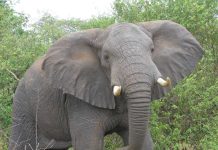
    Elephants are in the news. Not many Nigerians know there are elephants in Nigeria. Well, there are. And the news is that they are causing havoc in Lagos and Ogun communities. Elephants from Omo Forest Reserve in Ogun State are said to be on a rampage in some communities.

    The Chairman of Active Hunters’ and Farmers’ Club at Epe, Alhaji Ajagunoba Aribada, was quoted as saying in a November 19 report: “We have been facing this situation for the past seven months. The elephants have destroyed all our banana, plantain and cassava farms. We can’t even reach the other parts of the farm because the nursing female elephants are aggressive. This has caused food scarcity in the community.”

    Corroborating this disturbing account, the village head of Oki Gbode Imobi, Baale Adeleke Olaitan, said: “Nobody can go to the farm for fear of being attacked. The elephants have eaten all the cassava crops and plantain on the farms. We want them out.”

    The elephant invasion has also affected fishing business in the community. “The elephants enter the river to drink and bathe and ruin all the fish traps,” said Ismaila Lekan. “My mother who is into fish business can no longer go about her business because of the fear of the elephants.”

    Why did the elephants move out of the reserve, described as “one of the last few elephant habitats in Nigeria”? Farming and quarry activities are to blame. The elephants forced to leave the reserve now roam at the Ogun-Lagos border, where Imobi – Itasin – Epe lagoon communities are located.

    The next question is: How were the elephants able to move out of the reserve?  If the elephants had a reason to leave the reserve, that shouldn’t mean they must have a way to leave. The elephants were able to leave the reserve because they could.

    If the reserve were properly managed, farming and quarry activities would not have been issues. Wildlife conservation is a serious issue. A report to mark World Elephant Day on August 12 said: “The Wildlife Conservation Society has outlined and advocated the need to increase aerial surveillance in strongholds, train and deploy more rangers in the protected areas, supply new rangers with equipment, assist the authorities in tracking and shutting down trafficking networks, and grow our community development programmes to support local communities to co-exist with wildlife.”

    There are plans to create a wildlife sanctuary within Omo Forest Reserve.  The authorities should take action.