Author: ConservationsNG

  • Artists, conservationists, others team up on Reading For Wildlife campaign

    Artists, conservationists, others team up on Reading For Wildlife campaign

    July sees the launch of the ‘Reading for Wildlife’ campaign, a month-long book reading for children and adults to raise awareness of the illegal wildlife trade and the impact of Covid-19 on wildlife and communities.

    London-based author Zella will be reading her children’s adventure story ‘An Elephant for Breakfast’ with a group of friends and releasing a chapter a day over the month of July.

    An Elephant for Breakfast’ is a detective story where a group of children in London have an adventure trying to stop ivory being smuggled into the country.

    Read also: PHOTOS: Conservation Club of Omo marks WMBD 2019

    The illegal wildlife trade is worth US$213 billion a year and is the fourth largest international organised crime in the world. According to the World Bank, an elephant is poached for its tusks every 30 minutes. Since Covid-19 stopped most international travel and resulted in an enormous fall in tourism revenues, funding for conservation projects and rangers has all but dried up and the situation has worsened.

    Zella, who is originally from New Zealand, said “My journey into the Illegal Wildlife Trade began when I wrote the book. I was shocked to learn how endangered elephants are and that we are likely to be the generation that sees them disappear forever, unless we stop the supply or demand of ivory. The Illegal Wildlife Trade is also likely to cause the extinction of Rhino, Cheetah and other iconic animals, unless people everywhere help stop demand. Now, things are even worse, with the devastating impact of Covid-19 on both animals and people, with tourism being wiped out and the obliteration of funding sources for conservation projects.”

    Zella continued, “I am delighted to be joined by so many dedicated and illustrious readers all with the same objective, to galvanise public support for the fight against the illegal wildlife trade. We are encouraging everyone, young and old, to make sure the wildlife is SAVED by suggesting five simple steps that everyone can take to join the fight.”

    Actor and wildlife advocate Joanna Lumley, who is one of the readers in the campaign said “A thought provoking and gripping and entertaining story, surely this will be a key to changing the minds of adults through the insistence of their children.”

    A total of 27 readers will each read a chapter of the book, with one chapter being released each day. Alongside Joanna Lumley are a number of authors, actors, broadcasters, artists, conservationists and industry leaders including, author, Ellen Alpsten; presenter and biologist Patrick Aryee; blogger Lucy Campbell; editor in chief of First News, Nicky Cox, Editor in Chief; artist Emily Croft-Baker; former Secretary General of CITES and Special Envoy for African Parks, John Scanlon among others.

  • Lagos moves to deal with rapid urbanisation

    The Lagos State Government on Saturday said that it had evolved strategies through inter-agency collaboration to deal with shocks of rapid urbanisation toward evolving a resilient safe and healthy city.

    Mr Gbolahan Oki, Chief Resilience Officer, Lagos State Resilience Office who made this known during a virtual meeting organised by the Lagos State Chapter of the Nigerian Institute of Town Planners (NITP) with the theme `Cities beyond Pandemic’ listed sharp shocks that threatened Lagos State in recent times to include fire outbreak, building collapse, COVID-19 outbreak, flooding, traffic congestion, bloated population, among others.

    The resilience includes the capacity of individuals, communities, institutions, businesses and systems within the city to survive, adapt and grow; in spite of acute shocks or chronic stresses.

    Oki explained that the state government was returning to a vertical settlement template started by the Babatunde Fashola’s regime, which offered opportunity for building affordable mass housing in small land areas.

    He added that high rise buildings were an important strategy for dealing with the problem of urban slums and overcrowding, which could trigger and increase disease outbreak and spread.

    “Resilience is all about being all inclusive with the agencies working together to bounce back and look good,’’ he said.

    Oki said that the state government was adopting intermodal transportation to deal with some of the problems.

    He added that the state launched a strategy about five months ago to implement the city resilience framework which included health and well-being as well as the infrastructure and environment.

    Oki further explained that the state was discussing with communities, local governments and its leadership on ways to evolve workable inclusive strategies to curb stresses and shocks of urbanisation.

    He said that the resilience office was working on health, security, environment strategy in line with the global resilience standards while carrying other agencies along.

    He noted that a letter had been sent to local governments through its permanent secretary to ensure communities and the third tier of government got involved in urban slum upgrading processes.

    Dr Idris Salako, the Commissioner for Physical Planning and Urban Development, represented by his aide, Mr Niyi Osinaike, said the COVID-19 pandemic increased cost of building materials and other items across board.

    Salako said that the ministry was interfacing with the ministry of health and other agencies to evolve “robust strategies for disaster management” and curb spread of coronavirus.

    He added that the ministry’s monitoring surveillance mechanisms had been upgraded by its agencies to implement the model city plan of the state government.

    Other speakers at the event stressed the need to encourage mixed land use to reduce migration, upgrade slums, address infrastructure and housing needs, tackle the effects of climate change for the health and welfare of the people.

  • Covid19: UK zoo threatens to kill animals over lack of funds

    Covid19: UK zoo threatens to kill animals over lack of funds

    A zoo in Wales, Britain is threatening to put down its animals because it is running out of money to feed the exotic breeds amid the coronavirus lockdown.

    Tracy and Dean Tweedy, who own Borth Wild Animal Kingdom in West Wales, fear they only have enough money to feed more than 300 animals for a week.

    The married couple say their money is running out to care for their stock and are planning ‘as a last resort’ to euthanise ‘the animals that we care for’.

    Council chiefs ‘lost confidence’ in the ability of the zoo to operate safely following the deaths of two lynx and other animals.

    In January this year, the zoo was ordered to close because it did not have trained gunmen in case of an animal escape.

    it costs £3,000 a week to run the zoo and a cull of the animals has been considered if they cannot be fed.

    But it was allowed to reopen in February before having to close again in March due to the coronavirus outbreak.

    Ms Tweedy, 49, said many staff are on furlough and the zoo’s business relief grant of £25,000 has nearly run out.

    She said: ‘We were already only scraping by financially after the long, quiet winter season.

    ‘We need help now more than ever. Despite everything, we are as determined as ever to not give up.’

    Read also: Covid19: Tiger tests positive in US zoo

    She said it costs £3,000 a week to run the zoo and a cull of the animals has been considered if they cannot be fed.

    After the money runs out, the couple will have to start looking at re-homing but are considering euthanasia as a last resort.

    Problems for the zoo began in late 2017 when Lilleth the Eurasian lynx escaped and was shot dead by a marksman after being found at a nearby caravan site.

    A second lynx, Nilly, also died in what was described as a ‘handling error’.

    A report revealed one in five of the zoo’s animals died in just one year. It was discovered that monkeys, crocodiles and a leopard also died from its animal stock during 2018.

    Owner Tracy and Dean bought the zoo for £625,000 in 2016 to start a dream new life with their family, but it has since turned into a nightmare.

    Tracey said: ‘It would be tragic if mid Wales lost its only zoo. We work with so many local organisations on animal education and wildlife conservation that we see ourselves as a vital asset for the community.’

    Read also: ‘Security’ lion removed from Lagos house opposite crèche

    Tracy said many of the animals would be very hard to re-home due to licence requirements needed to look after the exotic animals.

    ‘We also run as a sanctuary for animals that have been rescued from the exotic pet trade. For many of these animals, we are a last resort.

    ‘They came here because destruction was their only alternative.

    ‘They would be very difficult to re-home as the licence requirements to look after these animals and provide the proper care, can be very involved and expensive,’ she said.

    The couple say Westminster has announced a fund to help zoos in England but there is no similar support in Wales.

    The Welsh government said it had already provided all licensed zoos with details of existing support schemes.

    ‘If any zoo operators have concerns about their ability to meet the needs of their animals, they should contact their local authority’s animal health team for advice without delay as they are on hand to offer support,’ a spokeswoman said.

    It said its £500m economic resilience fund provided more generous support than one specifically for zoos would have.

    A spokesman for Ceredigion County Council earlier said: ‘The local authority has lost confidence in the ability of the zoo to operate responsibly and safely.’

    Zoos were forced to close at the end of March due to the coronavirus lockdown and many have warned their futures are in danger from the impact of the pandemic.

    Andrew RT Davies, Shadow Minister for Environment, Food and Rural Affairs in the Welsh Parliament, said: ‘This is a dire situation that the zoo finds itself in, but I’m afraid that zoos right across Wales are in the same precarious situation and desperately need support due to the profound impact of Covid-19.

    ‘It’s outrageous that whilst the UK Government has taken action and given £14 million to support zoos in England the Welsh Government has still not followed suit.

  • Boko Haram kills three elephants in Nigeria – Cameroon border community

    Boko Haram kills three elephants in Nigeria – Cameroon border community

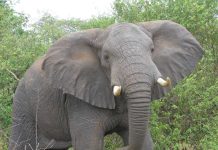
    Not less than three savannah elephants from a herd of about 300 roaming the Nigeria-Cameroon border have been killed.

    The elephants were believed to have been shot by Boko Haram terrorists around May 16, 2020, in Kala Balge Local Government Area, Borno State of Nigeria.

    A statement from Cameroonian MP Kamssouloum Abba Kabir, who represents the Far North Region, revealed that the elephants were shot in a village about one kilometre from the border between Nigeria and Cameroon.

    Read also: WCS celebrates four years of zero elephant poaching in Yankari

    The elephants which are listed as vulnerable on the IUCN Red list of threatened species seasonally visit Waza National Park located South of Lake Chad and adjacent to Borno State in Nigeria.

    Kabir said vigilantes of Afadé (Cameroon) quickly alerted the 41st Motorised Infantry Battalion [BIM], who intervened and prevented Boko Haram elements from gaining control of the dead animals.

    The presence of the elephant herd was first known when they were photographed from a United Nations helicopter on December 19, 2019, during a routine humanitarian mission flight over Rann in Kala Balge.

    It was the first known sighting of elephants in years in Borno State and Nigerian section of the Lake Chad National Park, the epicentre of a decade-long violent terrorism and insurgency campaign by Boko Haram and Islamic State in West Africa Province.

    Kabir told HumAngle that the herd usually migrates to Kalamalou National Park near Chari River during the dry season and returned to Waza National Park and Chad in the rainy season.

    Hundreds of elephants tend to migrate between national parks and game reserves in the Lake Chad region states of Niger, Nigeria, Chad and Cameroon, he explained.

    A 2006 count of elephants funded by the EU through Cite MIKE (Monitoring of Illegal Killing of Elephants) programme in the Sambisa Game Reserve in the southwestern Chad Basin National Park indicated extensive farmland and human settlement encroachment was affecting the local elephant range.

    Read also: Kebbi considers wildlife park for elephants

    Since then, the region has become an active war zone with a devastating impact on the local economy, population, and wildlife.

    Peter Ayuba, the Director of Forestry and Wildlife in Borno State, told HumAgle by telephone that Borno had lots of elephants and it was important to monitor and protect them.

    Ayuba said a memo was sent to the Federal Government for the acquisition of deterrent equipment (firecrackers) and training of villagers to scare them and prevent conflict between the local population and the displaced elephants.

    The proposal followed a report by the local Bulama (traditional leader) about the elephants destroying crops and trying to enter the town, he explained.

    Borno State Commissioner for Environment, Mr Kabiru Wanori, an engineer, told HumAngle that he was not aware of the killing of the elephants.

    Wanori said the state governments had contacted the National Park Service to monitor and protect the elephants and that there were efforts to get international organisations to support the conservation efforts.

    Whilst Nigeria wants to protect the elephants, Cameroon’s Kabir is concerned about their safety and wants the herd assisted back to Waza National Park in Cameroon.

    Tunde Morakinyo, Executive Director, Africa Nature Investors Foundation, said: ‘’It is very upsetting to see these terrible pictures of elephants having been killed in Nigeria.

    “We have so few elephants left, we cannot afford the death of even one elephant. The key question is: What can be done to protect these elephants so this does not happen again?”

    Morakinyo added: “We have to recognise that these elephants live in a conflict zone where human life is also in great danger. This makes any effort to protect them very difficult indeed.

    “However, this does not mean nothing can be done. I believe we have to recognise that these elephants do not belong to a single country alone.

    “They have migrated between Nigeria, Cameroon and Niger for hundreds of years.

    “Thus, just as all three countries need to work together to solve the conflict in the region, so too must we work together to protect these elephants.”

    “I would like to propose that all three countries should work together to identify the elephants’ migration routes between the three countries.

    “And then the three countries should work with the communities around Lake Chad to protect these migration routes and to prevent farming in these routes.

    ‘’This way we can ensure that one day when peace is restored to the region, the communities can benefit from tourism revenues as a result of protecting these wonderful elephants.

    “There have been talks of an economic package to revive the region. Creating new protected areas linking all three countries to promote elephant tourism should be part of the plan for the revival of the region,” he said.

    It is believed that Boko Haram has killed a huge number of wildlife in the past seven years since occupying the Sambisa Reserve and Alagarno forest areas.

    Among the wildlife in the region are endangered species such as the scarlet-fronted gazelle, African bush elephant and the African leopard.

    The region is now inaccessible to conservationists to ascertain how many of the animals are left.

    In February 2013, Boko Haram killed at least six park rangers in a reprisal attack after troops backed by helicopter gunships destroyed their position in a Sambisa game reserve.

  • Solomon Ogunji, Abia Commissioner for Environment dies

    Solomon Ogunji, Abia Commissioner for Environment dies

    The Commissioner for Environment in Abia, Dr Solomon Ogunji, is dead.

    The state’s Commissioner for Information, Chief John Okiyi-Kalu, confirmed the development in a statement issued in Umuahia on Sunday.

    Okiyi-Kalu stated that Ogunji died on Saturday “after a brief illness, relating to high blood pressure” at the Abia State University Teaching Hospital in Aba.

    He said the Abia government was deeply saddened by Ogunji’s death.

    “Gov. Okezie Ikpeazu, who received the sad news with shock yesterday (Saturday) has personally communicated and condoled with the bereaved family and he is currently in mourning,” he stated.

    “The state government prayed God to grant the bereaved family the fortitude to bear this irreparable loss,” said Okiyi-Kalu.

    Ogunji was a senatorial aspirant in the 2019 general elections, seeking to represent Abia South on the platform of the PDP.

    He was appointed special adviser to Ikpeazu on urban renewal in 2015 and later commissioner for environment in the previous administration.

    Ogunji, who was a close political ally and confidant of the governor, was a member of the state’s Inter-Ministerial Committee on COVID-19.

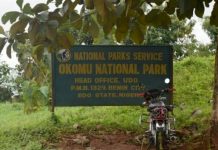
  • Biodiversity Day: Obaseki lauds Okomu National Park’s potential

    Biodiversity Day: Obaseki lauds Okomu National Park’s potential

    The Edo State Governor, Mr Godwin Obaseki, has implored environment activists, community leaders and local councils to continue to push for actions and behaviours that preserve the pristine features in Nigeria’s forest belt amid the coronavirus (COVID-19) epidemic.

    The governor made the call on the occasion of the commemoration of the World Biodiversity Day marked every May 22, by the United Nations and its various organs.

    Obaseki noted that it was imperative to preserve the country’s biodiversity as some of the solutions to the pandemic plaguing the world could be found in nature.

    According to him, “On this day, it is important to stress the need to conserve nature and preserve the defining features of our pristine flora and fauna, amid the coronavirus pandemic, which has caused everyone to be indoors and the forest assets at the risk of being unattended to. However, we need to ensure that these assets are protected for other organisms that benefit from our peculiar biological makeup in this period.”

    He described the theme for the 2020 celebration, Our solution is in nature, as germane, noting that remedies for ailments such as the one the world is currently plagued with can be found in our peculiar biodiversity if only researchers look hard enough. Obaseki noted that the state government was working with the Federal Government to preserve the Okomu Forest Reserve, as the Okomu National Park is a national asset that can boost tourism receipts. According to the United Nations, “2018 marks the 25th anniversary of the entry into force of the Convention on Biological Diversity.

    Since entering into force, the Convention has been implemented through the vision and leadership displayed by countries, non-governmental and inter-governmental organisations, indigenous peoples and local communities, the scientific community and individuals alike.”

  • Heavy metal responsible for mass fish death in Niger Delta

    Heavy metal responsible for mass fish death in Niger Delta

    The large amount of dead fish washed ashore along the Atlantic Ocean’s coastline of some Niger Delta states in Nigeria is due to increased toxicity of the water bodies, the National Oil Spills Detection and Response Agency (NOSDRA) has revealed.

    The agency noted that the discharge of toxic materials into the Atlantic may have come from land as the wastes from domestic and industrial sources often emptied into the water body.

    In April, NOSDRA had announced that it was coordinating a multi-agency investigation aimed at revealing the cause of the unusual fish deaths within the nation’s territorial waters.

    Read also: Concerns rising over dead fish along Niger Delta coastlines

    Idris Musa, the agency’s Director-General said that the increased toxicity was caused by pollution from heavy metals from industrial and domestic wastes.

    “As earlier mentioned, the findings did not show hydrocarbons (crude oil) as the possible cause of the death of the fishes,” Musa said.

    “In the course of the analyses, Total Petroleum Hydrocarbons, Polycyclic Aromatic Hydrocarbon, Benzene, Toluene Ethylene and Xylene were within regulatory standard limits in water, sediments and fish tissue analyses.

    “However, there were some heavy metals such as cadmium, chromium copper, zinc and iron that exceeded regulatory standard limits in the coastlines of the three states – Delta, Bayelsa and Rivers.”

    Musa noted that the plausible causes could partially be attributable to other human related pollution activities which are probably land based.

    He recommended that the country should pay more attention to the activities of those illegally carrying out fishing in our territorial waters to guard against possible dumping of wastes as well as unwanted aquatic species.

  • Yobe gives precautions on heat waves

    Yobe gives precautions on heat waves

    The Yobe Government has advised residents to adopt safeguard measures against the heatwave (hot season) being experienced in the state.
    Dr Mohammed Gana, the state Commissioner for Health and Human Services, gave the advice in a statement he signed and made available to newsmen on Sunday in Damaturu.

    Gana expressed concern over the adverse effect of what he described as the very high temperature and intensive heat in the state.

    He, therefore, advised the public to wear lightweight, light-coloured, loose-fitting clothing, stay under tree shades and environments with a lot of ventilation where the temperature is low and cool and cut down on exercise when it is hot.

    “If you are not used to working or exercising in a hot environment, start slowly and pick up the pace gradually, and if walking or exercising in the heat makes your heart pound and leaves you gasping for breath, stop it.

    “Get into a cool area or into the shade, and rest, especially if you become lightheaded, confused, weak, or faint,” he added.

    Gana also advised residents to drink a lot of water and schedule their outdoor activities carefully.

    “Try to limit your outdoor activity to when it is coolest.”

    He also enjoined parents not to leave children or pets in a hot car.

    “Cars can quickly heat up to dangerous temperatures, even with a window cracked open. While anyone left in a parked car is at risk, children and pets are especially at risk of getting a heat stroke or dying,” the commissioner warned.

    While advising the public to avoid hot and heavy meals as they add heat to the body, Gana also urged them to stay hydrated by drink more of fluids.

    “Drink more fluids, regardless of how active you are. Don’t wait until you’re thirsty to drink, stay away from very sugary or alcoholic drinks.

    “These actually cause you to lose more body fluid. And also, avoid very cold drinks, because they can cause stomach cramps,” he said.

    He also urged the public, especially during the Ramadan fasting, to restrict activities to early mornings and late evenings when the temperature cools off.

    “Drink plenty of fluids after ‘iftar’ (evening meal) and at ‘sahur'(early morning meal) and to take more fruits and vegetables,” the commissioner suggested.

    He added that elderly, obsessed and those having background illnesses such as diabetes, hypertension, heart and respiratory diseases are advised to be particularly more careful.

    Gana also highlighted some manifestations of heat disorders to include hot, dry skin or profuse sweating, confusion, loss of consciousness, seizures, very high body temperature, difficulty in breathing and gasping.

    Other disorders according to him are nausea, irritability, dizziness, muscle cramps or weakness, headache, fatigue and thirst.

    He, however, said heat-related deaths and illnesses are preventable; though hundreds to thousands of people die every year globally as a result of extreme heat.

    The News Agency of Nigeria (NAN) reports that temperatures in Yobe rise up to 45 and above degrees centigrade, especially within the months of March and May before the onset of the rainy season.

  • Concerns rising over dead fish along Niger Delta coastlines

    Concerns rising over dead fish along Niger Delta coastlines

    Fishes are dying in great numbers and are getting washed ashore along the coast of Niger Delta states. It is a worrying situation for residents along the coastlines of Akwa Ibom, Bayelsa, Cross River, Delta, and Rivers, and other places within the region.

    The dead fish are mostly croaker, but experts from the Nigeria Conservation Foundation (NCF) identified some shiny nose fish amongst the dead.

    “The cause of death of the fish is yet to be confirmed,” NCF tweeted. “However (we are) working with relevant stakeholders, samples have been taken to the laboratory to conduct proper investigation and advise accordingly”.

    The Nigerian Maritime Administration and Safety Agency (NIMASA) also said it has commenced inquiry to identify the cause of the mass fish deaths.

    While the situation is of utmost concern, some locals are taking advantage of the situation to make brisk business. They are selling the fish to unsuspecting individuals. Consuming such fish is dangerous especially when the cause of death is not known. 

    “We want to identify the cause and establish what can be done to alleviate the adverse effect of this occurrence on the people and the marine environment in the affected areas,” Director-General of NIMASA, Dr. Bashir Jamoh said in a press release.

    He added that deliberately selling the dead fish to the public may carry criminal liability.

    Rivers State Commissioner for Environment, Dr Igbiks has also warned the people living in the communities around Finima in Bonny LGA and Oyorokoto in Andoni LGA not to eat dead fishes as the ministry would carry out full scale investigation to ascertain the actual cause of the death.

    The Shell Petroleum Development Company (SPDC) said it is also helping with the investigation into the cause of fish deaths. Shell activities had been fingered as the cause. An Environmentalist, Mr. Furoebi Akene, alleged that the fish deaths were caused by the discharge of toxic chemicals from Shell’s operations at Ogulagha in Delta.

    House of Representatives member from the Degema/Bonny Federal Constituency in Rivers State, Farah Dagogo also thinks the deaths may be linked to pollution. 

    “Their death may be as a consequence of pollution caused by the oil and gas companies operating in the region or other associated factors as noted by some environmentalists, or likely as a result of increasing toxicity of the Atlantic ocean, which the primary investigation I conducted indicates. And it can also be all of the aforementioned,” Dagogo said in a statement on May Day.

    He called for swift action to be taken on the matter.

    But the Media Relations Manager of SPDC, Mr. Bamidele Odugbesan brushed the allegation off, saying that there was no oil leakage from its activities linked to the dead fishes.

    Read also: Nigeria’s environmental problems — The ringworm and leprosy

    “The Nigeria Oil Spill Detection and Response Agency (NOSDRA) was widely reported to have clearly stated that there is no evidence that oil and gas operations may have impacted the aquatic environment as being claimed in respect of the fish kill incident,” Odugbesan said in a statement.

    Idris Musa, Director-General of NOSDRA confirmed that the agency found no connection with oil spills to the dead fishes and was looking at other probable causes. 

    Fish were also seen in rivers around Finima in Bonny LGA and Oyorokoto in Andoni LGA.

    According to FishNet Alliance, shoals of dead crocker, also known as “broke marriage” or “onah” were first noticed in February along the Niger Delta coastlines in Ogbulagha Kingdom in Burutu Local Government Area of Delta State

    Then the same pattern was noticed in other fishing communities along the Atlantic coastline of Ondo, Bayelsa, Rivers and Akwa Ibom.

  • Alex Ekwueme’s community appeals for help on gully erosion

    Alex Ekwueme’s community appeals for help on gully erosion

    Statesmen and people who served a country at some of the highest possible levels deserve honour both when they are alive and when they are dead. This is one of the reasons behind the call from Igbo socio-cultural organisation, Ohaneze Ndigbo for an urgent attention to the environmental problems in Oko, Nanka and Agulu in Orumba North Local Government Area of Anambra State.

    The country home of former Vice President of Nigeria, the late Dr Alex Ekwueme is located in Oko. The town is plagued with gully erosion believed to be as deep as the Grand canyon.

    The country home of former Vice President of Nigeria, the late Dr Alex Ekwueme is located in Oko.

    On Thursday, the Ohaneze Ndigbo appealed to President Muhammadu Buhari through the Federal Ministry of Environment attend to the situation before it will get out of hand, considering the huge contributions the late Icon has made to keep Nigeria as one.

    Read also: Stepping Up Climate Action for a Resilient Africa

    A letter titled “Save Us From The Ravaging Gully Erosion in Ekwueme’s home” addressed to President Buhar contained the appeal. 

      “The communities of Oko, Nanka and Agulu are constrained to notify you of the grave situation and the havoc being unleashed on the affected  communities by the erosion menace, which has continued to escalate, resulting in loss of lives, households and threatening the existence, especially for the poorest people in the three communities,” the letter signed by Chief Demian Okeke Ogene, Anambra State chairman of Ohaneze Ndigbo read.

    In the past, representatives of the Nigeria Erosion and Watershed Management Project (NEWMAP), under the Federal Ministry Environment have paid visits to the three communities and mobilised the people to support their preliminary works like engineering design, survey, resettlement plan and environmental impact assignment. They sensitised the people on how they can help to stop erosion and how they can relate with the contractors when they eventually start work. The copies of the studies are still with the community leaders after approval by Anambra State Government, Federal Government of Nigeria and the World Bank. 

    But work is yet to be commenced on the affected site.

    “The rate at which the erosion is ravaging is better imagined than seen. You might be surprised that since NEWMAP visited last year, more houses have caved in to the deep abyss of the dreaded gully,” Ogene said.

    To avoid dishonouring the memory of the late vice president and “because of the country’s reputation in the eyes of the World Bank, Ogene appealed to the president to act fast before the rainy season.