Category: Land

  • Women cry out over diseases in Ogoni land

    Women cry out over diseases in Ogoni land

    Ogoni land women leaders in Rivers State have said the activities of the Hydrocarbon Pollution Remediation Project (HYPREP) has resulted in high level of diseases in their land instead of alleviating the problem.

    The women made the revelation at a one-day media interactive session on the implementation of the United Nations Environment Programme (UNEP) report on the emergency measures at Kebetkache Women Development and Resource Centre in Port Harcourt.

    According to the Ogoni women leaders, HYPREP has not provided potable water and health initiatives even after it was reported as an emergency measure by UNEP.

    The representative of Kegbara Dere community, Gokana Local Government Area, lamented the bad state of the community, saying women suffered the most.

    “My community has 56 oil wells and so the pollution level is high. However, HYPREP’s effort to clean up the land is not going well because it did not provide the emergency measures needed, especially for the safety of women,” she said.

    She added that women are exposed to a higher risk of diseases like
    heart attacks, breast cancer, skin diseases, tuberculosis, leading to premature death because they are the ones who use water the most.

    “When the provision of health care, food, and good water was mentioned we were happy, but now the promises have gone with the wind. We don’t understand why they would jump the most important issue that has to do with health and good water supply,” the representative added.

    “We have not seen anything that shows that the clean up is on. Whenever they visit, it is to meet with the chiefs and elders and they cover their eyes with money.

    “We bury our children and relatives daily, and if anyone becomes pregnant, you automatically become a prayer warrior until the person puts to bed. HYPREP is not doing anything to save Ogoni Land; they are not concerned about the people’s health, but only interested in what they will gain.”

    The representative of Kwawa community, Khana Local Government Area, Eucharia Brownson, doubted the existence of HYPREP because they have not seen anything to justify their presence in the community.

    “We have not even seen anyone from HYPREP before, it’s as if we do not exist, the suffering is too much,” she said.

    Responding to the women’s claims, HYPREP said that it was working towards providing potable water for the people while carrying out the clean-up of the Ogoniland.

    HYPREP Project Coordinator, Dr. Marvin Dekil, said during a radio program,
    View Point, on Rhythm 93.7 FM, that studies had been carried out towards ensuring the filtering and treating of water for the affected communities to drink.

    He explained that HYPREP was aware of the needs of the communities and that nothing would be left unaddressed.

    “As government, it means we must carry out necessary studies and also have the sort of capacity that will filter and treat the water as such that water going out to the public is of acceptable standard,” Dekil said.

    “That means that even the facilities as we currently have in place, we need to study them and look at the quality they generate and we need to apply the necessary treatment where applicable. This is what we have been doing over this period.”

    He noted that the companies on HYREP’s website are categorised into.

    “The ones that will do consultancy in relation to existing facilities, the ones that will provide consultancy in relation to putting in new water facilities and the ones that will install new facilities,” he said.

    “Now, we will also have to look at some projections beyond today so that we may be able to provide services that will give us water for today and for years to come.

    “Every contract has a serious component that deals with the young people as security within the community. A whole bulk of work we are doing has to do with training the scientists we have today. Over 90 per cent of Hydrocarbon Pollution Remediation Project’s scientists are indigenous Ogoni scientists.”
  • Group questions Nigerian Government over Ogoni cleanup process

    Group questions Nigerian Government over Ogoni cleanup process


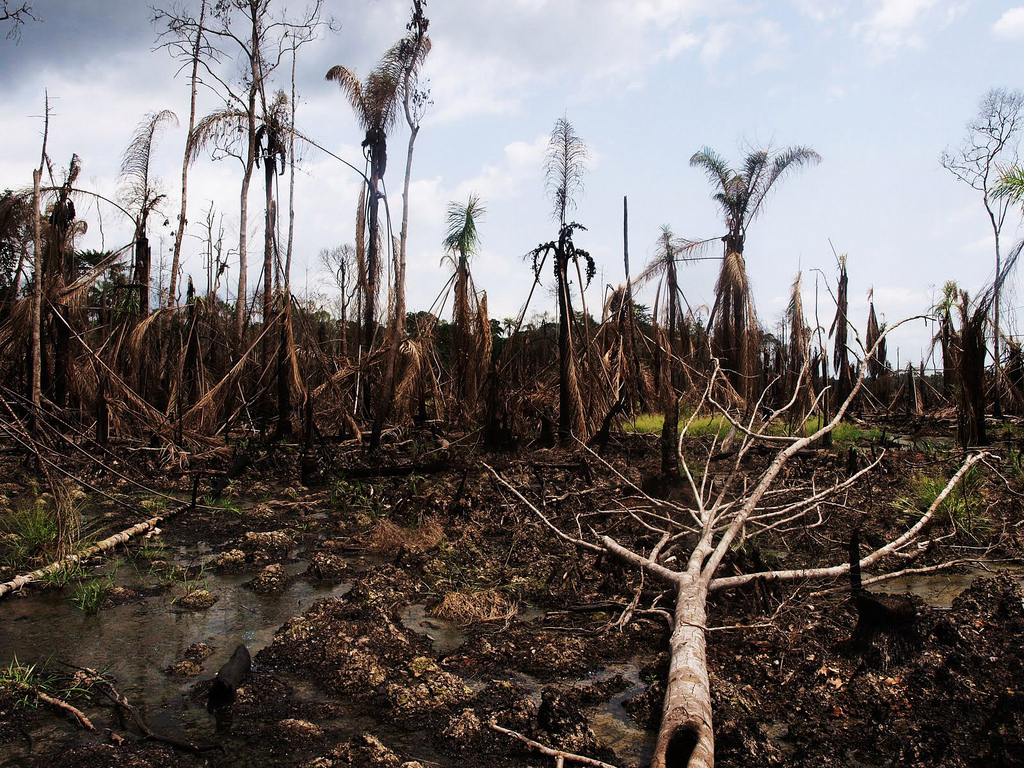
    Civil society groups are questioning the process being adopted by the federal authorities to remedy the sites of massive oil spillage in Ogoni, Rivers State, Nigeria.


    A group, Civil Society Legislative Advocacy Centre (CISLAC), said that the status of Hydrocarbon Pollution Remediation Project (HYPREP) in terms of its structure, independence, funding, effectiveness, capacity as well of perception of sluggishness due to bureaucracy, politicization, low responsiveness has affected the cleanup exercise.

    CISLAC holds that the exercise is now bugged with identity crisis, procedures, processes and overheads. Perception of corruption, lack of transparency and accountability, complex decision making, internal crisis of choice between Ogoni and the Niger Delta.

    Kolawole Banwo, programme manager for CISLAC who provided an overview of the UNEP report on Ogoniland at an interaction in Lagos, that HYPREP is now seen as a HY-BRID, made up a project and agency, rather than a specific programme for the Ogoniland clean up. He also noted lack of no sequence of action and prioritization of activities and cost management as well as adherence to original in the process.

    The United Nations Environment Programme (UNEP) released its Environmental Assessment of Ogoniland in August 2011 after series of protests of oil spillage in the community that culminated to the death of Ken Sarowiwa and eight others.

    The report commissioned by Federal Government of Nigeria, made recommendations to the government, the oil and gas industry and communities to begin a comprehensive cleanup of Ogoniland, restore polluted environments and put an end to all forms of ongoing oil contamination in the region

    Findings in the Report underline that there are, in a significant number of locations, serious threats to human health from contaminated drinking water to concern over the viability and productivity of ecosystems.

    In addition that pollution has perhaps gone further and penetrated deeper than many may have previously supposed. Pollution of soil by petroleum hydrocarbons in Ogoniland is extensive in land areas, sediments and swampland.

    In 49 cases, UNEP observed hydrocarbons in soil at depths of at least 5 metres. At 41 sites, the hydrocarbon pollution has reached the groundwater at levels in excess of the Nigerian standards permitted by National Laws at Nisisioken Ogale, in Eleme LGA, close to a NNPC product pipeline where an 8 cm layer of refined oil was observed floating on the groundwater, which serves the community wells.

    Banwo said that the fatalities occasioned by pollution in Niger Delta, particularly Ogoni had called for serious attention to save lives and property.According to him, there is need to re-visit, and where necessary remediate identified sites.“We are already eight years behind after the report itself was first launched in 2011 and 63 years late after the first oil spill happened in Oloibiri in 1953.

    “The Federal Government flagged off the remediation of contaminated sites in Ogoni Land in 2016.“But since then, not much has been done in that direction. The wellbeing of the people in Ogoni and the Niger Delta at large is to say the least pathetic.“Life expectancy has dropped to 40, livelihoods destroyed, inhabitants consume contaminated water 900 times above the World Health Organisation (WHO) standards.

    “Festival of funerals in the region has become very worrisome, all due to pollution and exposure to environmental hazards.“This calls for the urgent need to review the remediation techniques, repair, maintain and decommission non-producing facilities.“The duty of care point of view upon which the emergency measures are based imposes not just a moral but a legal obligation to prevent harm or compensate victims.

    “The 25-year long journey and struggle for the clean up of Ogoniland and the Niger Delta Region is a challenge to our shred humanity.
    “It is about the lives of real people whose only offence is that petroleum resources which drives our economy are found in their land. We must keep asking right questions, applying the right pressure and speaking out.

    “With the professionalism, courage and persistence of the press we will achieve more and faster. We must do more to get our government to Clean Up Ogoni now”, he said.

    Also the Programme Manager, Defence and Security of CISLAC, Mr. Salaudeen Hashim, attributed the slow pace of cleanup and remedial exercise at Ogoni Land to weak institutional and regulatory framework.Hashim said that companies’ collusion, bad governance and corruption were factors, which needed to be addressed to record significant result from the situation in Ogoni. He urged the government to intensify more efforts in ensuring effective institutional and regulatory framework for the region.

    Hashim enjoined the Ogoni communities to take proactive stance against theft and illegal refining.He said: “The Ogoni Community is exposed to petroleum hydrocarbons in outdoor air and drinking water, sometimes at elevated concentrations.

    “Hydrocarbon contamination is found in water taken from 28 wells at 10 communities adjacent to contaminated sites; and without an adequate regulation framework in tackling the menace, it will continue to multiply”, he added.