Category: Environments

  • WATER, FCPF others move to save Cross River forest

    WATER, FCPF others move to save Cross River forest

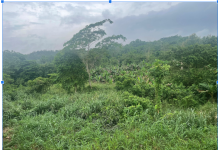
    A non-governmental organization, Wise Administration of Terrestrial Environment (WATER) has organised an “institutional capacity building workshop to check the massive degrading of rainforest in Cross River state.

    The event funded by the Forest Carbon Partnership Facility (FCPF) through the Kenyan based Mainyoito Pastoralist Integrated Development Organisation (MPIDO), was meant to x-ray the participation of communities in REDD+ (Reducing emissions from deforestation and forest degradation) and to seek ways of improve the processes leading to meaningful participation in forest preservation.

    WATER Programme Coordinator, Chief Edwin Ogar said the capacity training programme with participants drawn from different communities and organisations in the state, was aimed at identifying the gaps in terms of government, Private sector and NGOs working together with communities. The programme , he stressed was also meant to identify ways to improve the collaboration as forest communities in the state are still far from what is obtainable elsewhere in the world in terms of participation by local communities in development and forest management.

    Ogar said only one community is doing something unique to protect her forest with support from outside while the rest of the communities are lagging far behind.

    According to him, unknown timber merchants for some time are entering the forests in Boki and Akamkpa axis and tearing away the Afi River Forest Reserve (ARFR) in Abo Ogbagante village which is an important corridor linking the Afi Mountain Wildlife Sanctuary to the Mbe Mountains and the Okwango Division of Cross River National Park.

    The capacity training programme, he said is basically is to enable the participants identify those gaps and proffer solutions so that we send those information for WATER partners to use as a tool to ensure that things are done properly here in Nigeria” in terms of forest protection.

    Delivering a lecture at the training programme, the Engagement and management Specialist for Reducing emissions from deforestation and forest degradation (REDD+) in Cross River state, Mr. Tony Attah said REDD+ is disturbed with the alarming rate of deforestation following the introduction of forest moratorium in the state.

    He stressed that over 140,000 hectares of forest were lost between 2007 and 2014, hence REDD+ readiness to sign in the state and stakeholders strategy developed to safeguard the forest level emission and measurement reporting for verification with over $800,000 put into it.

    As a follow up, Attah stated that over $300,000 will be released by REDD+ to develop an investment plan by ensuring that there is effective participation in forest protection and development of community based projects between now and 2020.

  • Ogoni cleanup: Group frowns at quality of HYPREP’s work

    Ogoni cleanup: Group frowns at quality of HYPREP’s work

    A civil society organisation, the Social Development Integrated Centre (Social Action) has expressed its reservation about contractors and the quality work by the Hydrocarbon Pollution Remediation Project (HYPREP) for the clean-up of the polluted Ogoni environment in Rivers State. The group specifically questioned the identity of the 21 companies that were given contracts for the clean up by HYPREP.

    Social Action expressed its concerns in a letter addressed to the HYPREP Coordinator, Dr. Mavin Dekil, requesting to see the list of the contractors, with their lots, job types and specifications.

    The letter which invokes the provisions of the Freedom of Information (FOI) Act, also requested for details on the emergency measures, including livelihood projects so far provided by HYPREP for the Ogoni clean-up project in line with the 2011 UNEP Report.


    “Permit us therefore Sir, to please request, in line with the provisions of the Freedom of Information Act of 2001, that you kindly avail us with the following information on and around the clean-up/ remediation processes in Ogoni,” the letter dated June 10, 2019 and signed by the Social Action’s Head, National Advocacy Centre, Vivian Belonwu-Okafor, requested.

    “Ogoni Clean-up implementation framework (timetable) showing activities’ schedule (inception to date, and in-view). List of the 21 companies so far awarded the Ogoni clean-up contract jobs, indicating their lots, job types, specifications, etc.

    “Details on the emergency measures (including the livelihood projects) so far done towards the clean-up, so far provided by HYPREP in line with the 2001 UNEP Report.

    “The requested information would provide us better clarity and insight into the activities of your body and strengthen is further as a CSO (Civil Society Organization) working with communities towards both the desired outcomes of your work (clean-up exercise) and the well-being of communities and it’s inhabitants.”

    Also speaking with newsmen on Monday in Port Harcourt, Bellonwu, said the group would go to Court if HYPREP does not respond to its requests within the stipulated time.

    She said while the government’s intention in establishing HYPREP could be noble, a number of the steps and activities around the report implementation have not helped to shore up citizens’ confidence in the process.

    Belonwu-Okafor also expressed serious concern over the slow pace of implementation of the clean-up process. She added during the discussion that that steps taken by HYPREP were not encouraging, insisting that the organisation must include all stakeholders in the activities to ensure transparency and accountability.

    She pointed out that despite attempts by governments to clean-up, and indeed, remediate the polluted Ogoni environment in line with the UNEP report recommendations, the HYPREP leadership appears to be sabotaging the efforts of governments and betraying the confidence of the people of Ogoni.


  • Ogoni cleanup: Remediation commences in 16 sites says Zarma

    Ogoni cleanup: Remediation commences in 16 sites says Zarma

    The Federal Government of Nigeria says it has commenced remediation exercise in 16 sites affected by oil pollution, across the four local government areas in Ogoniland. The immediate past minister of environment, Suleiman Hassan Zarma, made the announcement on behalf of the Federal Government in Abuja during his valedictory press briefing and presentation of the ministry’s four-year achievement.

    In 2016, President Muhammadu Buhari launched the clean up of Ogoniland as recommended by United Nations Environment Programme (UNEP), resulting in the set up of a new Hydrocarbon Pollution Remediation Project (HYPREP).  

    According to Zarma, that federal government handed over the clean-up of additional five sites to contractors approved by the Federal Executive Council (FEC) last month.

    Sulaiman Hassan Zarma

    He said that federal government started sensitisation and engagement of communities and stakeholders in all the local government areas since 2016 and that over 21,000 patients were treated through community health outreaches.

    “Scooping/delineating of phase 1 remediation sites are ongoing while procurement for phase II remediation have fully commenced,” he noted.

    While stating that water facility inventory, sampling and surveys were ongoing in partnership with RSG, he pointed out that the process of rehabilitation of existing water facilities has commenced in Ogoni land.  

    He described the flag-off of the Ogoniland clean-up exercise as unprecedented feat that heralds President Buhari’s  determination to restore and maintain the ecosystem, ecological process and preserve biodiversity in Nigeria.

    Zarma hinted that NESREA has issued about 804 air quality, waste and toxic substances permit as well as 14 eco-guard certificate to various industries and facilities. He disclosed that the agency developed one additional regulation on healthcare waste control which has been transmitted to the Federal Ministry of Justice and gazetted as a national environmental regulation. The minister disclosed that PMB – led administration under the ‘Change’ mantra has recorded significant progress in securing a quality and conducive environment by promoting the sustainable use of natural resources, likewise in the development of programmes that affect the environment.  

    He stated that Nigeria was championing the fight against illegal wildlife trade in the West African region, a situation that led  to the development of a West African Strategy on Combating Wildlife Crimes (WASCWC). According to Zarma, this would be presented at the Conference of Parties (COP) 18 of Convention on International Trade in Endangered Species of Wildlife Flora and Fauna (CITES).

    Zarma added that the ministry has developed National Forest Investment Programme (NFIP), expected to run from 2019 to 2023, adding that CITES has consistently served as key revenue earner for government. On the activities of Forestry Research Institute of Nigeria (FRIN), he emphasised that about 10 indigenous tree species were planted on 834.6 hectares of land in 2018 through the National Afforestation Project (NAP). He pointed out that the institute has commenced research into biotechnological approach to mass production and multiplication of endangered and economic tree plant.

    He revealed that the National Oil Spill Detection and Response Agency (NOSDRA) has embarked on routine review and activation of the National Oil Spill Contingency Plan (NOSCP), Regional Oil Spill Contingency Plan (ROSCP) and Facility’s Oil Spill Contingency Plan (OSCP). He said that NOSDRA’s laboratories were currently renovated for effective regulation and certification of polluted sites.    

    The minister informed the gathering that the National Agency for the Great Green Wall (NAGGW) had produced 4,145,070m assorted forest and fruit tree seedlings for various afforestation, land rehabilitation and restoration projects in the front line states. Great Green Wall is an African Union Initiative covering 11 frontline states of Borno, Yobe, Adamawa, Bauch, Gombe, Jigawa, Kano, Katsina, Zamfara, Sokoto and Kebbi, with focus on afforestation and land restoration.

    While stating that NAGGW established  389.96km shelterbelt and 293ha community woodlots, he said it developed a robust framework for the promotion of alternative livelihoods in the frontline states, expected to serve as incentive for community ownership of afforested land. He disclosed that Nigeria Erosion and Watershed Management Project (NEWMAP) supported the development of a framework for adoption of Liquefied Petroleum Gas (LPG) as low carbon alternative to firewood and kerosene. This was aimed at reducing environmental pollution from use of kerosene, likewise to curtail felling of trees used as firewood, noting that NEWMAP started with six participating states at inception and has extended to 21 participating states, Zarma said.

    The NEWMAP is a World Bank-assisted project aimed at addressing gully erosion crisis in the south-east and land degradation in the north.

    Also speaking at the event, the permanent secretary in the ministry, Mrs Ibukun Odusote, commended Zarma for securing notable accomplishments in climate change issues, including improved access to Global Environmental Facility (GEF), the issuance of Sovereign Green Bond and among others.

    She stated that the minister also initiated various environmental policies and programmes targeted at addressing environmental pollution, land degradation, biodiversity and efficient framework for the effective management of the environment. Odusote commended Zarma for addressing various ecological challenges facing different parts of the nation as well as his commitment towards ensuring the establishment of shelterbelts across the country to protect desert encroachment and desertification.

  • Ecotourism company announces cut in plastic use

    Ecotourism company announces cut in plastic use

    Wilderness Safaris, an ecotourism company with headquarters in Gaborone, Botswana has announced its plan to eliminate single-use plastics in its operations in Namibia, Zambia and Zimbabwe by providing reusable bottles for guests.

    The company made the announcement on Monday, saying it is in line with the environmental action it took in Botswana and in Rwanda. The company has camps and mobile safaris across eight African countries.

    According to the company’s Group Sustainability Coordinator Warren Ozorio, decreasing the use of plastic remains a priority, especially plastic bottles.

    “Wilderness Safari is also currently paying attention to food waste in our kitchens, and making efforts to produce smart and sustainable menus,” Ozorio added.

    The project not only reduces wastes, but also addresses immense logistical challenges in areas where Wilderness Safaris camps are located, the sustainability coordinator said.

    He also said the company’s ultimate goal is to become completely plastic-free in all its operations.

    “Even though our official campaign was launched in 2018, Wilderness Safaris has been working on waste reduction since we began operating back in the 1980s, and while the reduction of plastic is our main objective – with recycling as a last resort – we are currently also paying attention to food waste in our kitchens, and making efforts to produce smart and sustainable menus. Our ultimate goal is to become completely plastic-free in all our regions”, confirms Ozorio.

  • Minister, others visit UK over Ogoni clean up

    Minister, others visit UK over Ogoni clean up

    Nigeria’s minister of environment, Suleiman Hassan Zarma and other senior government officials are on a working visit to the United Kingdom for the successful clean-up of Ogoni oil spill.

    It was gathered that the trip was facilitated by the United Nation Environment Programme (UNEP) to enable the delegates to understand global best practices in the remediation of other sites contaminated by oil pollution across the country.

    Minister of Environment, Suleiman Hassan Zarma

    Members of the governing council of Hydrocarbon Pollution and Remediation Project (HYPREP) who are part of the tour are expected to visit five sites in the United Kingdom — Biogénie’s Trecatti and Redhill soil treatment facilities in South Wales and South East England respectively, the Coed Darcy regeneration project in South Wales, the former Avenue Coking Works in the East Midlands, and ALS Laboratories in North West England.

    The sites would provide an opportunity for HYPREP’s governing council to witness the redeveloped land.  Around three-quarters of the site were restored for open space, community and ecological uses, while the remaining areas were used for residential and commercial purposes.

    According to a statement signed by the ministry’s director of press, Mr Saghir Mohammed, the visit would also enable the delegates to observe an extensive range of in-situ and ex-situ remediation techniques, such as soil washing, bioremediation, thermal desorption, separating techniques, and among others.

    It was envisaged that these demonstrations and visits would build HYPREP’s capacity to reuse and recycle many sites and worn-out materials, thereby contributing to the sustainability of the clean-up exercise.

    ” The delegates, expected to visit the Chester laboratory in north-west England would focus on quality, accreditation, sample preparation, analysis of petroleum hydrocarbons, reporting, and interpretation of analysis,” Mohammed’s statement revealed.

    During the tour, they are expected to identify the aspects that could be replicated in Nigeria in order to increase the overall quality of indigenous laboratories.

    UNEP’s 2011 assessment of Ogoniland revealed that bringing back important ecosystems to full productive health could take up to 30 years. The report had recommended that a $1 billion should be set aside for the first five years of remediation activities. Upon completion, the clean-up of Ogoniland could serve as a model for replication in both Nigeria and the region.

    Experts had stated that the restoration of Ogoniland initiated by the federal government could prove to be the world’s most complex and longest oil clean-up exercise ever undertaken. This is why UNEP in its 2011 assessment report highlighted the severe and widespread contamination due to oil production spanning several decades.

  • Lake Chad Basin gets massive attention at UN General Assembly

    Lake Chad Basin gets massive attention at UN General Assembly

    The raising of international awareness on the Lake Chad Basin and efforts of Nigeria to promote sustainable development, peace and security is a major issue to be discussed during the visit of Ms María Espinosa, President of the United Nations General Assembly.

    She is due to be in Nigeria on Monday on the invitation of the Nigerian Government to strengthen bilateral relations between Nigeria and the United Nations.

    Mr Oluseyi Soremekun, the spokesperson, United Nations Information Centre said on Sunday in Lagos.

    Soremekun said that during her mission, she will further discuss the priorities of the UN General Assembly as related to women and youth empowerment, raise awareness and encourage understanding of the importance of multilateralism and the UN.

    “While in Nigeria, the President of the UN General Assembly will have bilateral meetings with President Muhammadu Buhari, and Minister of Foreign Affairs, Geoffrey Onyeama.

    “She will also engage with students and youths on the theme: Responding to Global Challenges in a fast-Changing World: The Case for Strengthening Multilateralism”.

    “Espinosa will also discuss with a women audience on the theme: `The Role of Women in the Promotion of Multilateralism”.

    “She is scheduled to also meet with the Minister of Women Affairs and Social Development, Hajiya Aisha Abubakar,’’ Soremekun said.

    Soremekun said that Espinosa will be received at the Nnamdi Azikiwe International Airport Abuja, by a representative of the Nigerian Government and Mr Edward Kallon, United Nations Resident Coordinator in Nigeria.

    According to him, this was the second official visit of Espinosa, President of the 73rd Session of the UN General Assembly to the African region since taking over the presidency.

    He said that on June 5, 2018, the United Nations General Assembly elected Espinosa who was then Ecuadorean Foreign Minister as President, the fourth woman to hold that position and the first since 2006.

    Somerekun disclosed that she has more than 20 years of multilateral experience in international negotiations, peace, security, defence, disarmament, human rights, indigenous peoples, gender equality, sustainable development environment, biodiversity, climate change and multilateral cooperation.

  • New consortium to reduce environmental footprint of rice production

    New consortium to reduce environmental footprint of rice production

    A new global consortium, the Sustainable Rice Landscapes Initiative, will bring together expertise from international organizations, research institutions and business groups with significant market influence to tackle the enormous environmental footprint of rice production, members of the partnership announced today.

    The new consortium will introduce sustainable approaches to farming practices, incentivise production and demand for sustainable rice with market-based instruments, deliver policy support to governments, and improve knowledge sharing and collaboration on sustainable rice solutions.

    Rice is a leading cause, as well as a victim, of climate change, and its production impacts many natural systems. Rice is responsible for about the same greenhouse gas emissions as Germany, particularly from methane, which is emitted from rotting vegetation in inundated paddy fields.

    At the same time, rice yields and nutritional values are significantly reduced by rising temperatures, and production must increase by 25% by 2050 to meet global demand.

    Practices such as removing rice straw can reduce methane emissions by up to 70%, but farmers currently lack awareness, training, policy and market support.

    The founding members of the Sustainable Rice Landscapes Initiative represent the range of partners needed to make these practices commonplace, namely UN Environment, the Food and Agriculture Organization, the Sustainable Rice Platform, the World Business Council for Sustainable Development, the International Rice Research Institute and the German Agency for International Cooperation (GIZ).

    “UN Environment is proud to be a member of the Sustainable Rice Landscapes Consortium. Sustainable rice production is one remedy that can fix a host of issues,” said Dechen Tsering, Regional Director of UN Environment’s Asia and the Pacific Office. “It can help us fight climate change, protect biodiversity and restore landscapes and simultaneously safeguard rice farming communities and the billions of people that rely on them.”

    The Initiative is particularly targeting a number of Asian countries, where rice is one of the most important crops and the economic backbone for millions of farmers, and will seek changes in national policy, farming practices, and improvements in the supply chain. To achieve scale, the Initiative is calling upon governments and international funding bodies to support their efforts.

  • Women cry out over diseases in Ogoni land

    Women cry out over diseases in Ogoni land

    Ogoni land women leaders in Rivers State have said the activities of the Hydrocarbon Pollution Remediation Project (HYPREP) has resulted in high level of diseases in their land instead of alleviating the problem.

    The women made the revelation at a one-day media interactive session on the implementation of the United Nations Environment Programme (UNEP) report on the emergency measures at Kebetkache Women Development and Resource Centre in Port Harcourt.

    According to the Ogoni women leaders, HYPREP has not provided potable water and health initiatives even after it was reported as an emergency measure by UNEP.

    The representative of Kegbara Dere community, Gokana Local Government Area, lamented the bad state of the community, saying women suffered the most.

    “My community has 56 oil wells and so the pollution level is high. However, HYPREP’s effort to clean up the land is not going well because it did not provide the emergency measures needed, especially for the safety of women,” she said.

    She added that women are exposed to a higher risk of diseases like
    heart attacks, breast cancer, skin diseases, tuberculosis, leading to premature death because they are the ones who use water the most.

    “When the provision of health care, food, and good water was mentioned we were happy, but now the promises have gone with the wind. We don’t understand why they would jump the most important issue that has to do with health and good water supply,” the representative added.

    “We have not seen anything that shows that the clean up is on. Whenever they visit, it is to meet with the chiefs and elders and they cover their eyes with money.

    “We bury our children and relatives daily, and if anyone becomes pregnant, you automatically become a prayer warrior until the person puts to bed. HYPREP is not doing anything to save Ogoni Land; they are not concerned about the people’s health, but only interested in what they will gain.”

    The representative of Kwawa community, Khana Local Government Area, Eucharia Brownson, doubted the existence of HYPREP because they have not seen anything to justify their presence in the community.

    “We have not even seen anyone from HYPREP before, it’s as if we do not exist, the suffering is too much,” she said.

    Responding to the women’s claims, HYPREP said that it was working towards providing potable water for the people while carrying out the clean-up of the Ogoniland.

    HYPREP Project Coordinator, Dr. Marvin Dekil, said during a radio program,
    View Point, on Rhythm 93.7 FM, that studies had been carried out towards ensuring the filtering and treating of water for the affected communities to drink.

    He explained that HYPREP was aware of the needs of the communities and that nothing would be left unaddressed.

    “As government, it means we must carry out necessary studies and also have the sort of capacity that will filter and treat the water as such that water going out to the public is of acceptable standard,” Dekil said.

    “That means that even the facilities as we currently have in place, we need to study them and look at the quality they generate and we need to apply the necessary treatment where applicable. This is what we have been doing over this period.”

    He noted that the companies on HYREP’s website are categorised into.

    “The ones that will do consultancy in relation to existing facilities, the ones that will provide consultancy in relation to putting in new water facilities and the ones that will install new facilities,” he said.

    “Now, we will also have to look at some projections beyond today so that we may be able to provide services that will give us water for today and for years to come.

    “Every contract has a serious component that deals with the young people as security within the community. A whole bulk of work we are doing has to do with training the scientists we have today. Over 90 per cent of Hydrocarbon Pollution Remediation Project’s scientists are indigenous Ogoni scientists.”

  • Group questions Nigerian Government over Ogoni cleanup process

    Group questions Nigerian Government over Ogoni cleanup process


    Civil society groups are questioning the process being adopted by the federal authorities to remedy the sites of massive oil spillage in Ogoni, Rivers State, Nigeria.


    A group, Civil Society Legislative Advocacy Centre (CISLAC), said that the status of Hydrocarbon Pollution Remediation Project (HYPREP) in terms of its structure, independence, funding, effectiveness, capacity as well of perception of sluggishness due to bureaucracy, politicization, low responsiveness has affected the cleanup exercise.

    CISLAC holds that the exercise is now bugged with identity crisis, procedures, processes and overheads. Perception of corruption, lack of transparency and accountability, complex decision making, internal crisis of choice between Ogoni and the Niger Delta.

    Kolawole Banwo, programme manager for CISLAC who provided an overview of the UNEP report on Ogoniland at an interaction in Lagos, that HYPREP is now seen as a HY-BRID, made up a project and agency, rather than a specific programme for the Ogoniland clean up. He also noted lack of no sequence of action and prioritization of activities and cost management as well as adherence to original in the process.

    The United Nations Environment Programme (UNEP) released its Environmental Assessment of Ogoniland in August 2011 after series of protests of oil spillage in the community that culminated to the death of Ken Sarowiwa and eight others.

    The report commissioned by Federal Government of Nigeria, made recommendations to the government, the oil and gas industry and communities to begin a comprehensive cleanup of Ogoniland, restore polluted environments and put an end to all forms of ongoing oil contamination in the region

    Findings in the Report underline that there are, in a significant number of locations, serious threats to human health from contaminated drinking water to concern over the viability and productivity of ecosystems.

    In addition that pollution has perhaps gone further and penetrated deeper than many may have previously supposed. Pollution of soil by petroleum hydrocarbons in Ogoniland is extensive in land areas, sediments and swampland.

    In 49 cases, UNEP observed hydrocarbons in soil at depths of at least 5 metres. At 41 sites, the hydrocarbon pollution has reached the groundwater at levels in excess of the Nigerian standards permitted by National Laws at Nisisioken Ogale, in Eleme LGA, close to a NNPC product pipeline where an 8 cm layer of refined oil was observed floating on the groundwater, which serves the community wells.

    Banwo said that the fatalities occasioned by pollution in Niger Delta, particularly Ogoni had called for serious attention to save lives and property.According to him, there is need to re-visit, and where necessary remediate identified sites.“We are already eight years behind after the report itself was first launched in 2011 and 63 years late after the first oil spill happened in Oloibiri in 1953.

    “The Federal Government flagged off the remediation of contaminated sites in Ogoni Land in 2016.“But since then, not much has been done in that direction. The wellbeing of the people in Ogoni and the Niger Delta at large is to say the least pathetic.“Life expectancy has dropped to 40, livelihoods destroyed, inhabitants consume contaminated water 900 times above the World Health Organisation (WHO) standards.

    “Festival of funerals in the region has become very worrisome, all due to pollution and exposure to environmental hazards.“This calls for the urgent need to review the remediation techniques, repair, maintain and decommission non-producing facilities.“The duty of care point of view upon which the emergency measures are based imposes not just a moral but a legal obligation to prevent harm or compensate victims.

    “The 25-year long journey and struggle for the clean up of Ogoniland and the Niger Delta Region is a challenge to our shred humanity.
    “It is about the lives of real people whose only offence is that petroleum resources which drives our economy are found in their land. We must keep asking right questions, applying the right pressure and speaking out.

    “With the professionalism, courage and persistence of the press we will achieve more and faster. We must do more to get our government to Clean Up Ogoni now”, he said.

    Also the Programme Manager, Defence and Security of CISLAC, Mr. Salaudeen Hashim, attributed the slow pace of cleanup and remedial exercise at Ogoni Land to weak institutional and regulatory framework.Hashim said that companies’ collusion, bad governance and corruption were factors, which needed to be addressed to record significant result from the situation in Ogoni. He urged the government to intensify more efforts in ensuring effective institutional and regulatory framework for the region.

    Hashim enjoined the Ogoni communities to take proactive stance against theft and illegal refining.He said: “The Ogoni Community is exposed to petroleum hydrocarbons in outdoor air and drinking water, sometimes at elevated concentrations.

    “Hydrocarbon contamination is found in water taken from 28 wells at 10 communities adjacent to contaminated sites; and without an adequate regulation framework in tackling the menace, it will continue to multiply”, he added.