Category: Featured

Featured posts

  • Celebrating conservation champions on IWD 2020

    Celebrating conservation champions on IWD 2020

    It is another March 8, the International Women’s Day, a time specially set aside to appreciate and celebrate women.

    This year’s theme is #EachforEqual and we are commemorating IWD 2020 by celebrating the achievements of three leading women in the field of conservation in Nigeria. These women have given voice to the voiceless flora and fauna of Nigeria. They deserve resounding ovation.

    Meet Rachel Ikemeh, Iroro Tanshi and Stella Egbe in our International Women’s Day special.

    Rachel Ashegbofe Ikemeh


    Rachel Ikemeh

    Rachel is the Project lead/founder of the SW/Niger Delta, a non-governmental organization pioneering conservation actions for a small but unique population of endangered chimpanzees in southwestern Nigeria and for critically endangered Niger Delta Red Colobus monkey across their range – another rare species of primates found only in Bayelsa State, Nigeria. The project’s efforts span over 5,000km2 of highly threatened forest landscape.

    Read Also: Experts make case for intensified effort in Cross River gorilla conservation

    Her contributions and commitments to primate conservation earned her a seat on the International Primatological Society (IPS) Conservation and Education committees. She is the Co-Vice Chair Africa section of the IUCN/SSC Primate Specialist Group and a member of the United Nations Commission on Sustainable Development (UNCSD) Education Caucus. She also co-led  the steering committee that founded the African Primatological Society (APS).

    Rachel is committed to all of these groups and always seeks ways to maximize her associations with these networks and explore opportunities for collaboration to promote African leadership an enhance primate conservation across board.

    the critically endangered Niger Delta Red Colobus monkey…
    Photo: Noel Rowe

    She is an alumni of the Durrell Institute of Conservation and Ecology (DICE), University of Kent, U.K where she studied for a degree in Conservation Project Management. She is a two-time nominee of the Future for Nature Awards and twice long-listed for the Whitley Awards also well-known as the ‘Green Oscars’. She recently became a National Geographic Explorer.

    For more than a decade she has worked in the Guinean Forests of West Africa which is home to over 2,200 unique plant and animal species.  The threatened primates on which she has focused serve as a reference point for the broader assemblage of threatened species and bolster her efforts to engage local communities in their protection.  Rachel offers an excellent example of how to combine a specialized education, training and field experience to serve as a conservation leader. Her purpose driven work provides critical link between the Nigerian government and the people sharing the habitat with some of the world’s most unique but threatened species.  

    Iroro Tanshi

    Iroro Tanshi

    Iroro Tanshi is an award-winning Nigerian bat ecologist and conservationist, whose interest spans research on landscape, community and population ecology of bats that generate evidence for conservation of threatened bat species. She is also passionate about raising the next generation of biologists and conservationists, while developing local infrastructure for research and conservation. 

    Read also: SaveTheVultures: They need all the help

    Her career spans more than a decade during which she has a track record of species protection, worked with policy makers and mentored budding conservationists. Iroro is a lecturer at the University of Benin. She is currently finishing a doctoral program at Texas tech University, Lubbock, USA, where she’s also a teaching assistant. She holds two Masters’ degrees in biodiversity and conservation from the University of Benin, and University of Leeds. As part of her efforts to conserve Nigerian bats and raise capacity of local conservation scientists, she co-founded a Nigerian based NGO – Small Mammal Conservation Organisation (SMACON). She is also a founding member and first co-Chair of Bat Conservation Africa (BCA) – a network of bat researchers and conservationists working to protect African bats. During her leadership of BCA, she helped fund raise to support researchers and institutions with important library resources and organized a workshop to train budding scientists on important bat research skills. Iroro initiated the Bats of Nigeria Project and is a strong critic against wide spread misconduct and sub-par research in Nigerian science.


    Iroro initiated the Bats of Nigeria Project and is a strong critic against wide spread misconduct and sub-par research in Nigerian science.

    Iroro is currently working on conserving foraging habitat and roosting caves of the range-restricted endangered Short tailed roundleaf nosed bat, Hipposideros curtus. The major threats to the species are habitat loss from wildfires and cave disturbance from fruit bat hunting, which in addition to declining population is driving the species to the brink of extinction. The key strategy to reducing these threats to this species is working with local farmers and fruit bat hunters, through collaborating with other NGOs and relevant government agencies.

    Stella Egbe

    Stella Egbe

    Stella is a conservation biologist who has worked extensively on maintenance of habitat integrity to avoid loss of biodiversity which — if it happens — would be detrimental to man and wildlife. She holds strongly that continuous research is the key to understanding the landscape and land use interactions which will provide basic knowledge for sustainable habitat use.

    Read also: APLORI trains young scientists on field ornithology, biostatistics, others

    Balancing the needs of humans while maintaining ecosystem quality in Nigeria is what has kept her forging ahead in the field of conservation. Stella holds strongly that mitigating negative anthropogenic activities, while learning and enjoying all that nature has to offer is a key conservation strategy that should be embedded in the hearts. Stella loves helping new conservationists with fundamentals of field work.

    Stella loves helping new conservationists with fundamentals of field work.
    Photo: birdlife.org

    She has carried out her research at the Afi Mountains and Wildlife Sanctuary, looking at the effects of activities on forest edges using birds as indicators. She has also collaborated on projects with the Royal Society for the Protection of Birds (RSPD), Nigerian Conservation Society (NCF), A. P Leventis Ornithological Institute (APLORI) and so on.

  • Conservation experts task Ogun community on elephant protection

    Conservation experts task Ogun community on elephant protection

    Many trees depend on the elephants’ digestive system for their seeds to be effectively propagated and if elephants become extinct, such trees would be prone to extinction. When the forest elephants eat the fruits of certain trees, they break the dormancy of the seeds and when they are excreted, the dispersed seeds germinate and sprout from the dung, giving hope for to combat climate change. 

    READ ALSO: Overgrazing, others threaten Hadejia Nguru Wetlands – NCF

    These are some of the revelations made on Monday by conservation experts at one of their community sensitisation programmes on the need to protect elephants in what is left of their natural home range in Nigeria. 

    The experts, from the Nigerian Conservation Foundation’s Forest Elephant Initiative and Rufford Foundation’s Elephant Conservation and Awareness Project, pointed out that the animals’ intelligence enables them to remember previous encounters with humans and to determine a course of action.

    READ ALSO: How baby elephant strayed, died in Okomu

    Speaking at Atikiriji Odo, a community in the boundary area of Omo Forest, Ogun State, Dr. Tajudeen Amusa, from the Department of Forest Resources Management, University of Ilorin, helped the community to appreciate the importance of the forest, the role of wildlife, especially forest elephants in maintaining the health of forest and how to live in peaceful coexistence with nature.

    Dr. Amusa who has studied elephants throughout Nigeria for more than seven years highlighted the consequences of encroaching into the elephants’ territories, reminding the community that it is a criminal offence to kill elephants since they are protected by both local and international laws.


    https://www.instagram.com/p/B5JIHydnCih/?igshid=1enmbac2gur4k

    “The forest elephant is vulnerable to extinction and so, it is hard to kill it and escape dire consequences and punishment from the government,” he said.

    He added that planting red pepper around their crops will help protect it from raiding by elephants.

    Responding, Baale Atikiriji Odo, Afisu Busari, the Community leader thanked the experts for the initiative. He expressed appreciation to the team for travelling through difficult terrain to reach them with the crucial information and urged them to keep the good work up. The outreach was supported by Nigeria Conservation Foundation (NCF), Wild Planet Trust, Elephant Crisis Fund, Rufford Foundation among others.

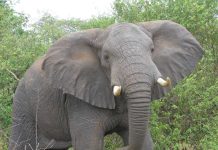
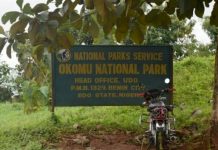
    According to recent estimates, there are less than 1000 individuals elephants of two different species — the forest elephant and the savannah elephants — in Nigeria. About 350 savannah elephants reside in the Yankari Game Reserve, while a viable population of less than 100 forest elephants reside in Omo Forest Reserve. Others are found in Kamuku Park, Okomu National Park and Osse River Park. 

  • Stepping Up Climate Action for a Resilient Africa

    Stepping Up Climate Action for a Resilient Africa

    Nisreen Eslaim, a young woman from Sudan who actively participated in the Peoples’ Revolution which triumphed over a 30-year autocracy, shares a devastating story that is phenomenon turning more challenging than winning the democratic struggle.

    People in her country are faced by another catastrophic ecological crisis of monumental proportion, which has already killed over 60 people and destroyed 37,000 homes.

    Nisreen is now very worried that though the people had capacity to mobilize themselves to rise against tyranny, their capacity to defeat the weather-inspired floods, which have become frequent, is diminished.

    She wonders why the “Loss and Damage” framework she has heard in UNFCCC Negotiations has not helped her people.

    “These are just some of the voices from people, generally fatigued by endless negotiations, conferences and declarations which end up gathering dust on the shelves of our ministries as the inaction on climate change, from national to international level, lingers across the board,” said Mithika Mwenda, Executive Director of the Pan African Climate Justice Alliance (PACJA).

    Such concerns are being raised at yet another Conference on Climate and Development in Africa (CCDA-VIII), holding in Addis Ababa, Ethiopia, on the theme: “Stepping Up Climate Action for a Resilient Africa: a Race We Can and Must Win”.

    “Do we need to be meeting year after year, making declarations which we do not honour?” Mithika quizzed, while re-echoing the request of the UN Secretary General for leaders to talk less and limit themselves to concrete actions they can take to address climate change.

    The action portfolios include the mobilization of public and private sources of finance to drive decarbonisation of all priority sectors and advance resilience; accelerate the shift away from fossil fuels and towards renewable energy; reducing emissions; advancing mitigation and resilience at urban and local levels; and advancing global efforts to address and manage the impacts and risks of climate change, particularly in those communities and nations most vulnerable.

    The vulnerability of the African continent to the effects of climate change is no longer in doubt, with cyclones, floods, mudslides, massive erosions and drought all affecting masses within the continent.

    Some of these effects of climate change can directly be linked to conflict, displacements, deaths, reduced agricultural activities and disease, all which have direct impact on economies of each nation.

    According to Ahmed Shehu, Regional Coordinator of the Civil Society Network of Lake Chad Basin, over 30,000 people have lost their means of livelihood to climate change which affected the Lake Chad Basin.

    He says the water at the Lake Chad had been shrinking daily and over 70 million people who relied on it for their livelihood were being affected and at the risk of also losing their means of livelihood.

    “And the insurgency contributed to it because people can no longer have access to the water because of trans-border issues, and it is causing drought, feminine and desertification,” he said.

    With the recent climate impacts of Cyclone Idai and Kenneth in Mozambique, Malawi, Tanzania and Zimbabwe, droughts and floods in KwaZulu-Natal and Eastern Cape; it is obvious that many African countries are just a step away to a natural disaster of sinking into a circle of poverty and prolonged lack of social and economic opportunities caused by the effects of climate change.

    “We challenge our leaders to walk the talk, and lead from the front,” said Mithika, in furtherance of the quest to step up climate action for a resilient Africa, and indeed globally, and to win the race.

    PACJA has worked with the Pan African Parliament to advance cooperation, which has crystalized into the African Climate Legislation Initiative (ACLI), an innovative and unique arrangement for the African context. This will enable African civil society and governments to work jointly to pursue shared vision of responsiveness to the health of the planet and the concerns of future generations.

    “We as the civil society reaffirm our commitment to work with all Actors, as long as this aligns with the aspirations and expectations of Africa’s people. In all successive negotiation outcomes,

    Africa has lost due to our inability to stand firm, and due to our susceptibility to forces of manipulation, intimidation and carrot-dangling,” said Mithika.

    The vulnerable people on the African continent can only keep hoping that the unity of purpose that brings climate actors to CCDA will contribute to a process which will shape the future of humanity and health of the planet.

  • APLORI trains young scientists on field ornithology, biostatistics, others

    APLORI trains young scientists on field ornithology, biostatistics, others

    Promoting citizen science is a rising global trend aimed at bridging the gap in environmental conservation. It is with this objective that the A. P Leventis Ornithological Research Institute (APLORI) through the Nigerian Bird Atlas Project (NiBAP) organised a one month Introductory Ornithology course in both Yankari Game Reserve, Bauchi state and Leventis farms, Weppa, Agenebode, Edo state.

    This training was funded by National Geographic Society Grants, a total of 30 scientists (15 in Yankari and 15 in Weppa) from different parts of the country were trained in Field Ornithology, Introductory biostatistics (R statistical package), data collection and General Ecology.

    The 26-day-training held in July was facilitated by professionals in the field from different parts of the country. Trainees carried out mini projects as a first-hand practice of all they had learnt during the course.

    The expected outcome for the participants was a replication of these experiences in their local communities and this has been achieved with records of Bird clubs springing up across the nation in the last month.

    These efforts are also contributing to the Nigerian Bird Atlas data which is a long-term project aimed at monitoring bird population in Nigeria.

  • WCS celebrates four years of zero elephant poaching in Yankari

    WCS celebrates four years of zero elephant poaching in Yankari

    Yankari Game Reserve, home to Nigeria’s largest remaining elephant population, has experienced zero poaching in the last four years, the Wildlife Conservation Society (WCS) has reported.

    The announcement was made just days before officials gather for the meeting of CITES, the Convention on International Trade in Endangered Species. The success underscores the importance of tightening up the closure of importing countries’ domestic ivory markets, along with vigilant anti-poaching and anti-trafficking efforts.

    WCS, which helps manage the protected area, attributes the success to well-managed, well-equipped and highly trained rangers who patrol the 866 square miles (2,244 square kilometers) reserve, which also supports important populations of lion, buffalo, hippo, roan and hartebeest.

    READ ALSO: World Rangers Day 2019 in Omo

    Yankari’s elephant population remains stable at 100-150 individuals, and is expected to grow in the coming years if conservationists remain steadfast in keeping poachers out of the reserve. As recently as 2006 there were as many as 350 elephants in Yankari, but a period of heavy poaching from 2006 to 2014 reduced their numbers dramatically. Since 2014 Yankari has been managed through a co-management agreement between Bauchi State Government and WCS.

    Yankari’s elephant population remains stable at 100-150 individuals
    photo: WCS Nigeria

    Elephants are critically endangered in Nigeria, with the Yankari elephants being the only savanna elephants remaining in the country. Some forest elephants also still remain in low numbers in the forested south including Cross River National Park area (where WCS is also working to secure forest elephants and the Cross River Gorilla). Historically the Yankari savanna elephants may have been ecologically connected with the Sambisa area (impacted by Boko Haram) and perhaps also Gashaka Gumti National Park and neighboring areas of Cameroon. This is a core critical area for elephant conservation in the Sudano-Sahel Region.

    READ ALSO: Ogun elephant video: No one was injured, says expert

    Originally created as a game reserve in 1956, Yankari was upgraded to a national park in 1991. It was managed by the National Parks Service until 2006 when responsibility for the management of the reserve was handed back to Bauchi State Government. Since then tourism infrastructure has been dramatically improved. Yankari is now one of the most popular tourism destinations in Nigeria.

    “Rangers are the key to stopping poaching in protected areas” said Andrew Dunn,WCS Nigeria Program Director “Yankari is an amazing success story and shows the world that with targeted use of limited funds, and government commitment, progress can still be made provided that rangers are properly trained and supervised.”

    Rangers are the key to stopping poaching in protected areas
    photo: Natalie Ingel/WCS Nigeria
     

    Dunn attributes the success in the reserve to several factors. The leadership of Nachamada Geoffrey, Director of the Yankari Landscape for WCS, directs efforts to ensure a zero tolerance policy for corruption coupled with making sure all rangers are well-equipped in the field and trained with regular refresher courses. SMART (Spatial Monitoring and Supporting Tool) together with real time radio communications is used help guide and monitor the rangers and optimize their impact.WCS supplements rangers’ incomes with additional monies per night as an incentive whenever they are on a long-distance foot patrol.

    Nachamada Geoffrey stated, “Solid logistical support (food rations), equipment, and motivation through regular salary payments support our ranger operations day in and day out. Most of the rangers are recruited from the local community and are highly motivated to protect the wildlife of Yankari.”

    David Adejo Andrew of Nigeria’s Federal Department of Forestry and Federal Ministry of Environment also commended WCS’s efforts.

    “The efforts of the WCS in conserving the largest pool of elephant populations at the Yankari Game Reserve has given Nigeria a good platform for conserving other Elephant population in the country. This has encouraged the Nigerian Government to work with the WCS to translate this success stories to other areas,” he said.

    The future outlook

    Of course in the long-term Yankari will only survive if it has the support of the surrounding communities. Yankari is one of the main sources of employment locally, including both rangers, hotel staff and elephant guardians. WCS is also working with local schools to help develop future conservation leaders. In addition, WCS has helped establish an informant network among the communities surrounding the reserve that provides critical information on poachers.

    Building on this foundation and work ethic, significantly more resources are urgently needed to fully establish the Reserves full management systems and effectiveness.

    WCS’s conservation efforts within Yankari are supported by the Bauchi State Government, United States Fish and Wildlife Service, Embassy of France in Nigeria, Australian High Commission in Nigeria, Tusk Trust, the North Carolina Zoological Society, Omaha’s Henry Doorly Zoo and Aquarium, CITES-MIKE, the UNEP African Elephant Fund, the A.P. Leventis Conservation Foundation, the Lion Recovery Fund—an initiative of the Wildlife Conservation Network in partnership with the Leonardo DiCaprio Foundation, and the Elephant Crisis Fund—a joint initiative between Save The Elephants and the Wildlife Conservation Network, in partnership with the Leonardo DiCaprio Foundation.

  • World Rangers Day 2019 in Omo

    World Rangers Day 2019 in Omo

    On Wednesday 31st July, 2019, millions of people worldwide joined in celebrating rangers. Many organised special events, some organised photo sessions while others only gave the rangers a shout-out on the social media.

    In Omo wildlife reserve, Ogun State, Nigeria the World Rangers day was celebrated with a modest event spiced by news of the birth of twins by the wife of one of their colleagues.

    Researcher Stella Iruoje delivers opening address at World Rangers Day 2019

    As part of the event, the rangers had quizzes and talked about their work as rangers. The event was capped with eating, drinking and dancing at the Erin Camp, deep in the heart of the forest.

    Below are photos from the event.

    Rangers and community scouts at the 2019 World Rangers Day in Omo, Ogun State
    https://www.instagram.com/p/B0l4Z4gnB15/?igshid=1uc0bkbctgy3a

  • #SaveTheVultures: They need all the help

    #SaveTheVultures: They need all the help

    Vultures are not just birds. They are active players in the seamless flow of the cycle of life. They are the unpaid cleaners of bio-debris who diligently perform their natural task of preventing diseases from spreading through dead animal. If there were no vultures, humans would constantly be plagued with outbreaks of diseases which may potentially emanated from decomposing carcasses. And if humans were to pay for the services of the vulture, the bills would be in billions. Yet, the vultures are under severe threat. Currently in Nigeria and some other parts of Africa, vultures are killed in volts daily and this must stop.

    Vulture population is nearing total collapse. From the millions of individual birds a little over a decade ago, the population has dropped to a few hundreds. There are about 30 vulture species throughout the world. Eleven of these species are found in Africa while six are native to Nigeria. Of the 11 in Africa, eight are threatened while five of the six species in Nigeria are on the brink of extinction. Whether we realize it or not there is a state of emergency in this regard. These birds who have, by their mere act of feeding saved the government huge sums of money by preventing outbreak of diseases such as botulism and anthrax are now ending up as mere game, in traditional medicine markets, in constant conflicts with man over habitat and just dead from accidental poisoning.

    Naturally, vultures shouldn’t be in this acute situation. According to many traditional folklores, vulture are sacred birds or messengers of the gods helping to take sacrifices to the heavens. For example, the Yorubas of West Africa have it in their oral poetry and incantations that “…akìí pa igún, akìí jẹ́ igún, akìí fi ẹyẹ igún bọ orí”. Meaning “…we don’t kill the vulture, we don’t eat the vulture and we don’t use the vulture for sacrifice. It is like that in many other cultures even beyond Africa. Sadly, Ibadan and Ikare are among the three hubs of vulture sales in Nigeria, joined by Kano, according to a 2017 survey by NCF.  The same features that make the popular raptors sacred and protected seem to be working against them in other climes. There are many reports of vulture parts seen in voodoo markets and in possession of traditional healers and sorcerers. Recently a vulture and its owner was “arrested” by police in Maiha, Adamawa state over beliefs that it was associated with ill-luck. The woman who held the vulture captive on the other hand, claimed that it was for protection of her husband who was in jail. Thankfully, the Nigerian Conservation Foundation stepped in to make sure that the vulture is not returned to its tormentor.

    Apart from belief related killings vultures are declining in numbers through mass poisoning. It has been found out that residues of nonsteroidal anti-inflammatory drug, diclofenac (sold under several trade names) for the treatment of pains in cattle is one of the leading causes of mass poisoning of vultures. In a bid to prevent sick cows from dying for example, herdsmen usually use this drugs to treat their animals during the long nomadic grazing movements. If the animal eventually dies, and the scavengers feed on it, they die en masse. Also, vultures are common sights in abattoirs. When vultures feed on diclofenac-tainted leftovers from the slaughterhouse, it is usually their last meal. To prevent unintentional mass killings like this, a thorough orientation must given to all in the meat production value chain. Diclofenac, originally developed for human use only, is cheap and very effective for cattle farmers, so the knee-jerk solution of banning the drug may be hard to implement. Rather finding a safe substitute and ensuring it is adopted swiftly by cattle farmers is a viable option.

    A multidisciplinary team of expert must work together to end this killings before the consequences become obvious. The Agricultural Extension apparatus of the nation must be called upon to meet this challenge. Animal science associations, cattle rearers associations, the National Orientation agency, Center for Disease Control, and the Environment ministry must join hands with NGOs such as NCF, Birdlife International, A.P. Leventis Ornithological Research Institute (APLORI) among others that have taken it upon themselves to preserve and be the voice of  these voiceless birds.

    A verification of what ailments vulture parts are believed to cure should also be made and  empirical proofs that vulture parts does nothing to treat such disease should be presented. Religion leaders need to assure their followers that the vulture is another unique creature in the universe just like any other and that they are not demons or evil spirits. This way, the public health epidemic waiting to happen if vultures go extinct would be prevented. The government also needs to set up an apparatus that sees to resolving conflicts between wildlife and humans.

    There is an ongoing campaign to save the vultures. Everyone has a role to play. Learn facts about the vultures to day and tell it to others. You never can tell, one who needs to know may just be in your network.

    There is an ongoing campaign to save the vultures
  • Consider Gombe for your next northern trip

    Consider Gombe for your next northern trip

    The mention of travel to any part of Northern Nigeria gives a lot of people the jitters. Many things come to their minds — terror. But there are great secure destinations there. Gombe is a good example. Gombe whose capital city is also named Gombe is bordered by Borno, Yobe, Taraba, Adamawa and Bauchi. The state was created out of Bauchi State on 1st October 1996 by the late General Sanni Abacha’s Administration. Nicknamed Jewel of the Savannah, the state is home to the headquarters of many international intervention organisations catering to the needs of Internally displaced people who are victims of the Boko Haram crisis.

    Travel

    For lovers of road trips, there are many ways to go about the trip. The first way (if you are coming from Lagos) is to get a straight bus from Jibowu, Yaba or Ijora all in Lagos. The trip takes 18 to 20 hours by road, not adding the toilet and food stops along the road and the bus fare ranges from N6,000 to N13,000. The second is to break the trip into two. Take a bus to Abuja, from Iwo road (Ibadan), Kuto (Abeokuta) or Yaba (Lagos). From Abuja, take another bus to Gombe from Nyanya or Jabi Park, it takes only six hours to Gombe from Abuja. The cost is roughly the same, but the sites to see are so much more.

    By air, it can get cumbersome a bit. There are only two airlines flying that route regularly – Arik Air and Azman. Arik Airline travels to Gombe via Abuja on Mondays, Wednesdays and Friday. Sometimes the layover can be up to eight hours. Azman airline travels to Gombe via Abuja only on Mondays and it is not regular.

    Dressing

    Gombe has two distinct climates, the dry season between November and March; and the rainy season between April and October with an average rainfall of 850mm. The heat can be very much during the dry season so make sure to consult your weatherman before you take the trip.

    Accommodation

    There are many hotels in Gombe, but many international visitors to the state lodge at 1. The Custodian Hotel and 2. The Gombe International Hotel.

    The Custodian Hotel is a four-star hotel with a cozy appeal. It is located in the heart of the town, in an easily accessible and serene neighbourhood. It is only about 20 minutes drive from Gombe Airport. The hotel has a small restaurant that serves both local and continental dishes that are not bad at all. It also has a 100-seater conference hall that is almost always booked. The hotel offers laundry, car hire and shuttle service to the airport. The rooms prices range from N70,000 to N16, 000 per night. The service is not bad and the staff are very polite and helpful. The only downside is its terribly unreliable free wifi service.

    Gombe International Hotel has a vast collection of sports facilities, including a swimming pool tennis court and a well-equipped gym. It is about 15 minutes from the airport. The hotel has nice lounges and the rooms are well furnished. The large conference halls in the hotels make it a destination for many events so for someone looking for a serene environment to meditate or write, it may not be the best. Apart from its being prone to rowdiness, the service many times can get very poor. Price per night ranges from N120,000 to N20,000.

    Other hotels are Flourish, Bulma, Dan Arewa, Zuma Royal among others, rooms can cost as low as N3000 in these hotels.

    What to do

    For lovers of nature, this is indeed the jewel of the savannah, co-housing the popular Yankari Game Reserve with Bauchi State. It is not to be confused with the Gombe Stream National Park in, Tanzania. The popular Yankari Game reserve. Places to visit in Gombe include the Emir’s Palace, Bima Hills, Gombe State University, the Federal University Kashere, State Polytechnique Bajoga, College of Education Billiri and the Ashaka Cement Company, Ashaka, Funakaye Local Government. You can also visit the Tangale Hill, the Kilang Hill, Popandi Village, Kaltungo Deba Local Government.

    There is also the historical Tula Battlefield, where the British first attacked and fought the Tula people. You should also visit the Tomb of Bubayero Gombe Abba. Bubayero is the patriarch of the Sukku emirate and his tomb is registered as a national monument.


    Food
    Gombe like every other state in the north all have foods like miyan kuka, and the several tuwo varieties in common. There is also fura de nono and kunun tsamia. The state also has a fine  collection of kilishi and dambu nama maker. So, do well to have a taste of the skillfully prepared meat delicacies when you go to Gombe.

  • An elephant story

    An elephant story

    Elephants are in the news. Not many Nigerians know there are elephants in Nigeria. Well, there are. And the news is that they are causing havoc in Lagos and Ogun communities. Elephants from Omo Forest Reserve in Ogun State are said to be on a rampage in some communities.

    The Chairman of Active Hunters’ and Farmers’ Club at Epe, Alhaji Ajagunoba Aribada, was quoted as saying in a November 19 report: “We have been facing this situation for the past seven months. The elephants have destroyed all our banana, plantain and cassava farms. We can’t even reach the other parts of the farm because the nursing female elephants are aggressive. This has caused food scarcity in the community.”

    Corroborating this disturbing account, the village head of Oki Gbode Imobi, Baale Adeleke Olaitan, said: “Nobody can go to the farm for fear of being attacked. The elephants have eaten all the cassava crops and plantain on the farms. We want them out.”

    The elephant invasion has also affected fishing business in the community. “The elephants enter the river to drink and bathe and ruin all the fish traps,” said Ismaila Lekan. “My mother who is into fish business can no longer go about her business because of the fear of the elephants.”

    Why did the elephants move out of the reserve, described as “one of the last few elephant habitats in Nigeria”? Farming and quarry activities are to blame. The elephants forced to leave the reserve now roam at the Ogun-Lagos border, where Imobi – Itasin – Epe lagoon communities are located.

    The next question is: How were the elephants able to move out of the reserve?  If the elephants had a reason to leave the reserve, that shouldn’t mean they must have a way to leave. The elephants were able to leave the reserve because they could.

    If the reserve were properly managed, farming and quarry activities would not have been issues. Wildlife conservation is a serious issue. A report to mark World Elephant Day on August 12 said: “The Wildlife Conservation Society has outlined and advocated the need to increase aerial surveillance in strongholds, train and deploy more rangers in the protected areas, supply new rangers with equipment, assist the authorities in tracking and shutting down trafficking networks, and grow our community development programmes to support local communities to co-exist with wildlife.”

    There are plans to create a wildlife sanctuary within Omo Forest Reserve.  The authorities should take action.