Category: News

  • Why UK may ban hybrid cats as social media fuels its popularity

    Why UK may ban hybrid cats as social media fuels its popularity

    The government of the United Kingdom is likely to place a ban on the part-wild hybrid cats as social media hypes grants the extreme breeds popularity.

    The unusual features of these cross-breed cats which include: huge size, strong muscles and spotted fur has made them to be seen by people in this social media era as the ideal pet. However the increase in it’s trade raises concerns over animal welfare and the wildlife black market.

    Government sources have revealed that they planned to review the Animal Welfare (Licensing of Activities Involving Animals) (England) Regulations 2018.

    UK legislation at the moment does not regulate the mix-breeding of exotic felines with domestic cats. A source therefore said “During this review we will consider whether there is a need to introduce licensing arrangements for cat breeders including restrictions on the breeding of certain types of cats.”

    The campaigns against these hybrid cats bothers on the argument that their part-wild nature makes them unsuitable for most pet owners because of their complex needs, and also a high demand for the rare felids in the wild will see some breeders resorting to illegal wildlife trade to find wildcats to breed from.

    The cross between the African serval and the domestic cat called Savannah cats has gained popularity on social media as a result of their unusual look. Stryker, which is one of such cats has more than 800,000 followers on Instagram. While the luxury cattery promoting the breed has 44,000 followers.

    Since 2001 when the savannah cat breed was recognised, there has been a surge in it’s popularity as trophy pet. The “F1 hybrids”- a cat with a serval as a parent- fetching up to £20,000 per kitten.

    A research conducted by the Wildheart Trust revealed that there are 259 small and medium exotic cats registered in the UK. A great number of these cats are used for producing these feline amalgam.

    “Urgent legislative action to make this form of hybridisation illegal will prevent the suffering of individual animals caught up in this trade and mitigate against future threats to wild populations of exotic felids. The Wildheart Animal Sanctuary has over 40 years of experience caring for exotic felids. We see first-hand the physical and psychological damage inflicted on animals at the hands of humans ” said a spokesperson for the charity

    A breed called Bengals were created by breeding domestic animals with Asian leopard. While the breed is established, most are bred with each other rather than wildcats. Due to the high energy characteristics that are too much for their owners to handle, many of them are dumped at Animal rescue centers.
    Bengals that have a wildcat as it’s parent or grandparent could be subject to a ban, however, many of the breed are now so interbred that wildcats are far back in their lineage are likely to still be allowed according to experts.

    Battersea Dogs and Cats Home has declared it’s support of the ban on breeding hybrid cats according to its spokesperson who said: ” In recent years demand has grown for designer hybrid cats such as savannahs cats, a cross between a domestic cat and an African serval. Unsurprisingly these cats are not suitable for domestic home environment, due to their wild cat DNA, their size, and their very strong predatory instincts.” He added: “We have seen so many examples of animals being bred for their looks rather than welfare, causing numerous welfare issues. It’s vital that we clampdown on this practice and stop further animals suffering at the hands of indiscriminate breeders.”

    The RSPCA has joined in calling for a crackdown on the breeding of these cats stating the fact that it involves a demand for dangerous wild animals and the implication of that on the safety of both humans and animals as its reason.

    The scientific officer of RSPCA Evie Button said: ” We have concerns about the breeding, trade and keeping of wild – or ‘exotic’ – animals kept as pets, including those classified as dangerous wild animals, such as servals. We believe that animals should only be kept in captivity if good welfare can be assured and this can be challenging.
    Exotic pets are wild, non-domesticated animals kept in captivity and so their needs are essentially no different to the same species living in the wild. Some species- like servals- are unsuitable to be kept as pets because their needs are too complex to be met in a household environment”

    Lastly she said that the charity was pushing for a wider review into the keeping of exotic animals as pets.

  • Duke of Cambridge, Prince William travels to the UAE to promote the UK and sustainable world.

    Duke of Cambridge, Prince William travels to the UAE to promote the UK and sustainable world.


    The Duke of Cambridge, Prince William arrived on Wednesday in the UAE. Dubai to be precise on his first major overseas tour since 2019.

    His itinerary will include:

    -Joining in events showcasing British talents at the Dubai Expo 2020
    – Visiting the event on Thursday for UK National Day.
    – Taking part in the Queen’s baton relay for the 2022 Commonwealth Games, which is passing through the event on the way to visit Commonwealth nations.

    The Prince who arrived on a commercial flight tweeted his comment saying: “Excited to be arriving in Dubai to celebrate the UK at Dubai Expo and discuss the vital issue of working together with the UAE and international partners to achieve a more sustainable world with earthshotprize and united for wildlife. W”

    The event which was initially scheduled to take place in 2020 was postponed to October 2021 due to the outbreak of the Covid 19 pandemic.

    The Dubai government has so far spent approximately $7bn or £5.2bn on the event in which about 190 countries will be showcasing their cultures and innovations.

    A spike in tourism and investment is anticipated as nearly 25million visitors are expected to grace the event.

    Nonetheless, there has been criticism of the event because of the UAE’s human rights record.
    The European Parliament last year went further to urge member states not to participate in the Expo and companies to withdraw their sponsorship.

    A resolution against the emirate cited what it described as the “systematic persecution of human rights defenders, journalists, lawyers and teachers speaking up on political and human rights issues in the UAE”, as well as the country’s “inhumane practices against foreign workers” who constitute 80% of the population.

    The UAE foreign ministry however rejected the resolution, stating that the allegations it contained were “factually incorrect”. Insisting that the country’s laws provided for the fair treatment of all citizens and residents.

    Britain on the other hand is a strong ally of the oil producing nation which consists of seven gulf states that were formerly part of the British Empire.

    During his visit, the Prince will learn more about Initiatives protecting wildlife in the region. He will also get the opportunity to promote his Earthshot Prize which is an environmental award and his United for Wildlife initiative aimed at tackling illegal wildlife trade.


  • Fourth Land Accelerator Africa opens for application

    Fourth Land Accelerator Africa opens for application

    The World Resources Institute (WRI) in partnership with AFR100 and the African Union Development Agency (AUDA-NEPAD), is announcing that the application for the fourth Land Accelerator Africa opens through March 31, 2022.

    The Land Accelerator is the world’s first training and mentorship program which is tailored towards the needs of businesses that restore degraded forests, farmland, and pasture.

    The announcement was made in a statement posted online Wednesday. 

    Signed by Land Accelerator Africa Manager, World Resources Institute, Samuel Kabiru and Communications and Advocacy Officer, Teko Nhlapo, the statement emphasised that this year’s edition encourages women-led and youth-led companies to apply

    Applications from all African Union member countries are welcome, the statement said. 

    Land Accelerator lends its support to the AFR100 in its goal to restore 100 million hectares of Land by 2023 by providing Land-restorating entrepreneurs all over Africa with avenues for mentorship and networking, technical training, and workshops to build their storytelling and pitching skills, the statement announced further.

    At the close of the program participants are well equipped to connect with potential investors in order to take their businesses to the next phase of development. The program has attracted approximately 2,000 applicants across Africa.  So far 11,200 jobs have been created by the 110 alumni from 34 countries, they’ve worked with 56,000 farmers and have restored 127,000 hectares of land. 

    For the 2022 edition, an exciting approach is being adopted which includes:

    – Encouragement of all participants to attend an informal session on                                    Feb 22 for this year’s application process, focused on gender equity.

    – From among the applicants, the team will select 100 of Africa’s top restoration entrepreneurs, all of whom will benefit from the extensive online training and networking over three months. 

    – A panel of experts will then select the Top 15, who will benefit from one-on-one technical support and pitch their business to a room full of investors during an Impact Day in October 2022.


  • World’s oldest male gorilla, Ozzie, dies at 61 at Zoo Atlanta

    World’s oldest male gorilla, Ozzie, dies at 61 at Zoo Atlanta

    Ozzie, a western lowland silverback was found dead by his care team on Tuesday morning, the zoo reported in a news release. He was 61.

    While the cause of death isn’t known, Ozzie had been treated for facial swelling, weakness and an inability to eat or drink over the last 24 hours before his death the zoo said.

    Ozzie was one among the 13 gorillas of Zoo Atlanta who tested positive for Covid 19 last year. The officials of the zoo believe that the apes contracted the disease from a zoo worker who was fully vaccinated and was wearing protective equipment. The worker was also said to be asymptomatic.

    The results of the ape’s necropsy which is being carried out by University of Georgia veterinary college will be release upon its completion.

    “This a devastating loss for Zoo Atlanta, while we knew this day would come someday, that inevitability does nothing to stem the deep sadness we feel at losing a legend.” park CEO Raymond King commented.

    The oldest living gorilla is Fatou, who turned 64 last year at the Berlin zoo, while Helen turned 63 on January 1st at the Louisville zoo. Making Ozzie the third oldest gorilla in the world.

    Ozzie was brought to Zoo Atlanta in 1988. He fathered 12 gorillas, enjoyed oranges and cabbage and hated loud music.

    The western lowland gorilla inhabits the rainforest of Central Africa, it’s one of four subspecies of the Great ape. Unfortunately, according to the World Wildlife Fund, a conservation group, poaching and diseases have shrunk it’s population by 60 percent, putting the animals in the critically endangered species category.

  • Five Species Found only in Africa

    Five Species Found only in Africa

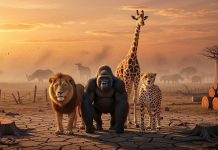
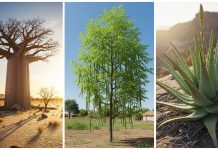
    Continents across the globe are replete with a vast variety of flora and fauna, which are endemic to these different geographical locations. Africa is no exception as it’s filled with a fascinating array of rich plant and animal species. Let’s take a look at some of these fascinating animals.

    (more…)

  • Collaboration by tech giants, regulators, conservationists vital to intercepting online wildlife trade

    Collaboration by tech giants, regulators, conservationists vital to intercepting online wildlife trade

    Tech giant Facebook on the average attracts about 2.89billion active subscribers who every minute upload hundreds of thousands of statuses, comments and discuss a plethora of subjects that could range from lifestyle to extremist views to the sales of endangered species across continents.

    Social media platforms have provided a convenient leverage on which both legal and illegal wildlife traders connect and transact business as never before. While some operate legally within the confines of international laws, others use private chats and groups to bypass middlemen and exchange information on how to evade law enforcement. Both private and public channels alike are used on social media platforms to sell wildlife as pets or luxury artefacts. Traders connect with a vast global customer base via public posts, however arrangements regarding payment, shipping and conversations about other available wildlife can be quickly carried out through private messaging services.

    Some social media platforms have adopted strong community regulations that ban any attempt to sell or by endangered wildlife and private sales of live animals. Nevertheless it takes only a few seconds of searching to find posts featuring sales of endangered animals captured from the wild for export in wholesale quantities, which is in clear violation of international laws.

    Combating this is of the essence as wildlife trade poses a great threat to global biodiversity and could contribute to the spread of infectious zoonotic diseases.

    The journal Conservation Biology recently published a study where the online behaviour of wildlife traders based in West Africa was examined and also an exploration of how researchers and moderators can use information scattered across different parts of social media platforms to detect posts selling wild birds.

    Some of the trade studied are allowed under international trade agreements. However its scale and extent of the trade is a source of concern to conservationist. The trade in wild parrots from West Africa has traced to the global spread of infectious diseases.

    Data analysis gathered from the study while working with ornithologists, conservationists, and legal analysts revealed about 80 different species in trade some of which are highly threatened and prohibited from commercial trade under international laws. Those species ranged from parrots and hornbills to song birds and doves.

    There were about 400 social media posts made by known bird traders featuring birds in trade.

    Majority of the posts did not contain clear messages that could be used to ascertain whether the posts were aimed at the sale of wildlife, violating platform community standards.

    The application of simple algorithms searching for keywords such as “for sale”, or the names of target species, would help detect some of this activity. But administration in some closed Facebook groups have advised their members to avoid using certain key word algorithms.

    The research further found that the triangulation of information available elsewhere both within and beyond social media platforms could be used to make strong inferences about how posts facilitate trade, violate platform standards and signpost illicit activity. Such information may be found in elements such as images, profile pictures or comments. Thus it is necessary that e parts are involved in monitoring social media for potentially illegal trade, they have the knowledge in identifying the species involved and contextualising the activity within international and domestic regulations.

    There is no standard procedure for detecting wildlife trade online as different wildlife are bought and sold in different locations online and in different ways let alone illicit or harmful trade.

    The study, however, establishes a framework for thinking about how different sectors of illicit or harmful activity can be understood and monitored and moderated more effectively. Careful analyses led by experts in specific fields can help in the design of algorithms and approaches to moderation tailored to the situation.

    It is noteworthy that new regulatory legislation is being planned or coming into play in major economies including China, the US, the EU, Australia and the UK, aimed at cajoling and coercing big tech to do more to protect users from harmful content.

    Carefully designed algorithms that can intelligently triangulate across multiple data sources will be part of the solution. Manual analysis will also be critical. Knowing which species were in trade and the relevant local legislation is critical for understanding legality.
    But such tasks are beyond the abilities of artificial intelligence and machine learning.

    However collaborations between tech firms and subject matter experts remain in their infancy.


  • Rare Tree-Climbing Lion Pride Appear again in Uganda

    Rare Tree-Climbing Lion Pride Appear again in Uganda


    It’s been six months since six lions were killed and mutilated in the Ishasha section of Queen Elizabeth National Park (QENP) Uganda.

    These lions popularly know as Ishasha lions have been seen lazing around on the numerous branches of sky high fig trees. This pride of lions is one among the two populations of lions known to be tree climbers thus making these amazing animals captivating subjects for study and a source of tourist attraction. Unfortunately, though these lions face a great number of threats to their lives which include habitat loss, human-wildlife conflict, illegal wildlife trade, traffickimg of lion body parts and snaring.

    However on account of these threats the number of the Ishasha lions have reduced to only 69 lions; as the threats to these beasts continue to increase, tourism revenues which make up about 8% of Uganda’s gross domestic product before the pandemic are also threatened. In order to provide protection to these population of lions, they have been categorised by the global Red List of threatened species maintained by the International Union for the Conservation of Nature (IUCN) as “vulnerable” to extinction. While Uganda’s National list places them in the “critically endangered” category.

    Nevertheless, the Ishasha lions have in recent times richly endowed the country with several cubs that now require the collective effort of all to protect them so they may grow to adulthood. According to Bazil Alidria, the Wildlife Conservation Society (WCS) Carnivore Officer who regularly monitors the lions, the lion cubs are fortunate to have six other full grown lions in the pride to offer a measure of protection to them. Among these lions are Sultan and Sula (the fathers of the cubs), Jacob (a snare survivour), and three other adolescent brothers who are ready to protect and groom them.

    Sadly, knowledge about lion population dynamics and threats in Uganda remains limited. In 2005 and 2008, the Wildlife Conservation Society (WCS) carried out monitoring efforts for the lions in the Queen Elizabeth National Park (QENP) and in Uganda’s Murchison Falls National Park (MFNP) using Global Positioning System (GPS) enabled collars.

    This work was based on the groundwork previously done by Uganda Wildlife Authority (UWA) Veterinary Doctor Margaret Driciru (2001) and Ludwig Siefert of the Uganda Carnivore Program. In the 0rocess of monitoring the lions WCS also got rid of snares from the parks that are a threat to this unique animals and worked to curtail human-lion conflicts by constructing Carnivore proof pens to prevent lions from attacking livestock thereby forestalling retaliatory attacks from angry herders.

    A study carried out in 2010 by WCS of three National parks involved in lion conservation- Queen Elizabeth NP, Murchison Falls NP, and Kidepo Valley NP- gave an estimate of the lion population to be about 408 individuals.

    Although it’s been 10 years since the last census was conducted, the monitoring work carried out by WCS, the Uganda Carnivore Program (UCP) and UWA in the Queen Elizabeth National Park showed lion sightings which implies that the lion population trend is relatively stable, according to Simon Nampindo, WCS Uganda country director. According to a 2021 research commissioned by the WCS indications show that the greatest threat to lions today are human-unduced mortality which include retaliatory attacks by herders for the killing of their livestock, worsened by assumption in Uganda that parts of these lions have medicinal value and the customary beliefs that lion body parts should be kept in homes and shops as a source of power and wealth.

    In the 2021 study Nampindo noted that an increased demand for lion body parts by community members, traditional rulers, business people, religious leaders, poachers and cattle herders were the triggers and motivations for lion killings. This therefore calls for a more comprehensive approach to stopping this crime.

    The lions also face various challenges to their survival occasioned by climate change and variability which favours the growth and spread of invasive species in most of Uganda’s national parks this thus results in the loss of suitable habitat for both prey and predators. Hence forcing both lions and elephants alike to move outside the parks into communities. Thus influx into the communities has resulted I livestock predation and crop damage, thereby exercebating the human-wildlife conflicts occurring in these areas.

    The Wildlife Conservation Society has called upon stakeholders which include local governments, conservation organisations, individuals and even companies in the private sector to join hands to address these threats before their natural heritage is lost.

    Inspite of the multifaceted challenges the Ishasha lions remain resilient. The WCS along with the Uganda Wildlife Authority, the private sector and other devoted conservation organisations will continue to monitor the lion populations and remove wire snares and traps to save the lion populations and ensure that the tourism sector thrives.

  • FG to Partner with the Nigerian Exchange Group (NGX) on climate disclosure, data

    The Minister for Environment Chief Sharon Ikeazor said at the Digital Closing Gong Ceremony that the Federal Government of Nigeria will continue to collaborate with the Nigerian Exchange Limited to build a framework that will help issuers navigate climate data available to the investment and finance community. The ceremony was hosted by NGX to mark the end of trading for the year 2021.

    Chief Ikeazor noted that NGX has played an admirable role in Nigeria’s dedication to alleviate the effects of climate change. She added that climate change is a serious and long term threat to which the country has shown commitment to the the goals of Paris Agreement on Climate Change with its revision of the Nationally Determined Contributions (NDCs) pre-COP 26

    Ikeazor further stated that “with the step taken immediately after COP26, Nigeria has further demonstrated its commitment towards the Paris Agreement on Climate Change. As part of measures to comply with the National Determined Contributions (NDC) in emissions reduction to climate change in Nigeria, the Federal Government launched the Nigeria Deep Decarbonization Project.” She also mentioned that investors are increasingly working together in response to climate change and added that the Federal Government would continue to engage NGX on climate disclosure and data.

    The Minister added saying “I hope there will be a continuous collaboration between NGX and the Federal Ministry of Environment to build a framework that will help issuers navigate climate disclosure, associated engagement with their shareholders, and ultimately improve the climate data available to the investment and finance community. Partnership with NGX will provide investors with important new tools to enable capital reallocation.”

    The Chief Executive Officer, NGX, Temi Popoola in welcoming the Minister mentioned that NGX remains resolute in its commitment to promoting sustainable finance because it recognises that urgent action is required to combat climate change and its impact as incorporated in the Paris Agreement on Climate Change and Goal 13 of the Sustainable Development (SDGs).

    He further said, “We are committed to fostering the growth of sustainable financial products which integrate the financial risk and opportunities associated with climate change and other environmental challenges. NGX has shown strong commitment to sustainable finance over the years.

    In 2016, NGX collaborated with the Ministry of Environment and Debt Management Office (DMO) to deepen the Green Bond market. This effort led to the issuance if the maiden N10.69 billion ($25.8million) 13.48 percent 5 year Green Bond in 2017 to fund projects to develop renewable energy. The second tranche, N15billion ($36.1million) 14.5 percent 7 year Green Bond was issued in June 2019 and was over subscribed.”

  • Nigerian Park Ranger Wins The 2021 Wildlife Ranger Award worth £30,000 At The Tusk Conservation Awards

    Nigerian Park Ranger Wins The 2021 Wildlife Ranger Award worth £30,000 At The Tusk Conservation Awards

    Sulieman Saidu, a Nigerian, emerged winner of the 2021 Tusk Conservation Wildlife Ranger Award worth £30,000.

    The award ceremony was held at the BFI Southbank in London The Tusk Conservation Award which was established in 2013 has since then  been celebrating African-based Conservation leaders and Wildlife Park Rangers for their significant impact in the field.

    A recognition Sulieman Saidu is well deserving of as a Senior Game Guard Ranger at the Yankari National Park whose hard work and tenacity in monitoring elephant population, combating poaching and helping to reduce human-elephant conflict is not only protecting a gravely endangered speices but is also helping to maintain the rich biodiversity of the environment.

    The Yankari Game Reserve situated in Bauchi State home to one of the largest remaining elephant populations in West Africa and Nigeria’s richest wildlife site would not be the Park it is today without the Sulieman Sadiu.

    The Nick Morgan Foundation the official sponsors of the Tusk Wildlife Ranger Award, believe that recognising the unsung heroes of our time will be a source of motivation to future conservationist leaders. Founder of the Nick Morgan Foundation and Board Member of Tusk, Nick Morgan, said: ” There are times when it is important to single out the work of one individual to serve as an example for others who contribute to conservation, or who might want to contribute to conservation in the future.

    He added that Saidu should be rightly recognised for his achievement and should be considered as a true hero of our times, one that richly deserves the Tusk Wildlife Ranger Award for 2021 and that he was proud that the Nick Morgan Foundation is the official sponsor of the Tusk Wildlife Ranger Award and hopes that it will continue to be for many years to come.

    Also speaking at the event, the Duke of Cambridge Prince William who presented the awards paid tribute to those risking their lives to protect the threatened speices in Africa.

  • Godfather of Biodiversity Thomas Lovejoy Dies at 80

    Godfather of Biodiversity Thomas Lovejoy Dies at 80


    Thomas Lovejoy one among the world’s leading conservation biologist died on Saturday, December 25. Lovejoy had enjoyed a 50 year long career which carried him round the world as a conservation proponent. He was the first to use the term “biodiversity” and also among the world’s foremost experts on biodiversity in the amazon.

    Dr Lovejoy served as a University Professor within the Department of Environmental Science and Policy in the Mason’s College of Science in 2010. He also served as a scientific director for Mason’s Institute for a Sustainable Earth.

    Thomas Lovejoy was a colossus among world leaders in environmental management. Being also a good and decent person, his loss is devastating to humanity and indeed the planet and he will be sorely missed.

    Dr Thomas was both Founder and President of the non-profit Amazon Biodiversity Center and the Biological Dynamics of Forest Fragments Project in the central Amazon (with INPA, Brazil’s National Insitute of Amazon Research).
    He served on science and environmental councils under the administration of Presidents Reagan, Bush, and Clinton and as Science Envoy for Presidents Obama and Biden. He was also a Senior Fellow at the United Nation Foundation.

    As an international climate scientist of high esteem, Professor Lovejoy focused on the critical importance of sustainability, he also made many consequential contributions to our understanding of climate change as we know it today and employed a cross disciplinary approach to finding solutions to the greatest and grandest challenges to our era.

    In April 2021 Dr Lovejoy joined an elite group of scholars recognised for their contributions to Science and research upon his induction into the National Academy of Sciences. Also in 2019 he was named one of Virginia’s Outstanding Scientists, honouring him for his globally significant contributions to the field of science.

    For many decades Lovejoy associated with the National Geographic Society, since receiving his first grant to study the ecology of rainforest birds in the Amazon in 1971. He also served as a member of the society’s Committee for Research and Exploration, Ocean Restoration Advisory Council; he chaired the Big Cats Initiatives Grants Committee and the Advisory Committee of the Great Energy Challenge; also as a scientific advisor to the Society’s Chief Scientist and its Perpetual Planet Expeditions.

    “To know Tom was to know and extraordinary scientist, Professor, advisor, and an unyielding champion for our plantet” said Jill Tiefenthaler, Chief Executive Officer of National Geographic in an online statement. He further added that Dr Thomson was a consummate connector, helping bring people and organisations together to preserve and protect some of our most fragile ecosystem and cornerstone speices”

    In 2019, he was selected as a National Geographic Explorer at Large, a title he held until his demise.