A lion that was used as a ‘security guard’ has been removed from outside an apartment block opposite a crèche and primary school.
A task force intervened to take the two-year-old lion, named Kiara away from the Lagos property on Friday.
The owner, said to be an Indian expatriate has been urged to turn himself in to police or he could be arrested.
The lion, who was thought to have been brought to the building, 229, Muri Okinola, Victoria Island, two months ago was transported after being tranquilized, to Bogije Omu zoo, Lekki.
Lagos State Environmental Sanitation and Special Offences Unit workers found the animal after a petition by people who live in the area was sent to the ministry of environment. The school said it was worried about the safety of the children.
Meanwhile, three people have been arrested in connection with the illegal possession of the big cat. In an exclusive chat with Channels Television, Chairman of the Lagos State Taskforce on Environment and special offences, Olayinka Egbeyemi, explained that the three retired officers, who double as security officers to the cat owner, said they were aware of the presence of Kiara, the lion within the building since it arrived.
Lions are found in two places in Nigeria, Yankari Game Reserve – where there are about five – and Kainji Lake National Park, where about 30 of the big cats live.
Suleiman Saidu, a Nigeria senior game guard ranger from Yankari National Park was honoured at the 2019 African Rangers Award in Accra on Friday.
Saidu was honoured along with 49 other rangers working in 17 countries across Africa. Six rangers were recognised posthumously after they died in the line of duty.
This is the second annual Awards, which will be given annually for 10 years by the Paradise International Foundation, a Chinese not-for-profit environmental conservation organisation, and the Alibaba Foundation, a charitable organisation established by Alibaba Group.
The Paradise International Foundation was set up by Jack Ma and other Chinese entrepreneurs, artists and philanthropists. It works to preserve the planet through charitable actions, a scientific approach, and efficient business management.
“The difference between us and you is that we protect ourselves first then we talk about protecting the Earth,” Ma said.
Mirriam Namushi is one of Africa’s growing number of women rangers, and one of the few to reach a very senior position — Area Warden — at one of the continent’s largest conservation areas, the 22,400 sq. km Kafue National Park in Zambia.
“Rangers face danger to protect wildlife; you are different. You are the real heroes.
“Today there are only two places most kids go to see animals: zoos, to see animals in cages, and museums, to see animals that are already lost.
“I hope that in the future our kids don’t only know animals through books. Protecting animals is not just the responsibility of rangers, it’s the responsibility of everyone.”
Clare Akamanzi, Executive Director and CEO of the Rwanda Development Board; M. Sanjayan, CEO of Conservation International; and Fred Swaniker, Founder and CEO of African Leadership Group, attended and addressed the event.
Dozens of nominees from 17 countries were suggested by colleagues, employers, government agencies, or tourism partners. A panel of conservation leaders including Irene Amoke, Executive Director of the Kenya Wildlife Trust; Dr Max Graham, CEO of Space for Giants; and Matthew A. Brown, Africa Director of The Nature Conservancy, selected the winning list.
Many of the winners have been injured or faced significant danger in confrontations with wildlife criminals. Each received a $3,000 cash prize, given to family in the cases of fallen rangers.
Four in five African rangers had faced mortal danger at work, and three in five had been directly attacked by poachers, a 2016 survey found. More than 1,000 lost their lives protecting wildlife and wild habitats between 2000 and 2016.
“To be a park ranger is a dangerous job but we can’t leave our wild animals without protection because it can cause the extinction of all animals all over the world,” said Leonidas Mpumuje, Head Rhino Monitor working with African Parks at Akagera National Park in Rwanda, and one of the winners.
Mirriam Namushi is one of Africa’s growing number of women rangers, and one of the few to reach a very senior position — Area Warden — at one of the continent’s largest conservation areas, the 22,400 sq. km Kafue National Park in Zambia.
“We women are few in conservation at the moment, but the few that we are, I think we are doing a better job than men,” Namushi said.
“We take the job more seriously, and when it comes to corruption, there is less. We are more dedicated to our work.”
Lijun Sun, Partner of Alibaba Group and Chairman of the Alibaba Foundation, said that protecting Earth’s natural resources is one of Alibaba Foundation’s core missions.
“Alibaba leverages its technologies and experience in creating impact through public engagement such as the Ant Forest app, to lead efforts in environmental protection and conservation,” he said.
“Alibaba is willing to work with responsible companies and environmentalists to take advantage of their respective platforms and technologies to jointly resist illegal poaching, promote public awareness of environmental protection, and empower environmental protection.”
The Paradise International Foundation and Alibaba Foundation are sponsoring in full both the cash rewards for the rangers and the programme’s management expenses for the next 10 years, expected to be $1.5 million in total.
“The challenges to protected areas are changing and increasing and there has never been more of a need for park rangers,” said Shawn Zhang, CEO of the Paradise International Foundation.
“They are soldiers fighting courageously with insufficient support, they lack basic supplies like boots, socks, tents and GPS. They are husbands and wives and parents, they are heroes risking their lives for conservation.”
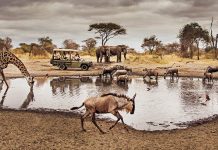
Africa is home to the richest diversity of wildlife in the world, including more than 1,000 species of mammals, 500 kinds of birds and 2,000 types of freshwater fish. Poverty, bushmeat hunting, the illegal wildlife trade pose serious threats to the continent’s bio-sustainability.
Five hundred rangers will be recognised through the 10-year programme. The Foundation hopes that the African Ranger Awards will continue to raise public awareness of the importance of safeguarding Africa’s diverse wildlife and creating sustainable development.
Zimbabwe is planning an enforced mass migration of wildlife away from a park in the country’s south, where thousands of animals are at risk of death due to drought-induced starvation.
At least 200 elephants have already died at two other parks due to lack of food and water, along with scores of buffalo and antelope, Zimbabwe Parks and Wildlife Management Authority (Zimparks) said on Monday, November 11, 2019.
“They will continue (to die) until the rains come. The biggest threat to our animals right now is loss of habitat,” Zimparks spokesman, Tinashe Farawo, told Reuters.
The El Nino-induced drought has also taken its toll on crops, leaving more than half of the population in need of food aid.
Farawo said Zimparks and private partners planned to move 600 elephants – as well as giraffe, lions, buffalo, antelope and spotted wild dogs – from Save Valley Conservancy in southern Zimbabwe to three other national parks.
“This is the biggest translocation of animals in the history of wildlife movement here because we are talking of distances of more than 1,000 kilometres,” said Farawo.
It will start once the summer rains come. Those are expected to start this week, which would offer major relief for the stricken animals and for farmers who are preparing for the 2019 and 2020 planting season.
The migration will also help to save the conservancy’s ecosystem by depopulating it because the animals “are now becoming a threat to their own survival,” Farawo said.
Zimbabwe is home to more than 80,000 elephants, around a fifth of Africa’s total, conservationists estimate. Overall numbers have declined sharply in recent years, mostly due to a combination of poaching, illegal hunting and drought.
Farawo said Zimparks, which does not receive government funding, requires 40 million dollars annually for conservation efforts but only generates half the amount.
Zimbabwe, together with South Africa, Botswana and Namibia, unsuccessfully lobbied the Convention on International Trade in Endangered Species for controlled sales of their ivory stocks at a meeting in August.
The President of Zimbabwe, Emmerson Mnangagwa had announced shortly thereafter that his country was planning to pull out of the UN Convention on International Trade in Endangered Species of Fauna and Flora . He had expressed the opinion that CITES’ proposal would deny his country some much-needed cash and that the nation should be free to do what it wished with its elephants.
Trade in ivory is banned to deter poaching. Zimparks says its ivory stockpile is worth 300 million dollars, money it can use for wildlife conservation. Zimbabwe has also exported nearly 100 elephants, mainly to China, earning $3 million, Zimparks statistics show.
A recent scoping mission to seven states has led to the addition of Ogun, Edo and Plateau states to the the REDD+ Programme in Nigeria.
According to reports, the Minister of Environment, Dr Mohammed Mahmoud, has endorsed the additions.
REDD+ stands for countries’ efforts to reduce emissions from deforestation and forest degradation, and foster conservation, sustainable management of forests, and enhancement of forest carbon stocks.
Dr Moses Amah, National Coordinator of the Programme made known the selection on Monday.
Amah noted that 17 states indicated interest in joining the Forest Carbon Partnership Facility (FCPF) funded REDD+ Readiness Programme but only seven were pre-qualified.
“The 17 states are Edo, Delta, Imo, Akwa Ibom, Ogun, Plateau, Oyo, Kaduna, Enugu, Katsina, Bauchi, Jigawa, Lagos, Gombe, Anambra, Ebonyi and Abia,” he said.
According to him, the scoping mission, conducted by two teams, was undertaken to select the three most qualified states from the seven based on laid down criteria such as presence of tropical forest, lowland rain forest, mangrove and montane forest and states’ commitments to sustainable forest management regimes.
Other criterias considered include forest dependent communities’ commitment to forest management; Institutional and regulatory framework that aligns with REDD+ implementation and State political will in driving sustainable forest management.
“These criteria informed the ranking/scoring of the seven pre-qualified states in the selection process. All persons involved in the scoping mission made their scores based on the above criteria,” Amah said.
He listed the summary of the average score for each state to be: Akwa Ibom State (66.5%), Edo State (77.8%), Delta State (63.8%), Imo State (61.6%), Plateau State (70%), Ogun State (80.2%) and Oyo State (60%).
“It is worth noting that these scores show the potential of all the states being supported in the REDD+ readiness programme, but the constraint lies in the FCPF grant sum which can only support just three additional states,” said Amah.
Cross River, Ondo and Nasarawa states, the earliest beneficiaries of a $3.8 million funding of the FCPF, are already implementing a REDD+ Readiness Programme.
However, an additional $4.9 million grant was approved by the FCPF, an initiative of the World Bank, to extend the REDD+ Programme to more states.
An environmentalist, Mr Emmanuel Emechete on Tuesday called for advocacy and sensitisation of Nigerians on the dangers of indiscriminate littering.
Emechete, also a climate change expert made the call in an interview with the News Agency of Nigeria (NAN) in Lagos.
He said that indiscriminate littering, also known as “trash blindness’’, due to the adverse effects on the environment and on public health.
“Trash blindness basically implies negligence to trash. It is when individuals choose to litter their environs without considering the negative impact on the atmosphere.
“Basically, to curtail the trash blind tendencies among Nigerians, we need a lot of enlightenment and education on the adverse effect of a polluted environment.
“We need to inform Nigerians on the dangers of indiscriminate littering and the side effects on not just the environment but our health. “Littering contributes immensely to drainage blockage.
“The government as well as environmental stakeholders must embark on intense advocacy; we need to talk to people about trash issues.
“Once people can understand that trash blindness is a problem, we need to provide an alternative. If you say do not litter indiscriminately, then you need to provide the alternative,’’ he said.
Emechete called for provision of alternatives for trashing waste and not paying lip service to combating trash blindness syndrome by placing sanctions where necessary.
“We need to provide alternatives for people to trash their wastes; we must back our advocacy with actions if we are to solve the syndrome of trash blindness,’’ he said.
The environmentalist urged that waste bins be provided on every street, walkways and commercial buses, among others, with conspicuous signs posted to direct people where to dispose wastes.
He said that arrangement should be put in place for prompt disposal of these waste bins to ensure sanitary condition of the environment.
“The government can also place sanctions against indiscriminate littering and it should be done with caution to avoid abused by the regulators who extort Nigerians.
“Sanctions should not be paramount, but the sensitisation of Nigerians on trash blindness should be on the front burner.
“Recently, we have heard reports of people drowning in floods as a result of blocked drainages which are remote causes of trash blindness.’’
Emechete said that if Nigerians could see the impact of trash blindness on the health, family, wellbeing and even on climate change, they would be more cautious as compared to having fear for sanctions.
“We should start first with enlightenment and education and if it does not work, we can now place sanctions on defaulters.
“Advocacy and provision for alternative trashing of waste should be put in place before the resort to sanctions on indiscriminate littering of waste,’’ Emechete said.
To overcome the agricultural problems faced by farmers in the besieged Gaza Strip, newly-graduated Palestinian agricultural engineer Irada Al-Za’anin has established the first-ever “water farm” in her house.
The project aims to reduce the area used in agriculture, saving effort and time as well as maintaining the amount of water used for irrigation.
Al-Za’anin, 24, from the northern Gaza Strip town of Beit Hanoun, implemented her agricultural project, which is the first of its kind in Gaza, on 70 square meters of water basins, planting basic agricultural crops such as tomato, eggplant, chilli, cucumber, lemon and other crops.
“Last month I reaped tomatoes, which were equivalent to a ton of healthy and fresh tomatoes. This is a proof of the success of my project,” al-Za’anin told Chinese news agenxy Xinhua, while picking eggplants.
“The aquaculture project is primarily aimed at increasing the amounts of agricultural crops, which can be up to three times higher than those normally grown in soils,” she said.
Palestinian agricultural engineer Irada al-Za’anin works inside her “water farm” in her house in the northern Gaza Strip town of Beit Hanoun, Sept. 17, 2019. Photo Credit: Rizek Abdeljawad/Xinhua
She noted that saving time and efforts also encouraged farmers to adopt this type of agriculture in the near future.
The young woman stressed that hydroponics is not costly and could also contribute to self-sufficiency in agricultural crops, adding that it helps secure all crops throughout the year.
Hydroponics is a method of growing plants using mineral nutrients in water without soil. It typically uses 90 percent less water than the conventional agriculture does.
The Gaza Strip suffers from an acute lack of water for human and agriculture use, in addition to water pollution, which contributes significantly to the spread of some diseases due to human consumption of agricultural crops irrigated with contaminated groundwater.
In addition, agricultural lands are declining as a result of the growing population in the Israeli-besieged seaside territory, which leads people to the horizontal and vertical expansion of urbanization, further contributing to the eradication of agricultural areas.
“This agricultural system will provide more safe and healthy food since farmers will not need to use chemical pesticides and industrial hormones,” the engineer said.
In her agricultural project, Al-Za’anin relies on water basins, which are sterilized by moving them through electric pumps that supply oxygen to ensure that water is not contaminated. Over 90% of water in the Gaza Strip is contaminated as spare parts to repair purification plants are not allowed in due to Israeli restrictions on Gaza.
“Last month I reaped tomatoes, which were equivalent to a ton of healthy and fresh tomatoes.” Photo Credit: Rizek Abdeljawad/Xinhua
Meanwhile, the Ministry of Agriculture in Gaza said Al-Za’anin’s project is one of the pioneering projects that ensure sustainable development, in addition to being an essentially environment-friendly project.
“Al-Za’anin has been able to prove that Palestinian youths are able to challenge all the circumstances and create a new environment for them through creative ideas that contribute essentially to overcome all the obstacles of life,” Adham al-Bassiouni, director of agricultural ministry in northern Gaza, told Xinhua.
Al-Bassiouni added that such development projects are usually a key factor for many farmers who always seek to increase their agricultural crops, which saves them time and effort and increases profits.
To overcome the agricultural problems faced by farmers in the Gaza Strip, newly-graduated Palestinian agricultural engineer Irada al-Za’anin has established the first-ever “water farm” in her house. Photo Credit: Rizek Abdeljawad/Xinhua
He noted that the ministry encouraged al-Za’anin to continue her project and transfer her experience to other farmers.
The official pointed out that the Israeli blockade negatively affects the success of such projects, noting that the problem of electricity is one of the most important obstacles threatening the success of this project since it requires electric pumps to move the stagnant water used in agriculture.
The whole Gaza Strip has been placed under a tight Israeli blockade since the Hamas movement won elections in 2006.
In the past decade, Israel has militarily attacked the Gaza Strip three times three, resulting in the loss of thousands of Palestinian lives. Israeli warplanes regularly launch airstrikes on agricultural land, claiming that they are used by Palestinian armed factions to fire rockets at Israeli towns.
Israel also imposed a buffer zone along the Gaza-Israel borders that takes up 17 percent of Gaza’s total land, making up to 35 percent of available farmland unsafe, with areas close to the border fence being the most restricted.
Director of Technical Programmes at the Nigerian Conservation Foundation (NCF), Onoja Joseph has explained what may have been the circumstances surrounding the death of a stray elephant calf in Okomu, Edo State recently.
Onoja took to Twitter on Wednesday after the death of the elephant was announced. He ruled out the involvement of poachers after preliminary investigation, promising in depth probe in future.
Onoja twitted: “It is necessary to state that when the news of this unfortunate situation came out, there were different accounts. We are working closely with the Park Management and conducting a thorough investigation to unravel what happened that the calf was separated from the mother/herd/ resulting to the injury it sustained.
“The calf was rescued by some farmers who handed it to some staff of OOPC working close by and was finally handed to the park management. The management had assured us that while thorough investigation is still on going, the compartments where the herds are have been identified and monitoring activities have been intensified.
“It is likely the elephant mother was killed by poachers.” – Preliminary investigations shows that this is not the case. That it was swept by strong current when the herd was crossing the River close to Iron Bridge. When it got out of the river, it was being persecuted and the events that happened thereafter until the calf was with taken into the possession of the Park Management.
“This is very necessary so that decisive measures will be taken to forestall and discourage any future incidents.”
Concerned Nigerians had earlier taken to social media to call for thorough investigation into the matter following the announcement of the calf’s death on Tuesday by the African Nature Investors (ANI).
— Africa Nature Investors Foundation (@ANI_Foundation) October 8, 2019
When the news broke earlier, the management of Okomu Oil Plc had swiftly denied reports of any involvement in killing the baby elephant which had strayed into its plantation.
The denial was issued through the company’s Head of Human Resources, Mr. Ikpomwosa Osunbor according to The Nation newspaper.
The management of the company had claimed that some staff ran for safety when they sighted the baby elephant, fearing its mother would soon attack.
Osunbor had reportedly said the baby elephant was captured and returned to the wild at the Okomu National Park.
Okomu Park is one of the last places where forest elephants still thrive in Nigeria.
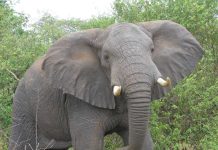
Conservation experts in Yankari Game Reserve, have fitted six elephants with GPS/Satellite Collars to help provide real-time tracking of elephant herds.
The move is aimed at consolidating on the anti-poaching success achieved in the game reserve over the years.
According to the Country Director, Nigeria Programme, Wildlife Conservation Society (WCS), Andrew Dunn, the device will allow ranger teams to shadow the elephants at all times and alert the reserve manager whenever elephants are in danger or stray outside the reserve.
“Since 2014 Yankari Game Reserve in Bauchi State contains Nigeria’s largest elephant population, currently estimated at around 100 and has been co-managed through a partnership agreement between WCS and Bauchi State Government, with funding support from US Fish and Wildlife Service, Elephant Crisis Fund and the Wildlife Conservation Society,” Dunn said in a statement at the weekend.
Highlighting the success of conservationists in the region, Dunn noted that with the focused law enforcement efforts and community engagement programmes, no elephant has been killed in Yankari since 2015, bringing previously high poaching levels down to a very low level over the past four years, with zero poaching incidences detected.
“Once widespread across Nigeria including rainforest and savanna, elephants are now restricted to a few protected areas in the country as elephants are threatened by habitat loss, human-elephant conflict and particularly by the illegal ivory trade. Elephants have been extensively persecuted in Nigeria for their ivory tusks for many years, highly-prized for traditional purposes and to supply the lucrative export market to Asia,” he said in the statement.
Emphasizing the importance of fitting collars on elephants, the Regional Director of WCS’s Sudano-Sahel Programme, Dr. Paul Elkan said “Real-time monitoring of elephant populations is essential for their protection by providing location data which is used to optimize deployment of anti-poaching and other wildlife protection interventions and also to help improve efforts to reduce elephant human conflict with neighboring communities.”
He added that at various protected area landscape sites across Africa where WCS is engaged in management partnerships with Governments and local communities, they have employed use of GPS/satellite collars, combined with ground based anti poaching patrols, aerial monitoring, and real time law enforcement management to secure elephant populations.
For WCS Landscape Director in Yankari Game Reserve and Resort, Nachamada Geoffrey, “the use of satellite collars has also allowed us to react more quickly whenever elephants stray outside the reserve, and has helped reduce levels of crop damage and human-elephant conflict.
We manage the information on elephant locations with strict confidentiality to ensure their safety at all times.”
Also commenting, the Chief Veterinarian on the project, Dr Richard Harvey disclosed that “the elephants are in good condition, with animals of various ages and plenty of juveniles and calves. The herd is reproducing well, which is great news for the future of elephants, and for the Yankari ecosystem overall.”
The European Union has pledged to assist Nigeria with N31.8 million to combat the outbreak of yellow fever in Katsina and Bauchi States.
There has been an upsurge of yellow fever cases in the two states with more than 30 death reported since September. Health officials said the outbreak was traced to people who visited the Yankari Game Reserve in Bauchi.
The fund is aimed at supporting efforts by the Nigerian government and other donor partners toward rolling back the spread of the disease.
A statement issued by EU on Thursday explained that the fund will help affected communities, and those most at risk from potential spread of the deadly disease.
The EU added that affected or risk communities in the two states, will directly benefit from the aid.
The funding is part of the EU overall contribution to the Disaster Relief Emergency Fund (DREF) of the International Federation of Red Cross and Red Crescent Societies (IFRC).
The Kebbi State government has expressed its readiness to establish a wildlife park for two strayed elephants currently roaming Tuga and Zaria Kala Kala in Bagudo and Koko-Besse local government areas.
Governor Atiku Bagudu said this yesterday while briefing journalists after a meeting with the delegates of the Conservator-General of the National Parks of Nigeria at the Government House in Birnin Kebbi.
Governor Bagudu said the options given to the state to conserve the elephants were either to establish Wildlife Park or Zoo for them.
The governor commended the people of Ruga/Zaria Kala Kala in Bagudo and Koko Besse local government areas of the state for taking care of the elephants.
Earlier, the Conservator-General, Alhaji Ibrahim Musa Goni, who was represented by Dr Abdulrahman Muhammed, commended the state government and the people of the communities where the elephants were kept for protecting and feeding the animals.
He said he would write to President Muhammadu Buhari to seek his consent on the action to be taken on the affected elephants.