Category: News

  • Nigerians Unveil AI-Powered Engine for Environmental Conservation

    Nigerians Unveil AI-Powered Engine for Environmental Conservation

    Given the increased rate of climate change worldwide and its harmful effects on Earth, Yewande Akinse and Fela Akinse, two Nigerians, have introduced an  AI-powered search engine aimed at addressing climate change.

    The co-founders, in an official statement to BusinessDay, disclosed their search engine named pap.earth which is used not only as an aid to help users find information but also to empower them to contribute to the fight against climate change with every online search.

    According to the co-founders, pap.earth functions very much like Google or any other search engine. The outstanding feature it has is that it’s an eco-friendly (has zero impact on the environment) search engine. It uses its profits to support lesser-known climate projects worldwide, helping fight climate change in a unique way.

    Yewande Akinse, co-founder of pap.earth, explained how the app operates, stating, “Every search on pap.earth earns a coin. Users can collect these coins to either donate them to featured climate projects for likely sponsorship, or convert them at our partner stores for discounts and rewards.” This way, your searches directly contribute to positive climate action. She further explained that when using pap.earth, every user receives rewards through a fun system called gamification

    Yewande mentioned that despite studying Law at university, the passion and concern for finding creative solutions to combat climate change challenges is what motivates her steadfast commitment. This commitment has led her to actively advocate for and lead efforts towards raising awareness for a sustainable environment.

    Yewande emphasized that Pap.earth is at the forefront of the fight against the detrimental consequences that the severe effects of climate change cause to the Earth.

    Co-founder and chief scientist of pap.earth, Fela Akinse shared that he created the pap.earth search engine with the aim of taking CO2 (Carbon dioxide) out of the atmosphere.

    He pointed out a point in the quote, “We have a special opportunity to connect scientific knowledge with everyday people, equipping them with the knowledge and skills they need to make meaningful contributions to a more eco-friendly earth. This is the essence of what Pap.earth, driven by AI, is all about”.

    In a world confronted by terrifying environmental challenges, Yewande and Fela, the co-founders of Pap.earth, see their creation as a flare of hope.


  • Rotarians promote tree planting for environmental protection and conservation.

    Rotarians promote tree planting for environmental protection and conservation.

    Rtn. Peter Itawawansa, Assistant Governor of Zone 22 in Rotary Club, passionately encourages Nigerians to cultivate economic trees as a means of protecting the environment. He also emphasizes the importance of clearing overgrown weeds within their surroundings, stressing the aged adage that “health is wealth.”

    Itawawansa delivered this message during a recent event at the Ugbolu Primary Health Centre in Oshimili North Council, Delta State with the collaborative effort involved between multiple Rotary Clubs, including Asaba Government House, Asaba Downtown, Okpanam Hilltop, Issele-Azagba Uptown, Asaba Bonsaac, and Rotaract clubs under District 9141 Nigeria, coming together for a four-in-one project aimed at enhancing healthcare services at the health centre.

    In addition to urging individuals and organizations with a vibrant spirit to contribute to maternal and child care, Itawawansa shared the list of items donated to the health centre. This included mattresses, pillowcases, bed sheets, window curtains, hand hygiene materials, and sanitary waste bins. In addition, as an indication of environmental preservation, economic trees were planted to fortify the local ecosystem, and overgrown weeds were cleared from the premises, dignifying the quality of healthcare services provided to the community.

    Itawawansa accentuated that this act aligns with Rotary Clubs’ worldwide vision, emphasizing that Rotary’s mission revolves around uplifting and empowering people.

  • Oil bunkering devastates Delta’s environment; urgent action is crucial

    Oil bunkering devastates Delta’s environment; urgent action is crucial


    In the Udu Local Government Area of Delta State, the Aladja community is struggling with an urgent environmental crisis that has sent shockwaves through its once-thriving fishing industry. Right at the core of this problem is oil bunkering. It’s basically this illegal and really damaging activity that’s become a big issue in the communities around the Warri River.

    Comrade Oro Ivwrigheghweta advocated for the agrarian community, emerging as the voice of those who have seen their way of life turn around due to the actions of oil bunkering operatives. He emphasizes the bad effects of criminal activity and how it’s affecting the lives of people attached to it. For example, these illegal activities have led to the deaths of fish in the river, harming fishermen and finding them clashing with financial hardship.

    Comrade Ivwrigheghweta emphasized, “Their actions have negatively impacted our environment. Fishermen are groaning the drastic decline in fish population.”

    Ivwrigheghweta implored the government to take swift and decisive action against crime, particularly crude oil theft in the Niger Delta region. He also called for an end to security agencies accepting bribes from those engaged in this illicit trade.

  • World Lion Day: Protection of West African lions can boost tourism

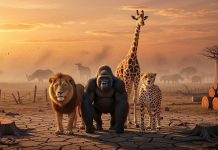
    World Lion Day: Protection of West African lions can boost tourism


    On the 10th of August, World Lion Day, the Wild Africa Fund encouraged the public to stop eating illegal bushmeat, help protect lion’s habitat, and support anti-poaching measures to help protect lions

    The total amount of lions remaining in West Africa ranges from about 120-374, and the rate of their extinction is rapid unlike those found in Southern African countries where these wild cats are protected. This transcends the loss of their habitat, they also suffer a decline in animals to prey on because of the bushmeat trade and they are sometimes killed for preying on farmers animals; the traps meant for catching bushmeats sometimes injure the lions and even kills them too.

    In Nigeria, there are less than 50 Lions in the wild, and they are found in Kainji Lake National Park and the Yankari Games Reserve, both in northern Nigeria. In Ghana, researchers could not find a single lion since they’ve all disappeared, this does not only occur in Ghana, many other West African countries also have loss or no lions at all in their country like- Côte d’Ivoire, Gambia, Mali, and Sierra Leone.

    Festus Iyorah, Nigeria’s Representative for Wild Africa Fund says in the quote “West African lions might disappear forever if we don’t urgently address the threats they face”. He further emphasised that if more practical steps are implemented, the Lions bounce back increasing the tourism rate in the country.

    A lot of countries have been able to revive the extinction of the lions in their country- Rwanda for example, was able to revive the numbers of their lions after the civil war in 1990 and the Genocide in 1994 claimed them all, after several decades of no lions in the country, seven lions from South Africa brought to Rwanda’s Akagera National Park in 2015, followed by two more male lions added to the park in 2017 were used to revive the populations of lions in the country. Today, Rwanda’s Akagera National Park has about 58 lions. Wild Africa Fund believes that protecting and rebuilding West Africa’s critically endangered lions is possible, especially in countries like Ghana, where lions are possibly extinct.

    Peter Knights, OBE, co-founder and CEO of Wild Africa Fund says that the disappearance of lions in West Africa would be tragic because it would mean no more tourist visits and there won’t be jobs in this niche like there are in southern and eastern African countries.

    Wild Africa Fund is set to enlighten the public using mass media like the radio, TV, newspapers, billboard, and social media to inform people about the threats facing West African lions and reduce demand for illegal bushmeat. This Awareness campaign also features popular Afrobeat star Davido, Nigerian footballer Alex Iwobi and a short documentary film showing the great efforts that are implemented to protect lions and their habitat.


  • From Agreement to Action: Build Back Biodiversity

    From Agreement to Action: Build Back Biodiversity

    International days and weeks serve as valuable opportunities to educate the public, mobilize political will, allocate resources to address global problems and celebrate humanity’s achievements. 

    These observances existed even before the establishment of the United Nations, but the UN has embraced them as powerful advocacy tools. 

    Additionally, the UN recognizes and commemorates various other observances to further its mission.

    Alarming statistics underscore the urgency to prioritize biodiversity conservation. 

    According to the World Wildlife Fund (WWF), the Earth has lost 68% of its global wildlife population since 1970. 

    This dramatic decline is primarily driven by human activities such as deforestation, habitat destruction, pollution, overfishing, and the illegal wildlife trade. 

    It is estimated that one million species are currently at risk of extinction, posing a severe threat to the delicate balance of our planet’s ecosystems.

    The implications of biodiversity loss extend far beyond environmental concerns. There are profound economic and social consequences as well. 

    The Intergovernmental Science-Policy Platform on Biodiversity and Ecosystem Services (IPBES) estimates that pollinators’ services’ annual global economic value of pollinators’ services alone ranges from $235 billion to $577 billion. 

    This includes the pollination of crops that form the backbone of our food systems. A decline in pollinator populations directly affects agricultural productivity and food security, exacerbating existing challenges in feeding a growing global population.

    Moreover, indigenous peoples and local communities who have traditionally coexisted with nature and relied on biodiversity for their sustenance face significant disruptions to their ways of life due to biodiversity loss. 

    Their profound knowledge of ecosystems and their stewardship practices contribute to the preservation of biodiversity and the sustainable use of natural resources. 

    Recognizing their rights, empowering their voices, and involving them in conservation efforts are essential for effective and equitable biodiversity protection.

    To address the complex challenges of biodiversity loss, the Kunming-Montreal Global Biodiversity Framework provides a roadmap for action. 

    The framework outlines targets and indicators across multiple sectors, including agriculture, forestry, fisheries, tourism, and urban planning, emphasizing the need for integrated approaches. 

    It calls for increased investment in nature-based solutions, restoration of degraded ecosystems, sustainable natural resource management, and mainstreaming biodiversity considerations into policies and decision-making processes.

    Building back biodiversity requires concerted efforts from all stakeholders, including governments, businesses, civil society organizations, and individuals. 

    It demands a paradigm shift in our relationship with nature, recognizing that biodiversity is not just a luxury but a necessity for survival and well-being. 

    Sustainable consumption and production patterns, responsible business practices, and promoting nature-based solutions are crucial steps towards a more harmonious and resilient coexistence with the natural world.

    As we celebrate the International Day for Biological Diversity, let us reflect on biodiversity’s immense value for present and future generations. 

    Let us commit to taking concrete actions to protect and restore the biological wealth of our planet. By doing so, we can ensure a sustainable future where ecosystems thrive, species flourish, and humanity coexists in harmony with nature.

    Dr. Cristiana Paşca Palmer, Executive Secretary of the CBD, said, “Biodiversity is the lifeblood of our planet and the foundation for our economies, food systems, health, and future well-being. 

    It’s time for us to step up and take decisive action to build back biodiversity, ensuring a resilient and sustainable world for generations to come.”

    The International Day for Biological Diversity reminds us that our collective efforts can make a significant difference. 

    Let us embrace this opportunity to raise awareness, inspire action, and work hand in hand towards a future where biodiversity thrives, and our relationship with the natural world is one of harmony and respect

  • Untitled post 1522

    Court sentences two men to four years imprisonment for wildlife trafficking

    A Federal High Court sitting in Lagos on Wednesday convicted and sentenced two men, John Kanu and Obinna Eze, to four years imprisonment, for conspiracy and unlawful possession of 839.4kg of Pangolin Scales and 145 kilograms of Elephant Tusks.

    Justice Nicholas Oweibo handed both Kanu and Eze the sentence after they pleaded guilty to the charges against them by the Federal Operation Unit, Zone A, of the Nigerian Customs Services, Lagos.

    The two convicts were arraigned alongside Anthony Onyebuchi and Monday Nnamanni in an amended charge marked FHC/L/123c/22.

    The convicts and the two men had pleaded not guilty to the charges when they were formerly arraigned before the court.

    However, at the resumed hearing of the case, the two convicts informed the court of their intention to change their plea, which the court granted.

    These suspects and others were arrested due to joint wildlife enforcement operations by the Nigeria Customs Service( NCS) and Wildlife Justice Commission( WJC), targeting illegal wildlife traders and traffickers from Africa to Asia.

    Following the new development, the presiding judge ordered that the amended charge be read to them.

    The two convicts pleaded guilty to the charge, while Anthony Onyebuchi and Monday Nnamanni pleaded not guilty to the authorities when the charges were read.

    The prosecutors, Mr. David Ereh, Michael Osong,, and Abidemi Aluko, while reviewing the case of the charge, told the court that the convicts’ and others on February 2, 2022, conspired among themselves to warehoused the prohibited items at Adeba in Ibeju Lekki, Lagos State.

    The prosecutors told the court that the convicts’ actions contravened sections 516 of the Criminal Code Act, Law of the Federation of Nigeria, 2004. 

    Section 7(3) of the National Environmental (Protection of Endangered Species in International Trade) Regulations,, 20n,, and punishable under section 7(4) of the same Regulations. 

    And section 5(1) of the Endangered Species (Control of International Trade and Traffic) (Amendment) Act, 2016,, and punishable under section 5(1)(a) of the same Act.

    The prosecutors urged the court to convict those that pleaded guilty to the charges and sentence them according to the sections of the laws that they were charged with.

    In his judgment, Justice Oweibo sentenced the two convicts to two years each on counts one and two while pardoning them on count three.

    The judge adjourned till September 28 for the trial of the remaining two defendants.


  • FG targets illegal wildlife trade with forest crime toolkit

    FG targets illegal wildlife trade with forest crime toolkit

    The Nigerian federal government has announced plans to use the wildlife and forest crime analytic toolkit to combat illegal wildlife trade and commercial poaching. 

    The Minister of Environment, Mohammed Abdullahi, declared this at the official presentation of the toolkit in Abuja, stating that it will aid in improving the criminal justice system and achieving the government’s mission, vision, and global commitments to nature.

    The wildlife and forest crime analytic toolkit is seen as a complete tool for fighting wildlife and forest crimes, which have resulted in over 1000 species facing extinction due to human activities. 

    To reverse this trend and address climate change, stakeholders recently gathered in Abuja to discuss the adoption of the toolkit in Nigeria.

    According to the United Nations Office on Crime and Drugs country representative, Oliver Stolpes, source and destination countries need to collaborate in combating wildlife and forest crimes. 

    Read also: Ekuri community demands 500 million naira compensation for illegal logging

    He emphasized that the legal framework in place has gaps, particularly concerning penalties and the need for investigators, prosecutors, and judges to have more capacities and resources to enforce an effective and credible criminal justice system.

    Dr. Sabri Macawi, the Head of Climate Change of the EU delegation, who sponsored the toolkit, stressed the need for collaboration among stakeholders and the importance of the toolkit. 

    He noted that the toolkit would help Nigerian legislators choose the right options for the country and compare its needs with what is proposed in the series of options provided.

    The wildlife in Nigeria is primarily poached for bushmeat, which is a very lucrative market fueled by a weak criminal justice system. The use of the wildlife and forest crime analytic toolkit is expected to upscale efforts to combat wildlife and forest crimes in Nigeria.

  • Earth day 2023-invest in our planet

    Earth day 2023-invest in our planet

    Earth Day is a global observance that takes place every year on April 22nd. This day is dedicated to raising awareness about the importance of protecting our planet and taking action to reduce our impact on the environment. Each year, Earth Day has a specific theme, and for 2023, the theme is “Invest in Our Planet.”

    The theme for this year’s Earth Day is a call to action for individuals, businesses, and governments to invest in the planet’s health and well-being. Investing in our planet means taking steps to reduce our carbon footprint, protect natural resources, and promote sustainability.

    There are many ways that we can invest in our planet. One of the most important is by reducing our reliance on fossil fuels. Burning fossil fuels like coal, oil, and gas is the largest source of greenhouse gas emissions, which contribute to climate change. By investing in renewable energy sources like solar, wind, and hydropower, we can reduce our dependence on fossil fuels and help to mitigate the effects of climate change.

    Renewable energy is an excellent way of investing in the planet’s health and well-being. It has the potential to create a more sustainable future and reduce our reliance on non-renewable resources. Renewable energy can provide significant benefits for the environment, human health, and the economy.

    For example, solar power is a renewable energy source that uses the sun’s energy to generate electricity. It is a clean and abundant source of energy that does not emit greenhouse gases, air pollutants, or water pollutants. Solar power can help to reduce our dependence on non-renewable resources like coal and oil, and it has the potential to create jobs in the clean energy sector.

    Wind power is another renewable energy source that has the potential to reduce our reliance on fossil fuels. Wind turbines convert the wind’s energy into electricity and can provide a significant amount of power to homes, businesses, and communities. Wind power is a clean source of energy that does not emit greenhouse gases or air pollutants, and it can help to create jobs in the clean energy sector.

    Investing in renewable energy is not the only way to invest in the planet’s health and well-being. Protecting natural resources like forests, oceans, and wildlife is also critical. Forests are essential for absorbing carbon dioxide from the atmosphere, while oceans are essential for regulating the Earth’s climate. Investing in the protection of these natural resources can help to preserve them for future generations.

    For example, deforestation is a significant contributor to greenhouse gas emissions. When forests are cut down or burned, the carbon stored in the trees is released into the atmosphere. Protecting forests through sustainable forestry practices, reforestation, and afforestation can help to reduce greenhouse gas emissions and preserve biodiversity.

    Investing in sustainable agriculture is another way to protect natural resources and promote sustainability. Sustainable agriculture practices like crop rotation, conservation tillage, and integrated pest management can help to reduce soil erosion, conserve water, and protect biodiversity. Sustainable agriculture can also help to reduce greenhouse gas emissions by sequestering carbon in the soil.

    Individuals can also play a role in investing in our planet. Small actions like recycling, using public transportation or biking instead of driving, and reducing meat consumption can all have a significant impact on the environment. By making sustainable choices in our daily lives, we can reduce our carbon footprint and help to protect the planet.

    Businesses also have a crucial role to play in investing in our planet. Many companies are already taking steps to reduce their environmental impact by implementing sustainable practices like reducing waste and emissions, using renewable energy, and sourcing sustainable materials. By investing in sustainability, businesses can not only reduce their impact on the environment but also save money in the long run.

    Finally, governments have a critical role to play in investing in our planet. Policies like carbon pricing, renewable energy, incentives, and regulations on emissions can all encourage businesses and individuals to invest in the planet’s health and well-being. Governments can also invest in infrastructure that supports sustainable practices, such as public transportation, bike lanes, and renewable energy projects.

    In conclusion, Earth Day 2023’s theme, “Invest in Our Planet,” is a call to action for all of us to take steps to protect the environment and promote sustainability. By investing in renewable energy, protecting natural resources, practicing sustainable agriculture, making sustainable choices in our daily lives, and implementing sustainable practices in businesses and government, we can all contribute to a more sustainable future. It is our responsibility to protect the planet for future generations, and Earth Day serves as a reminder of that responsibility.

  • Ekuri community demands 500 million naira compensation for illegal logging

    Ekuri community demands 500 million naira compensation for illegal logging

    The Ekuri Community in Akamkpa Local Government Area of Cross River State is demanding N500 million in compensation from Ezemac International Nigeria Limited for illegal logging in the Ekuri forest, a Community Conserved Area (CCA) in the area. 

    The community has also requested that the company ceases logging activities in the forest and withdraws from the area immediately. 

    Edwin Ogar, the Programme Coordinator of the Worthy Association for Tackling Environmental Ruins (WATER), who has power of attorney from the Ekuri Community to conserve and manage the community forest for the livelihood and improvement of Ekuri villagers, disclosed this on Sunday, April 16, 2023. 

    Ogar expressed that the community was no longer comfortable with the activities of the company and is seeking urgent international intervention as their forest was under threat of extinction.

    The Ekuri forest is a protected area and has equal status as the national protected areas or forests in Nigeria registered under the United Nations Environment Programme (UNEP) and the World Conservation Monitoring Centre (WCMC). 

    According to Ogar, the community has been conserving the forest for years, but the company destroyed a portion of it without permission. The community is seeking compensation for the illegal entry and destruction of a swathe of Ekuri forest, including timber, understory, poles, non-timber forest products, medicinal plants, cultural heritage, watersheds, and animal habitats.

    Ogar reported that the Ekuri forest guards discovered the destruction of the forest by the company, and when they intercepted two timber trucks coming to evacuate the wood inside the forest, they seized the keys and brought them home. He also noted that the company pleaded for mercy, claiming they were ignorant of the Ekuri boundary, and agreed to pay a fine.

    In response, Mr. Ezenwa Igwe, the Chief Executive Officer of Ezemac International Nigeria Limited, stated that he was called to open a road for the community, and his people mistakenly entered their forest and felled 112 trees. 

    He said that they entered into a peace talk, and the community requested cleansing and payment of N580,000. He added that the community asked him to pay for 100 trees and any additional trees and entered into an agreement for the money. 

    However, after two days, he was asked to stop work because he had encroached into the Ekuri forest, and the Ekuri community people removed the batteries of his caterpillars, causing damage. He expressed that they have stopped his workers from working for four months, and he has been paying N300,000 every day for the machines, which unfortunately is causing his business to fail.

  • Baby big-headed turtle finds a new home in newquay zoo

    Baby big-headed turtle finds a new home in newquay zoo

    A critically endangered big-head turtle recently found a new home at Newquay Zoo. It is appropriately called a big-head turtle because of the significant difference in the size of its head in comparison to its body. This turtle also has a unique neon stripe that goes around its shell. 

    Newquay Zoo which is part of Wild Planet Trust, a charity dedicated to helping halt species decline is home to 35 other critically endangered species which include the white and black ruffed lemurs, Javan magpies, and Visayan warty pigs among others. 

    The baby big-headed turtle whose sex is yet to be identified currently measures about 5 cm from head to tail, however, upon attaining maturity, it would grow to be about 40 cm in length. 

    Due to the size of their head, from which they gained their name, big-head turtles can’t retract their head into their shell to escape from danger like their counterparts. These turtles rather have a razor-sharp hooked beak that protects them, the beak is so strong that it is capable of crushing human bones. 

    These turtles whose natural habitats are located in regions such as Cambodia, Laos, Myanmar, Chain, Vietnam, and Thailand have greatly decreased in population by 90% within the past 90 years and are now critically endangered species. 

    This unpleasant decrease can be traced to several factors such as habitat loss which occurs as a result of intensive farming and development, climate change, habitat pollution, the pet trade, and the use of some traditional medicines. 

    Zoo keeper Simon Pratley expressed his delight in having the baby big-headed turtle brought to the zoo when he said: “Big-headed turtles are struggling in the wild, so I am really glad that we can introduce this fascinating species to our visitors and highlight the issues threatening its survival.”

    The big head turtle will be on display in the Tropical House at Newquay Zoo later this month.