Category: News

  • Prime minister Modi launches international big cats alliance to boost wildlife conservation efforts

    Prime minister Modi launches international big cats alliance to boost wildlife conservation efforts

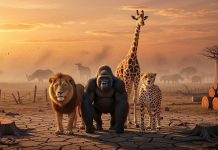
    During his visit to Karnataka on Sunday, Prime Minister Narendra Modi launched the International Big Cats Alliance (IBCA) and emphasized the need for a universal effort in wildlife protection. 

    The alliance is an extension of the call he made on Global Tiger Day in 2019 for an alliance against poaching and illegal wildlife trade in Asia. The focus of the IBCA is on the conservation of the world’s seven major big cats, including tiger, lion, leopard, snow leopard, puma, jaguar, and cheetah, and countries that are home to these cats will be part of the alliance.

    PM Modi believes that mobilizing financial and technical resources for the entire ecosystem associated with the big cats while ensuring their conservation and protection will be easy through the alliance. Under the alliance, member countries will share their experiences, help each other more quickly, and emphasize research, training, and capacity building.

    The Prime Minister also inaugurated the commemoration of 50 years of Project Tiger at Mysuru University in Karnataka and released ‘Amrit Kaal Ka Vision for Tiger Conservation’, which is a summary report of the 5th cycle of management effectiveness evaluation of tiger reserves.

    In his address, PM Modi highlighted India’s unique achievements in wildlife conservation, stating that protecting nature is part of the culture in India. 

    Despite having only 2.4% of the world’s land area, India contributes 8% to known global biodiversity. India is the largest tiger range country in the world, the largest Asiatic elephant range country with nearly 30,000 elephants, and the largest single-horn rhino country with a population of nearly 3,000. 

    India is also the only country in the world to have Asiatic lions, and its population has increased to 675 in 2020 from around 525 in 2015. The PM also mentioned that India’s leopard population increased by over 60% in four years.

    PM Modi further highlighted the work being done to clean up rivers, such as the Ganga, and how some aquatic species that were once considered in danger have shown improvement. He credited the people’s participation and a culture of conservation for these achievements.

    In conclusion, PM Modi’s launch of the International Big Cats Alliance is a significant step towards the conservation and protection of big cats and their associated ecosystems. 

    India’s unique achievements in wildlife conservation serve as an inspiration to the world, and the country’s commitment to conservation is evident through its various conservation efforts

  • The impact of climate change in Nigeria

    The impact of climate change in Nigeria

    Climate change is a critical issue that demands immediate attention. It is causing significant effects on our planet, including rising sea levels, extreme weather events, and biodiversity loss. Human activities such as deforestation and burning fossil fuels are the main causes of climate change. Impact

    The United Nations Intergovernmental Panel on Climate Change (IPCC) has issued several reports emphasizing the need for urgent action to mitigate the impacts of climate change. The latest report indicates that the world is dangerously close to reaching the 1.5°C temperature rise limit agreed upon in the Paris Agreement.

    Nigeria, like other countries, is vulnerable to the impacts of climate change. Its high dependence on agriculture and limited water resources make it particularly susceptible. The changing rainfall patterns and higher temperatures are leading to increased water scarcity and reduced water quality, which negatively impacts agriculture, ecosystems, and drinking water supply, increasing the risk of water-borne diseases.

    In addition, flooding is becoming more frequent and severe, resulting in the loss of property and infrastructure. Furthermore, the rise in sea levels due to melting ice caps and glaciers can lead to saltwater intrusion, contaminating freshwater resources and making them unsuitable for human consumption, which can lead to conflicts over water resources.

    One of the significant impacts of climate change on soil in Nigeria is desertification, which is leading to soil degradation, erosion, and loss of biodiversity, negatively impacting agriculture and food security, as well as the livelihoods of many communities.

    To mitigate the impacts of climate change, it is essential to reduce greenhouse gas emissions. This requires a transition towards renewable energy sources such as solar and wind power, as well as sustainable agriculture and forestry practices. 

    Additionally, adaptation measures such as improving infrastructure to withstand extreme weather events and promoting nature-based solutions such as wetlands restoration and mangrove planting are necessary to cope with the impacts of climate change.

    Addressing the impacts of climate change on soil and water requires a collective effort. Governments, businesses, and individuals must all play their part in handling this issue. 

    The Nigerian government has taken steps to mitigate and adapt to the impacts of climate change, such as promoting sustainable land management, reforestation, and water conservation, and increasing the use of renewable energy. However, more needs to be done to address the urgent challenges posed by climate change.

    In conclusion, climate change is having a severe impact on soil and water, which are vital components of our planet’s ecosystem. We must take action to mitigate the effects of climate change on soil and water to ensure the long-term sustainability of our planet and the well-being of all its inhabitants. It is crucial to protect our planet and ensure a sustainable future for generations to come

  • Climate change accelerates risk of pandemic outbreak

    Climate change accelerates risk of pandemic outbreak

    The acceleration of climate change is increasing the risk of disease outbreaks and the spread of Disease X, which represents a hypothetical unknown pathogen that could cause a future epidemic, according to a new report from the Coalition for Epidemic Preparedness Innovations (CEPI). 

    The Coalition is a foundation that takes donations from public, private, philanthropic, and civil society organisations to finance independent research projects to develop vaccines against emerging infectious diseases. 

    Outbreaks of deadly priority pathogens such as Lassa fever, Nipah virus, and Rift Valley Fever are becoming larger, more frequent, and more widely distributed as a result of climate change. 

    Several studies have shown that health systems are not prepared for the dual burden of climate change and escalating pandemic risk. 

    Climate change is also causing Lassa fever to extend its deadly reach far beyond its Nigerian and West African origins, according to scientists at the University of Brussels in Belgium and Scripps Research in the United States, who warned in a study published in September 2022. 

    By 2070, the number of countries across the whole of Africa that will develop the ecological conditions suitable for the Lassa virus spread could drastically increase, potentially exposing hundreds of millions more people to the disease.

    The WHO adopted the placeholder name Disease X in February 2018 to ensure that their planning was sufficiently flexible to adapt to an unknown pathogen (for example, producing broader vaccines, and manufacturing facilities). 

    Director of the United States (U.S.) National Institute of Allergy and Infectious Diseases Anthony Fauci said the concept of Disease X would encourage WHO projects to focus their research efforts on entire classes of viruses, instead of just individual strains, thus improving the WHO’s capability to respond to unforeseen strains. 

    Experts, including some of the WHO’s expert advisors, speculated that COVID-19, caused by Severe Acute Respiratory Syndrome Coronavirus type 2 (SARS-CoV-2) virus strain, met the requirements to be the first Disease X.

    The report argues that investing now in boosting global disease surveillance and early warning systems, as outlined in the 100 Days Mission, and in scientific research to prepare for known and for now unknown epidemic diseases, will mean that, just like with climate change, humans can begin to cap the rising risks, turn the tide of threats, and eventually neutralize their pandemic potential. 

    Although humans have the scientific knowledge and technical capability to contain outbreaks before they run out of control, health systems are not fully prepared for the dual burden of climate change and escalating pandemic risk.

    The changing climate is expanding the range of disease-carrying animals, fuelling spillover events, and accelerating the emergence of Disease X. The risk of the emergence of a new Disease X is increasing because of the rapidity of change in living conditions for humans and other life forms. 

    Environmental change is happening at a much higher speed now than before, which increases the likelihood that there will be (spillover of) pathogens and microbes to which humans are not adapted. Lack of immunity can cause these things to spread quickly to the whole human population.

    Despite these challenges, the report highlights that there is still reason for hope, as humanity has the scientific knowledge and technical capability to contain such outbreaks before they run out of control.

  • Nigeria, Cameroon collaborate to establish world heritage site for endangered species conservation

    Nigeria, Cameroon collaborate to establish world heritage site for endangered species conservation

    Nigeria in collaboration with Cameroon is on a mission to establish a world heritage site, the function of which would be the conservation of endangered species like the gorillas, chimpanzees, lions, and elephants which are indigenous to both countries. 

    This collaboration between the neighboring nations was made known in Calabar, Cross River State, by the Director of Cross River Landscape for Wildlife Conservation Society (WCS), Dr. Inaoyom Imong, on March 27, 2023, at a workshop on Watershed Protection for Safe Sustainable Water Supply. 

    The workshop which was sponsored by the United States Agency for International Development (USAID) is aimed at educating Nigerians on the importance of preserving wildlife. 

    “These species native to both countries are rare and few in the whole of Africa hence it is of great necessity to protect them using this facility,” Imong said.

    He further revealed that a Memorandum of Understanding (MoU) would soon be signed by the presidents of both countries and this would help both countries to attain joint conservation goals. 

    “The World Heritage Site will strengthen transboundary efforts between Nigeria and Cameroon which will make conservation more effective and reduce cost,” Imong added.

    “When the MoU is signed by the two presidents very soon, it will bring about many more benefits, including joint patrols and regular transboundary workshops between Nigeria and Cameroon.”

    He called for the reinforcement and implementation of laws to combat the incessant infiltration into protected forests and attacks on wildlife.

    He also called for support for the prosecution of violators and the creation of a code of conduct for forest rangers. 

    He further mentioned a recent workshop held for the officials of the National Environmental Standards and Regulations Enforcement Agency, (NESREA) and Nigeria Customs Service in Calabar about that. 

    “The workshop became necessary to keep relevant agencies abreast with the international dimensions which wildlife trade has assumed, including methodologies to tackle them.

    “We are also providing livelihood support for local communities in the forest areas to stem widespread poverty, and also dissuade them from invading protected areas for food,” he said.


  • Marine ecosystem: What you need to know

    Marine ecosystem: What you need to know

    Marine ecosystems are aquatic environments with high levels of dissolved salt. Marine ecosystems are defined by their unique biotic (living) and abiotic (nonliving) factors. Biotic factors include plants, animals, and microbes; important abiotic factors include the amount of sunlight in the ecosystem, the amount of oxygen and nutrients dissolved in the water, proximity to land, depth, and temperature.

    Sunlight is one of the most important abiotic factors for marine ecosystems. It’s so important that scientists classify parts of marine ecosystems—up to three—by the amount of light they receive. The topmost part of a marine ecosystem is the euphotic zone, extending down as far as 200 meters (656 feet) below the surface. 

    The euphotic zone is the disphotic zone, which can reach from 200 to as deep as 1,000 micrometers below the surface. At these depths, sunlight is still available, but only enough to facilitate some photosynthesis. Below the disphotic zone lies the aphotic zone, which does not receive any sunlight.

    Although the ocean is one continuous body of water, oceanographers have divided it into five principal areas: the Pacific, Atlantic, Indian, Arctic, and Southern Oceans. The Atlantic, Indian, and Pacific Oceans merge into icy waters around Antarctica. The ocean plays a vital role in climate and weather.

    The marine is found on every continent. The two largest bodies of water in the world are the Pacific Ocean and the Atlantic Ocean.

    Marine is the largest biome that is the natural habitat of various flora and fauna in the world. It takes up a whopping 70% of the Earth and accounts for 90% of the world’s water supply. Biome boasts more than 230 distinct species. The Marine biome is known for its salty waters which are about 33-37% salt and have a lot of biodiversity making up numerous complex ecosystems. The marine biome is prestigious due to its abiotic factor.

    The Indian Ocean is an extension of the Pacific Ocean and the Southern Ocean is an extension of the Atlantic Ocean. The Arctic Ocean is also an important marine biome.

    Did you know?

    Various types of aquatic environments make up the marine ecosystem and these include:

    The Open Ocean 

    The Deep-sea Ocean 

    The Coastal Marine Ecosystems

    Each of which has different physical and biological characteristics.

    The various types of marine ecosystem 

    The number of marine ecosystems is actively debated. Although there is some disagreement, several types of marine ecosystems are largely agreed on: estuaries, salt marshes, mangrove forests, coral reefs, the open ocean, and the deep-sea ocean.

    Estuaries 

    An estuary is a coastal zone where oceans meet rivers. Here, nutrients and salts from the ocean mix with those from the river in regions sheltered from extreme weather. As a result, estuaries are among the most productive places on Earth and support many types of life. 

    Salt Marshes

    Salt marshes occur where oceans meet the land. These places are rich in nutrients from sediment brought in by the ocean. Marshes are regularly flooded by high tides, making the surrounding ground wet and salty.

    Mangrove Forests 

    These ecosystems frequently flood with ocean water, submerging the roots of mangrove trees. The root systems of mangroves filter out salt and sit above ground to access oxygen. These trees provide a home for a variety of species. Animals, such as fish, crabs, shrimp, reptiles, and amphibians, live among the mangrove’s roots while its canopy provides a nesting site for birds.

    Coral Reefs 

    A bit farther out into the tropical sea are coral reefs, euphotic-zone ecosystems built from the exoskeleton secreted by coral polyps. These exoskeletons form complex structures that shelter many different organisms. Coral reefs are extremely diverse ecosystems that host sponges, crustaceans, mollusks, fish, turtles, sharks, dolphins, and many more creatures. By some counts, coral reefs can account for a quarter of all ocean species.

    Open Ocean 

    Open ocean ecosystems vary widely as the depth of the ocean changes. At the surface of the ocean, the euphotic zone, the ecosystem receives plenty of light and oxygen, is fairly warm and supports many photosynthetic organisms. Many of the organisms that we associate with marine ecosystems, such as whales, dolphins, octopi, and sharks, live in the open ocean. 

  • House of Reps approves the conversion of 10 game reserves into National Parks

    House of Reps approves the conversion of 10 game reserves into National Parks

    On Thursday, the House of Representatives approved the conversion of 10 game and forest reserves across Nigeria into national parks, by a declaration signed by President Muhammadu Buhari. The motion was put forward by House Leader Ado Alhassan Doguwa, and moved by Deputy House Leader Peter Akpatason.

    The President signed a Declaration Order on November 16, 2022, to declare 10 parks as national parks. These parks include Allawa Game Reserve in Niger State, Apoi Forest Reserve and Edumenum Reserve in Bayelsa State, Falgore Game Reserve in Kano State, Baturiya Wetland Game Reserve in Jigawa State, Kampe Forest Reserve in Kwara State, Kogo Forest Reserve in Katsina State, Marhai Forest Reserve in Nasarawa State, Oba Hill Forest Reserve in Osun State, and Pandam Forest Reserve in Plateau State.

    According to Akpatason, the President had requested the House’s concurrence, in keeping with Section 18 of the National Park Service Act, by communicating in writing about the 10 new national parks.

    Deputy Speaker Ahmed Idris Wase emphasized that the motion would not only enhance the beauty and tranquillity of Nigeria but also create employment opportunities.

    In addition to creating employment opportunities, the conversion of these reserves into national parks is expected to boost tourism in the country. National parks offer visitors an opportunity to experience the natural beauty of a region, as well as its flora and fauna, and Nigeria has a rich diversity of wildlife and natural resources to offer.

    Moreover, the creation of national parks is also a step towards the conservation and protection of these natural resources. National parks are usually managed by government agencies, and their primary objective is to conserve and protect the natural environment, including its wildlife, landscapes, and cultural heritage.

    By designating these reserves as national parks, the government can regulate human activities within these areas, such as hunting, logging, and other destructive activities that could harm the environment. This would ensure the preservation of these natural resources for future generations to enjoy.

    It is worth noting that Nigeria already has seven national parks, including Cross River National Park, Gashaka-Gumti National Park, and Yankari National Park. The addition of these 10 new national parks will not only expand the country’s protected areas but also improve their accessibility to visitors.

    In conclusion, the approval of the conversion of these reserves into national parks by the House of Representatives is a positive step toward the conservation, protection, and promotion of Nigeria’s natural resources. It is expected to create employment opportunities and boost tourism, while also ensuring that these natural resources are preserved for future generations

  • The Kamuku National Park

    The Kamuku National Park

    The Kamuku National Park is a park in northern Nigeria that is situated in the west of Kaduna State. The park sits on a landmass of about 1,120km in length and is adjacent to the Kwiambana Game Reserve to the northwest of the state. 

    The park which was established in 1936 as the Native Authority Forest Reserve of Birmin Gwari has a typical Sudanian Savanna ecology. However, in May 1999, the park was updated from being a state Game Reserve to being a National Park. 

    This transformation can be attributed to the success of a community-based project which educated the members of the community on sustainable resource usage, managed by Savanna Conservation Nigeria, a national NGO. 

    The Kamuku National Park which is separated from the Kwiambana Game Reserve only by River Mariga remains the finest area of the savanna in Nigeria.  

    The park’s landscape is mostly flat with stunning biodiversity features which sustain a medley of flora and fauna including the critically endangered African elephant. 


    Other species of animals include baboons, warthogs, antelope, and a host of other animals including reptiles, frogs, rodents, fish, and monkeys. 

    Another special feature of the park is the Dogon Ruwa Waterfalls and its unique species of birds of nearly 177 different kinds which makes the park an ornithologist’s dream destination. 

  • The threat of massive floods and food scarcity looms over Nigeria in 2023

    The threat of massive floods and food scarcity looms over Nigeria in 2023

    One of the major impacts of global climate change is flooding, this seasonal occurrence has been predicted by the Nigerian Meteorological Agency (NIMET) and the Nigerian Hydrological Services Agency (NIHSA) Annual Flood Outlook stating that about 178 Local Government Areas across 32 states and the Federal Capital Territory are at high risk of flooding, conceivably worse repetition of the 2022 flooding. 

    As a result, early warnings have been issued by the National Emergency Management Agency (NEMA) on expected pervasive flooding across many states in Nigeria. These early warnings are targeted primarily at vulnerable communities with the potential of being displaced as a result of the impending floods to make contingency plans. 

    These predictions, therefore, make it more than necessary to carry out climate change mitigation and adaptation strategies for better preparedness for upcoming floods.  

    The devastating 2022 floods claimed a total of 662 lives while 3,174 were injured and a total of 2,430,445 were displaced as revealed by the Director General of NEMA, Mustapha Habib Ahmed. Going on this data, the anticipated floods of 2023 hold very grim prospects for food security in Nigeria. 

    Nigeria ranks 103 out of 121 countries in the Global Hunger Index, the World Bank and the National Bureau of Statistics have respectively ranked 133 million Nigerians which is 63% of the population as being poverty ravaged and surviving on less than 2 dollars per day. Nigeria has also sadly been ranked by the United Nations Development Program (UNDP) as one of the most climate-vulnerable countries in the world. 

    Flooding is known to induce land degradation, land use change, and water pollution, unfortunately, 30 out of 36 States impacted by the 2022 flooding are yet to engage in damaged land remediation and restoration. These States include Delta, Rivers, Cross River, and Adamawa just to mention a few. 

    NEMA’s early warning of flooding and evacuation of occupants of flood-prone communities as a precaution against getting submerged can lead to the risk of food production being disrupted in places like Kogi, Ogun, and Benue among others. 

    Cyclical displacement of people and farmers often affects food availability and accessibility and the adverse effects of this fractured food supply are already being felt as the post-2022 flooding estimates, food prices have skyrocketed by a whopping 23.34% according to the National Bureau of Statistics. 

    These grim statistics call for urgent action on the part of the government to implement nature-based solutions to combat floodings such as restoring wetlands, removal of property and population from floodplains, implementing reforestation programs, and desilting drains and water bodies. In order the mitigate the devastating impacts of upcoming floods 


  • The value of wetlands

    The value of wetlands

    Wetlands are areas of land that are either covered by water or saturated with water. The water is often groundwater, seeping up from an aquifer (an underground layer of rock or earth that holds groundwater) or spring. 

    Wetlands have also been described as terrestrial or semi-terrestrial ecosystems characterized by low drainage quality, slow waters or seldom standing water bodies filled with soil. 

    The water found in wetlands also sometimes comes from a nearby river or lake. In coastal regions that experience strong tides, however, seawater can also create wetlands. 

    Wetlands are transition zones usually covered by water for most of the year but the depth and duration of the seasonal flooding experienced on wetlands vary. Wetlands have the characteristic of not being totally dry land or underwater, they have the characteristics of both. 

    The three major kinds of wetlands are marshes, bogs, and swamps. This categorization is done based on the floral habitat and associated soil components. 

    Swamps 

    A swamp is a wetland that is permanently covered by water and dominated by trees. There are primarily two types of swamps which are the saltwater swamp and the freshwater swamp. Freshwater swamps are common in inland areas while saltwater swamps protect coasts from the open ocean. 

    Freshwater swamps most times are formed on flat land around lakes or streams where the water table is high and runoff is low. The water level on these flat lands sometimes fluctuates due to seasonal rainwater and flooding. Plants such as cattails, lotus, and cypress grow in the swamp’s wetland soil to maintain the ecosystems of the swamp. 

    Saltwater swamps are usually seen around tropical coastlines. These swamps begin to form with bare flats of mud or sand that are lightly covered by seawater during high tides. The water is a mixture of both freshwater and seawater. Plants such as mangrove trees which can tolerate brackish water are found in these areas. 

    Marshes 

    Swamps often give way to marshes, these wetlands firm a flat, grassy fringe near river mouths, in bays, and along coastlines. Many of them are alternately flooded and exposed to the movement of tides. Just like swamps, marshes are usually divided into freshwater and saltwater categories. 

    Freshwater Marshes 

    These marshes are often dominated by grasses and aquatic animals. These marshes develop around lakes and streams and are located hundreds of kilometers from the coast. Many marshes can be found in the region of North America through the northern Midwest of the United States. The fertile soil and temperate climate make the marshes in this region some of the richest in the world. 

    Saltwater Marshes 

    Saltwater marshes are some of the richest ecosystems for biodiversity. These marshes are full of grasses hence they provide nourishment to fungi, algae, shellfish, amphibians, fish, and reptiles. Other animals also feed on the vegetation and insects found in the marshes. 

    Bogs 

    While marshes and swamps are mostly found in warm climates, bogs which are known as ferns or moors are often located in cold or arctic areas in North America, Europe, and Asia. They also exist in high altitudes in warm climates like the Sierra Nevada and the United States. 

    Similar to many wetlands, bogs develop in areas where the water table or the upper surface of underground water is high. They usually begin in glacial depressions called kettle lakes. These kettle lakes slowly fill up with plant debris, and leaves, roots, and stems of large plants accumulate on the bed of the lake. As the lakes get shallower, mosses and other plants growing along the edges of the lake extend into the lake. 

    As they float over the lake and get tangled, they attract water-loving grasses and sedges, and soon the lake is filled with vegetation. Some of the vegetation decay in the water and form a thick spongy mat called peat. Peat is a useful fuel in many parts of the world, it is usually burned for heating and cooking. It is also the first step in the process of making coal. 

    The value of wetlands to life can not be overemphasized. Wetlands provide many ecosystem services such as water treatment and purification, serve as a buffer zone, and provide a vital resource for humans and animals. Across the globe, wetlands provide huge resources like reefs, lakes, rivers, tidal flats, and rice fields.

    Wetlands are also used for recreational purposes like bird watching, sailing, and sports activities. Added to the fact that they are wildlife habitats for species including birds, amphibians, and mammals that are uniquely adapted to aquatic environments. 

    Wetlands are also useful for sediment protection and trapping, erosion control, and recycling of wastewater. Additionally, wetlands are useful for farming, especially the cultivation of rice and fish. 

    Wetlands are not to be regarded as wastelands as they were in the past when people felt that they should be drained or used as dumping grounds. Rather they should be regarded as places that provide important services to the environment and humans. 


  • NCF opens applications for S.L Edu Memorial Grant

    NCF opens applications for S.L Edu Memorial Grant

    Calls for applications have been made by the Nigerian Conservation Foundation (NCF) for the year 2023’s edition of the annual Chief S.L Edu Memorial Ph.D. Research Support Grant which has been under the sponsorship of Chevron Nigeria Limited (CNL) since the commencement of the initiative in 2006.

    The grant is targeted at Nigerian citizens to promote research in biological sciences, environmental management, Law (Environmental Law/ Protection) and allied fields related to nature conservation, environmental resource management and enhancement of livelihoods in Nigeria.

    The theme of this year’s Research:
    Research focusing on Nature-Based Solutions to Climate Change”

    DEADLINE:
    31st March, 2023

    Apply using the link below:
    https://bit.ly/SLEDUGRANT2023

    Copy link into browser if it doesn’t open.