Category: News

  • ANI Foundation Signs 30-year Agreement with Edo State Government

    ANI Foundation Signs 30-year Agreement with Edo State Government


    Africa Nature Investors (ANI) Foundation has announced the signing of a 30-year long agreement with the Edo state government for conservation/eco-tourism concession in Okomu South and Gele-Gele Forest reserves.

    ANI Foundation announced the move on Wednesday via its Twitter handle.

    The foundation highlighted the benefit of the agreement for not only the indigenes but also some endangered species.

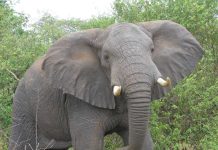
    “These two areas are contiguous with Okomu National Park. We hope to create a larger conservation landscape that will benefit both the local people and endangered forest elephants,” ANI Foundation tweeted.

    “The larger conservation landscape in Edo State will benefit wildlife and improve the livelihoods of the local communities and farmers.”

    Kada Ngbale a governance, policy and culture enthusiast congratulated and commended both parties referring to the pact as historic and as a pace setter. He expressed hope that other states will follow Edo’s example.

    “I look forward to seeing Adamawa and Taraba States where bestride the Gashaka Gumpti National Park sign a deal as important as this in the near future,” Ngbale said.

    However, in an exchange of tweets with the culture enthusiast, ANI Foundation revealed that in collaboration with the Federal Government in 2017, it had signed a similar 30-year agreement with the National Park Service regarding Gashaka Gumti National Park.

    ANI also stated that there is a similar agreement between it and the Nigeria Parks for Okomu National Park also in Edo State which was signed in May 2022.

  • Ugandan man nabbed with elephant ivory gets life sentence

    Ugandan man nabbed with elephant ivory gets life sentence

    Pascal Achiba was on Thursday, October 20, 2022 sentenced to life imprisonment by the country’s Standards, Utilities and Wildlife Court after he was convicted for the unlawful possession of protected species the state operated Uganda Wildlife Authority (UWA) reported in a statement.

    Mr Pascal was caught with nearly 10kg of elephant ivory and therefore, was handed the country’s highest penalty ever for wildlife violations.

    Achiba had earlier been arrested in January in a suburb of the capital Kampala alongside two pieces of ivory weighing 9.55kg.

    The head of UWA, Sam Mwandha referred to the sentence as “a landmark achievement in the fight against illegal wildlife trade.”

    The business of poaching and illicit wildlife trade is rife in Uganda where the police seize hauls of ivory, rhino horns, pangolin scales and other wildlife products.

    Being a previous offender, Achiba had earlier served an 18month jail term for having four pieces of ivory, so for the above reason he bagged a life sentence for being a “habitual offender” quoting the court’s chief magistrate.

    Justice was also served a man who pleaded guilty in July 2020 for killing Rafiki, a dearly loved gorilla in Uganda as he gained an 11year long jail sentence. .

  • Walk for Nature 15th Edition: Lagos state collaborates with NCF.

    Walk for Nature 15th Edition: Lagos state collaborates with NCF.

    The  15th edition of the yearly walk for nature is set to hold on the third Saturday of the month of October and this year the agenda is to to call attention to the importance of preserving nature and enhancing the quality of life across the state.

    In his statement during a press conference that was targeted at sensitizing the public on the significance of this year’s Walk for Nature, the Commissioner for the Environment and Water Resources, Mr Tunji Bello said that the event over time has continued to create awareness and alert Lagosians to the need for nature conservation and biodiversity.

    The Permanent Secretary, Office of Environment, Dr. Omobolaji Gaji, speaking on behalf of the Commissioner mentioned that the state government is desiring to demonstrate interest in conservation matters through partnership and collaboration with both the private sector and non-governmental organization in adherence to Sustainable Development Gols 17 (SDG17).

    He further explained that the state government had since 2008 been teaming up with NCF to enlighten the public on the importance of environmental protection and conservation by virtue of this yearly program titled: “Walk For Nature”.

    The walk for nature is scheduled to hold simultaneously in three different locations namely: Ikoyi, Ikeja, and Surulere.

    According to Dr. Omobolaji, this partnership with NCF has been in place for the past 15years and that the theme for each year is coined from the theme of World Environment Day.

    The Director General of NCF, Dr. Joseph Onoja, emphasised that the program was meant to build more awareness on the actions that put a strain on biodiversity and wildlife as well as to enhance behavioural change amongst the people towards nature.

    He pointed out that people should always remember that the more they endanger some species by killing them and practicing deforestation, the more they are harming themselves.

    He exhorted everyone to learn how to treat nature well in order to foster a healthy lifestyle .

  • World Migratory Birds Day: Dim the lights for birds at night

    World Migratory Birds Day: Dim the lights for birds at night

    Each year, birds travel hundreds and thousands of miles between breeding and non-breeding sites. They fly across the world to warmer climates where food is more abundant and days are longer.

    While migrating, the birds encounter challenges and obstacles. Light pollution stands out among migratory birds challenges. For this reason, this year’s commemoration calls on people to ‘Dim the lights for Birds at night’, quite apt.

    Light affects basically all spieces as it can attract and disorientate organisms. Lights also interfere with pollination, foraging, predator-prey relationships.

    The World migratory bird day is commemorated twice a year in May and October respectively. The event taking place on October 8, focuses on light pollution and it’s impact on birds.

    The executive secretary of Convention on Migratory Bird Spieces (CMS) Amy Fraenkel, while making her opening remarks in a Webinar held by various stakeholders around the world observed that “light pollution is a significant and growing threat to wildlife including migratory birds, and each year light pollution contributes to the death of millions of birds.

    “It can change their migratory patterns, foraging behaviour, and can attract and disorientate them making them more vulnerable to collisions and other dangers.

    “Natural darkness is as important to conservation as clean water, air and soil.”

    The objective of world migratory bird day is to bring the newest scientific research to people around the world, raising awareness about the phenomenon of migration. Where birds go, how they navigate and the factor that impacts their success. As well as the possible solutions to the problem.

    These include turning off or dimming non-essential lighting during critical migration periods. This will go a long way to drastically reduce dangers from attraction to and disorientation by light, thereby allowing birds to proceed safely with their migratory journeys.

    These light out will benefit not only the migrating birds by helping them stay on track, but it will also save energy and money for humans as well.

    Let’s all turn off the lights at night. (more…)

  • 9 LGA in Kogi submerged in 2022 floods

    9 LGA in Kogi submerged in 2022 floods

    The destruction of countless numbers of homes began the spate of flooding in various areas of the Kogi State, especially the capital Lokoja and Ajaokuta Local Government Area in late September. This led the state government to swing into prompt action by turning schools into temporary centers which sheltered about 10,000 victims.

    The Governor has since then affirmed that the flooding has affected 9 LGAs which cut across the Niger and Benue rivers and these include: Lokoja, Kogi-Koto, Ajaokuta, Ofu, Igalamela-Odolu, Bassa, Idah, Ibaji, and Omala.

    He further mentioned that Ibaji is nearly 100% submerged while the other parts are about 30% flooded. Other inland LGAs also have some measure of flooding from smaller rivers and tributaries.

    While issuing a statement on the incident on the 1st of October 2022, Governor Yaha Bello expressed his dismay over the happening saying ” I am deeply distressed by the scope if devastation and suffering that has already been visited on our people by the rising floodwaters this year”

    He further stated ” we therefore have a serious humanitarian tragedy on our hands, but I wish to assure every person, family and community which has been affected that they are not alone and that help is coming.”

    With the assistance extended from national partners, the state government will be in a position to provide shelter at different Internally Displaced Persons (IDP) Camps, as well as food, medicine, clothing, monetary donations and security among other things.
    While efforts are made towards more sustainable solutions

    The Federal Government has reported over 300 deaths and 100,000 displaced people across the nation in September.

    Governor Yahaya Bello has noted that 2022 floods have been confirmed as Nigeria’s worst flood disaster in a decade and appealed to President Muhammadu Buhari, to declare a State of National Disaster as a result of the flooding in Kogi and other affected states like it was done in 2018.

    The Governor stressed that “the declaration will help to unlock the nation’s latent capabilities to respond more aggressively with more men, money and materials to this harrowing situation”

    On October 4th 2022, Nigeria’s National Emergency Management Agency (NEMA) reported an unprecedented flood in border areas of Kogi and Enugu State. In Uzo-Umani LGA around 35,200 people have been affected, 53,800 hectares of farm land submerged, along with houses, roads, bridges and public facilities, schools, community health centres, markets and places of worship.

  • World Ozone Day 2022

    World Ozone Day 2022

    The World Ozone Day is held every year on the 16th of September and was again commemorate this year with the theme: “Global Cooperation to Protect Life on Earth.”

    The theme of this year’s event was announced by the United Nations and it underscores the measures that must be put in place for the preservation of life on earth.

    The Ozone Day which is celebrated every year on a global scale on the 16th of September, is geared towards prompting talks and widespread awareness on the depletion of the ozone layer.

    The ozone is a layer in the earth’s atmosphere which forms a protective shield that absorbs most of the ultraviolet radiations that reaches the earth from the sun. Therefore, every year the United Nations announce a theme for the celebration which focuses on the prompt action that must be taken by the people and the government to protect the ozone layer.

    The History

    The observance of the World Ozone Day began in 1995, when it was initiated to raise awareness about the importance of the Ozone Layer to our environment.
    The discovery about the impact human activities were making on the ozone layer was made by scientists in the 1970s and they made their apprehensions known.

    As a result of that, various governments across the globe embraced the Vienna Convention for the Protection of the Ozone layer and resolved to save it.

    The World Ozone Day held on 16th September focuses on remembering this accomplishment and to demonstrate that the collective decision taken is the answer to this major global problem.

    World Ozone Day and the Montreal Protocol

    The World Ozone Day of 2022 was observed to Mark the signing of the Montreal Protocol which is an international treaty that is designed to protect the ozone layer by eliminating the production of the numerous substances depleting the ozone layer.

    The Montreal Protocol was agreed upon on September 16, 1987, and it went into effect on January 1, 1989. Ever since, the Montreal Protocol has been revised 9 times which include: 1990 (London), 1991 (Nairobi), 1992 (Copenhagen), 1993 (Bangkok), 1995 (Vienna), 1997 (Montreal), 1998 (Australia), 1999 (Beijing), and 2016 (Kigali)

  • Five fun facts about lions you need to know

    Five fun facts about lions you need to know

    In the commemoration of the World’s Lion day which took place on the 10th of August, we bring you these exciting facts to celebrate “the King of the jungle”.

    The lion which is also known by it’s scientific name Panthrea Leo, is one of the most famous wild animals familiar to mankind. The strong, fearsome animal has it’s habitat essentially in Africa and India.

    It’s physical features include a muscular, broad-chested body with a short rounded head, round ears and a hairy tuft at the end of it’s tail.
    The male lions are differentiated from their female counterparts by their full and prominent mane among other characteristics of the lion which will be enumerated below.

    1)  Lions are hardy and adaptable animals and are thereby capable of living in dry regions such as the kalahari Desert. Here the lions depend on plants such as the Tsamma melon as a water source. They also survive on smaller preys like the porcupines more often than those living in lush environments.

    The tan golden skin colour of the feline also aids its adaptability because that makes it possible for the animal to hide between tall grasses in the wild while stalking its prey. Added to that, the hue of the lion’s furry coat makes it possible for it to conceal itself from its enemies as it blends perfectly with the blades of grass around it.

    2)  The impressive looking mane wrapped cozily around a lion’s neck and chest is grown only by the male lions and this begins as early as three years of age. However, the manes serves more vital purposes than just aesthetics. They grow as long as 16cm and gives the lion a bigger and more imposing look than it normally has.

    Added to that, as the lions grow older, the mane gets thicker and darker which are indicators of a strong and healthy male. Also the illusion of size the lion acquires courtesy of the mane makes it more attractive to the females and helps in scaring off potential rivals.

    The mane is also an important armour which protects the lion’s neck and head in battles and while hunting.

    Research has indicted that the thickness and size if the mane is influenced by environmental factors and not necessarily genetics. For instance local temperature can influence the growth of the mane.

    Lions living in colder temperatures are likely to grow fuller and more attractive manes. On the other hand, lions living in hot climates have adapted to growing scanty manes or no manes at all for that matter.

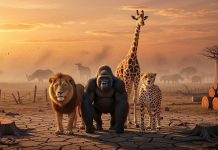
    3)  Another fun fact about lions is their appetite. Lions are known to be carnivorous in nature that is, they only eat meat. They consume land animals such as zebras, antelopes, buffaloes etc. Large animals like elephants and giraffes also make it to the menu especially when they are injured or sick.

    On occasion lions feed on leftovers or steal from other predators such as the hyena, wild dogs or leopards.

    Lions are such voracious eaters that they can eat up to a quarter of their body weight in a single meal, which amounts to about 40kg of meat.

    4)  What is the life span of lions? Lions are known to live between 8-25 years. In the wild they survive for 8-10 years unlike those in captivity who live for up to 25 years.

    The life expectancy of lions in the wild is shortened by the fact that young male lions are often kicked out of the pride at tender ages. Additionally, there are regular fights to defend the lion’s position in the pride which may result in death.

    The females nevertheless have a better chance at a longer lifespan than the males

    Adult males lions are also known to commit infanticide when they overthrow a new pride. They kill off all the cubs to begin a new family carrying only his genes.

    5)  Now let’s talk about the hair-raising roar of the lion.

    The roar of the lion is a means of communicating with other members of the pride, in addition to send a warning message to other lions outside the pride that the territory is already occupied.

    The roar of the lion is measured at 114 decibels which occurs at a level twice higher than the amount of safe hearing for humans and can be heard from 8km (5miles) away.

    The roar is also estimated to be 25 times louder than a petrol powered lawnmower.

    These are just a few among the numerous fun facts to be learned about the majestic feline. It behoves on us all to come together to protect the lion and other animals that are susceptible to human attacks by refusing to hunt them down and desist from activities that contribute to the loss of their habitats .

  • Threats to the continued existence of the African Manatee on the rise

    Threats to the continued existence of the African Manatee on the rise

    In recent years, there has been an increased threat to the existence of the African Manatee owing to the surge of hardship and abject poverty among rural dwellers who are dependent on the wetlands.

    The attention of the Biodiversity Preservation Centre was brought to the hunting and killing of a Manatee by the residents of Ntan Oboe Community of the Itu wetlands. However their presence at the scene was met with great hostility by the members of the community while they tried to take tissue samples from the dead animal.

    The Biodiversity Preservation Centre has called on the government to provide a different means of ekeing out a living for the rural dwellers as this will give the BPC the moral justification to enforce the law against offenders and has also in strong terms decried the random killings of these mammals.

    A request has also been extended to members of the public to join in educating communities both far and wide in the need to become guardians of our planet earth as this will ensure a great future for posterity.

  • Nigeria’s conservation centre in Uyo provides a new home to rescued turtles

    Nigeria’s conservation centre in Uyo provides a new home to rescued turtles

    No less than 40 turtles, some of whom have been wounded and distressed, have so far been rescued by various individuals and brought to the Conservation centre.

    A pair of turtles were last month found and saved in Akwa Ibom, a state in Nigeria’s South-south region well known to be a fertile ground for the peddling of wildlife for food and have since been taken to a conservation centre in Uyo.

    Pilot Enim Akwa, happened to be the rescuer of these two turtles when he bought them off a roadside trader looking for buyers. Thereby protecting the animals from becoming pieces of meat in a family’s cooking pot.

    These animals are considered to be a delicacy in Nigeria and have thus earned a special designation as “bushmeat”.
    Unsurprisingly, according to the research conducted in 2020 by Wildaid, an organisation combating the global consumption of wildlife, more than half of Nigeria’s population, precisely over 70% have feasted on wildlife at some point or the other.

    The Biodiversity Preservation Centre welcomed the rescued turtles as Mr Akwa handed them over to Edem Eniang, a professor of wildlife and the head of the centre in the company of his wife.

    Commenting on her husband’s commitment to the conservation of wildlife, Mrs Enwongo said in a Facebook post: ” I truly admire Enim, and the way he is firmly rooted where wildlife and the environment is concerned. He walks the talk, truly.” She also added that he had a similar “turtle rescue mission” nearly two years ago.

    The turtles brought in are evaluated for any signs of trauma and helped to get healed before they are released into the wild.

    The swamps around the Atlantic Ocean is the hunting ground where the indigenes go to hunt for the turtles.
    However many others are brought into Akwa Ibom from nearby Cross River State where there are more stringent rules that attract punitive actions from the rangers at the National Park against anyone nabbed engaging in wildlife trade.

    According to Mr Eniang, the spot along the highway where Mr Akwa bought the turtles is known as a turtle trade point in Akwa Ibom.
    “Most times one passes there you’ll see them hanging them upside-down for sale” he observes. “So Inim (Akwa) is in the habit of, if he sees them when he is coming back from work, he will take them from those people and bring them for rehabilitation and release into the forest.
    “I’m really amazed at his interest in the Preservation of that species.” He added

    The specie of turtles rescued by Mr Akwa are an endangered specie known as the terrapin often found in fresh water and for a certain should not be hunted, eaten, or traded according to the professor.

    “The Convention on International Trade in Endangered Species of Wild Fauna and Flora (CITES) prohibits the trade on Species. CITES is domiciled in Nigeria at the Federal Ministry of Environment. ” Mr Eniang said.

    “Number two, the Convention of Biological Diversity which Nigeria is also signatory forbids us from trading in them.

    “But most importantly, the Nigeria Endangered Species Act also forbids, likewise the National Park Act of Nigeria, the trade on this Species.”

    Giving an insight into why he loves conservation, Mr Akwa revealed that it was inculcated into him by his father who always stressed the need to take care of nature. Thus by the time he got into secondary school he joined a conservation organisations which helped to hieghtened his knowledge and passion for conservation.

    It is however a huge challenge to stop this practice of wildlife trade as the people who engage in it both in Akwa Ibom and in other parts of the country do not understand the value of conservation.
    Mr Eniang hit the nail on the head as to what is truly informing this relentless practice of wildlife trade when he asked the pertinent  question: ” But how can you plant conservation etiquette in a mind that is hungry?” And added: “There is so much hunger in the land, there’s so much challenge for survival. So nobody will listen to you except you give them an alternative. We need to build that into the conservation plan.”

    “Funny enough, on my way back again today I saw one turtle again. I paid for it. I will take it to the professor. Today’s own, they wanted me to pay N5,000 but I ended up paying N3,000 for it.” Mr Akwa explained

  • Could Migaloo the rare world-famous humpback whale be dead?

    Could Migaloo the rare world-famous humpback whale be dead?

    On Saturday morning, the carcass of a white albino humpback whale suspected to be the world’s most famous humpback whale named Migaloo was found ashore the Mallacoota beach in Eastern Victoria, Australia.

    Peter Coles a resident of the island was out fishing when he saw the dead animal. Commenting on the incident he said: ” it was beautiful even though it was dead. It was pretty spectacular. It was pure white and marble looking. I thought it looked like a sculpture, it almost didn’t look real. I paced it out and it was 10m long. I didn’t touch it and it was a bit smelly. There weren’t any signs of decomposition but it did look very, very dead.”

    Concerns abound in the hearts of many that this could actually be Migaloo – the snow – white whale who had often been sighted off the coast of Australia as far back as 1991 and became somewhat famous.

    Mr Cole went further to express feelings of sadness over the demise of the outstanding creature. ” I felt sad for the poor creature not knowing it might be Migaloo” he said

    Migaloo who was possibly born in 1986 has been missing for the past two years after losing his tracking chip.

    While making further remarks on his discovery, Mr Peter mentioned that it was later that he found out about the scarce whale adding:  “when talk came about, I realised it could be something quite rare if it is the white whale. It would mean I witnessed something incredible without knowing it at the time.”

    According to deep-sea specialists, the location of the white whale tallies with Migaloo’s migration pattern. Therefore with the aid of photos and genetic sampling, scientists are at the moment working hard to ascertain the identify of this particularwhale, perhaps it could be Migaloo.

    Migaloo is presumed to be about 15m long and about 40-tonnes in weight. Therefore, owing to it’s size, Mr Cole and others alike doubt whether the creature is actually Migaloo. He said “I think people are quite hesitant to call it Migaloo as many thought the whale would have been bigger”

    Dr Vanessa, a Wildlife scientist and a part of the group looking into the incident tweeted: “Currently working with other scientists to identify this individual. This may or may not be #Migaloo. Nothing confirmed yet. #watchthisspace.”

    Warnings have been made by the Victoria’s environment department (DELWP Victoria) that people should not touch or interfere with the dead whale as significant penalties will be meted out on anyone trying to take unapproved samples such like teeth as a souvenir.

    Migaloo which means “white fellow” was first captured on video in 2010 12 miles from the Green Island near the Great Barrier Reef in North Queensland. He is the only known all-white humpback whale in the world.
    Humpback whales are estimated to live for about 40-50 years which will make Migaloo about 36years old at the moment, which adds to the probability of this white whale not being Migaloo.