Category: Fauna

  • Nigeria’s last elephants wrestle for survival in forgotten reserve as Omo Forest suffers neglect

    Nigeria’s last elephants wrestle for survival in forgotten reserve as Omo Forest suffers neglect

    At dawn, the Omo Forest comes alive with a cacophony of whispers. Giant mahogany trees are blurred into a soft cloak of mist, with the melody of chirping birds emerging from the morning fog. Somewhere deep in the forest, some of the last herd of elephants in southwestern Nigeria quietly map the damp soil with their feet.

    But the calm is deceptive. Omo Forest Reserve, a 1,305-square-kilometer protected area in Ogun State, is under siege. Chainsaws snarl in the distance. Cocoa farms spread like wounds through the undergrowth. Timber trucks rumble down bush paths carved illegally into the reserve. And poachers, emboldened by weak enforcement, leave behind snares, gun shells, and fear.

    Here, Nigeria’s last forest elephants are forced to the brink.

    Amid this crisis stands one man, Emmanuel Olabode, a conservationist whose life has become entwined with the fate of these elephants. For nearly a decade, he has walked the forest, tracked the animals, recruited rangers, and tried to reconcile communities with conservation.
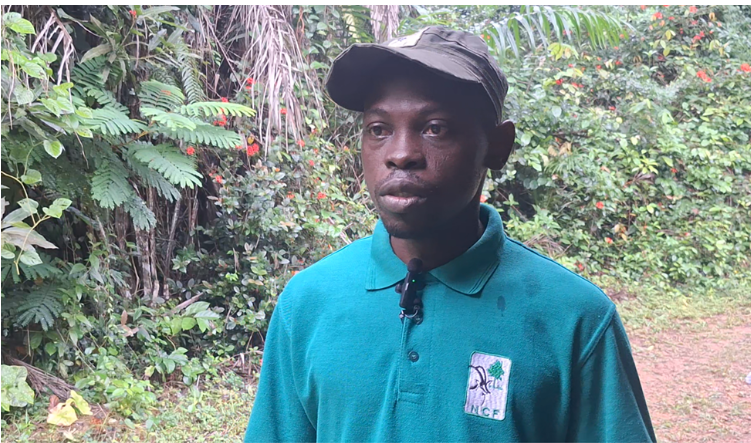
    Olabode Emmanuel, one of Nigeria's most outspoken rangers
    Olabode Emmanuel, one of Nigeria’s most outspoken rangers

    The ranger who cares 

    “When I first heard about elephants in Omo, I didn’t know they were so close to Lagos,” Olabode recalled, his voice carrying both awe and disbelief. “It took months of following footprints, droppings, broken branches, signs everywhere, but no actual sighting. When I finally saw them, it was one of the most intriguing moments of my life.”

    As project manager of the Forest Elephant Initiative at the Nigerian Conservation Foundation, Olabode leads a small team of 12 rangers tasked with protecting Omo’s fragile wildlife.

    “We use the elephants as a flagship species,” he explained. “If we can save them, we can save everything else here, chimpanzees, monkeys, birds, even the trees themselves.”

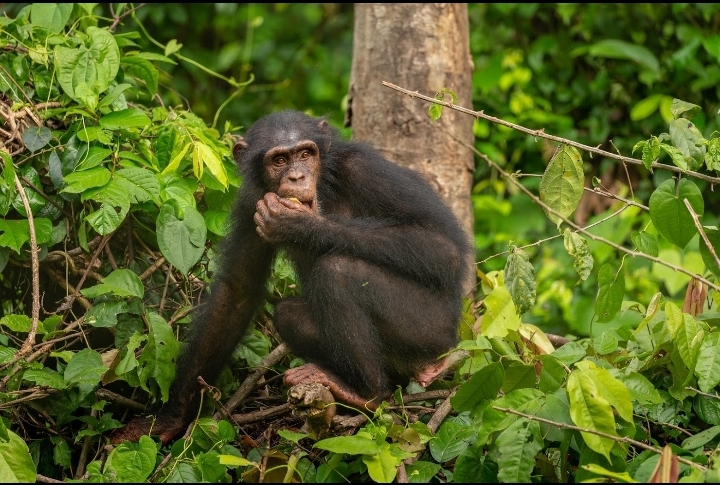
    But elephants are only a part of the story. Omo shelters over 200 tree species and more than 100 types of mammals and birds, from the rare Nigeria-Cameroon chimpanzee to the endemic white-throated guenon monkey. Each faces the same fate: survival or vanishing, determined by how quickly the destruction of Omo is curbed.

    “Biodiversity is a critical part of our work,” Olabode explained. “We are losing species that once defined this forest. Some are so rare now that even researchers spend years without spotting them.”

    A forest under siege

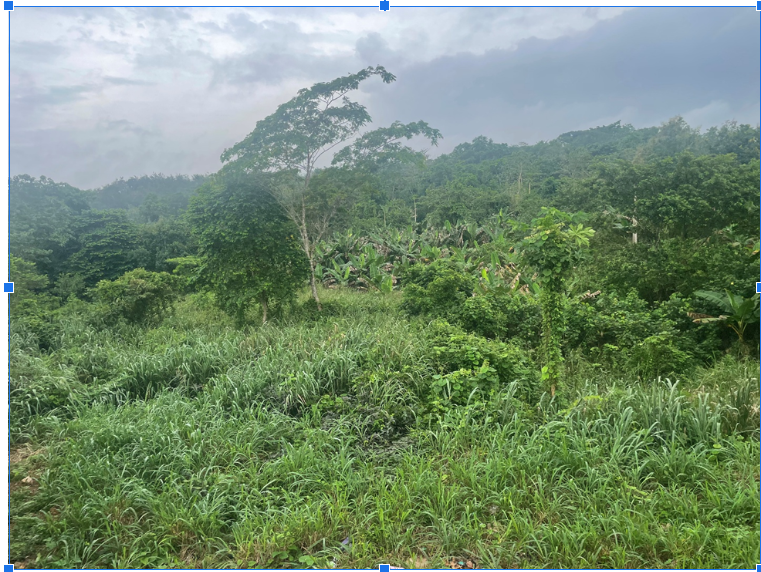
    Driving into Omo Forest is like stepping into two colliding worlds. On one hand, towering rainforest trees soar above all else, their buttresses anchoring the soil. On the other hand, yearning gaps reveal scars of human invasion, fresh tree stumps, charred earth from slash-and-burn farming, and makeshift camps of loggers.
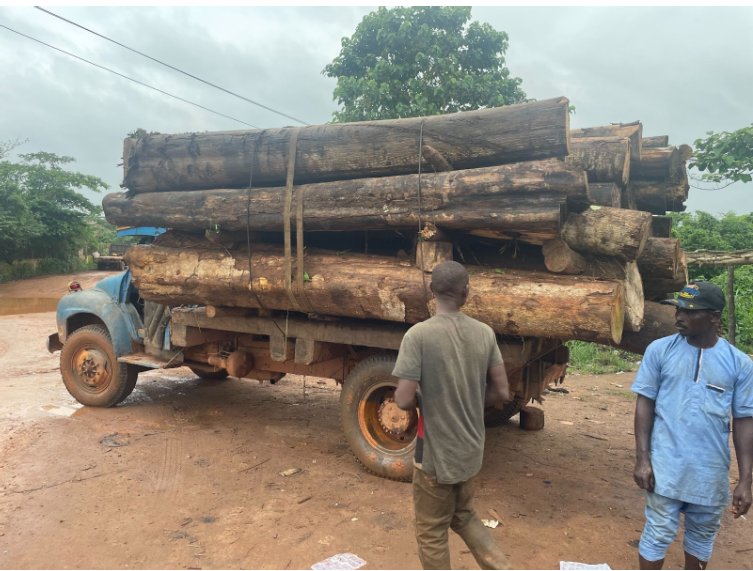
    loggers in the Omo reserve

    Officially, Omo is designated a Strict Nature Reserve, a classification that should bar extractive activities. In reality, illegal timber harvesting and subsistence farming flourish, threatening the integrity of the forest. Over the years, seven percent of its tree cover has been lost,  a number that underestimates the intensity of ongoing degradation.

    Olabode’s rangers routinely encounter poachers and illegal loggers, sometimes armed and aggressive. “It is dangerous work,” he admitted. “Some of them will attack anything that comes their way. We also deal with human-wildlife conflicts when elephants raid farms or when farmers encroach deeper into elephant habitat. Every day is a struggle.”

    The risks are compounded by the terrain itself: rangers trek for hours through rivers, hills, and thick undergrowth, often in torrential rains. “This is not like working in a zoo where animals are behind fences,” Olabode said. “Here, we share the same space with them.”

    Turning poachers into protectors

    Perhaps the most striking shift in Omo’s story lies in the men who once hunted its wildlife but now stand guard over it.

    For instance, Gbenga Ogunwole, a wiry man with a ready smile, hitherto spent years hunting antelope and monkeys to feed his family. Today, dressed in a faded ranger’s uniform, he patrols the forest alongside Olabode.

    “World Ranger Day is meaningful to me,” Ogunwole said. “Before, I was part of the problem. Now I’m part of the solution. People now recognise our work — to protect nature instead of destroy it.”

    By recruiting former hunters as rangers, the Forest Elephant Initiative not only reduces poaching but also integrates local knowledge of animal behaviour and forest navigation into conservation. This approach has also improved relations with nearby communities, who once saw rangers as outsiders threatening their livelihoods.

    “We regularly visit villages, talk to people about why conservation matters — not just for animals, but for human life,” Olabode explained. “When they see their own brothers wearing the ranger uniform, it changes the narrative.”

    Between Farmers, Loggers & Elephants

    Still, the battle for Omo is as much economic as it is ecological. Farmers cultivate cassava and cocoa deep inside the reserve, while loggers, some backed by powerful syndicates, target prized hardwoods like mahogany. Both groups argue they rely on the forest to survive.

    “Everybody claims the forest is theirs,” Olabode said. “The farmers say they must feed their families, the loggers say they need timber for their business. But where do the elephants go if we lose the forest?”

    The result is frequent tension. Rangers are caught in the middle, enforcing conservation laws that are often undermined by weak prosecution and political interference. Arrested loggers or poachers sometimes walk free, eroding ranger morale.

    “Our work will only succeed if policies are enforced,” Olabode insisted. “If offenders are arrested and prosecuted, it will deter others. Right now, too many cases end with nothing.”

    The farmers’ perspective is layered

    In J4, a settlement inside the reserve, cocoa trees line the forest edges in neat, cultivated rows. For thousands of farmers, cocoa is life.

    Akeji Femi, former public relations officer of the Association of Cocoa Farmers in J4, has lived here since 1995.

    “There had been no incident of elephants attacking humans,” he said. “There was already cocoa farming by the time I got here.”

    Akeji Femi, a former Public Relations Officer of the Association of Cocoa Farmers
    Akeji Femi, a former Public Relations Officer of the Association of Cocoa Farmers

    Akeji Femi, a former Public Relations Officer of the Association of Cocoa Farmers


    For Femi, farming in the reserve is not theft but survival. He described a system where farmers, many of them migrants, pay multiple levies to gain access to farmland.

    “We pay money to different community chiefs to get land. In 1995, we paid N5,000. Now, in 2025, it is N100,000. Then we pay to government more than N13,000 per tonne of cocoa. We pay the state Ministry of Agriculture. Most of us are visitors in these communities. We don’t fight for land. We stay where we are given.”

    We pay money to different community chiefs to get land. In 1995, we paid N5,000...
    We pay money to different community chiefs to get land. In 1995, we paid N5,000…

    For him, the solution lies not in conflict but in clearer land use policies. “What I recommend is for the government to give us a portion to do cocoa farming, while they can also set another part for forest preservation,” he said. “We know there are parts set for the elephants which we don’t go to.”
    on paper, zoning sounds good
    on paper, zoning sounds good

    On paper, this sounds simple: zoning the forest to balance agriculture with conservation.

    In reality, blurred boundaries, weak enforcement, and political interests make it far messier. Farmers often find themselves encroaching into restricted zones either knowingly or unknowingly, while rangers struggle to enforce rules without appearing hostile to communities who feel they have paid their dues.

    But while cocoa farmers defend their presence, others accuse them of being a greater threat to the forest than anyone else.

    Odunayo Ogunjobi, a timber contractor licensed by the Ogun State Ministry of Forestry, has watched with alarm as swathes of economic trees are felled to make way for cocoa plantations.

    “The government generates as much as over N8 million from me alone,” Ogunjobi said, “excluding the other indirect workers who depend on me. But illegal cocoa farmers are destroying the forest. They cut down valuable economic trees in Omo’s J4 area just to pave way for cocoa farms.”

    Odunayo Ogunjobi

    Odunayo Ogunjobi

    He recalled that during the administration of former governor  Gbenga Daniel, illegal farmers were expelled from forest reserves across the state. “As soon as Daniel left office in 2011, they all returned and increased in numbers,” he said, his frustration clear. “Now they pose a great threat to the security and economy of the state.”

    For Ogunjobi and other contractors, the issue is not just about wildlife, but also about the sustainability of the timber industry itself.

     “We are struggling to get timbers because most of the illegal contractors are taking over everywhere,” he said. “We generate a lot of revenue for the government, but no one seems to be listening to our cry. No one is monitoring the forest. At this rate, in the next two or three years, the trees or forests will go extinct.”

     Paper trail 

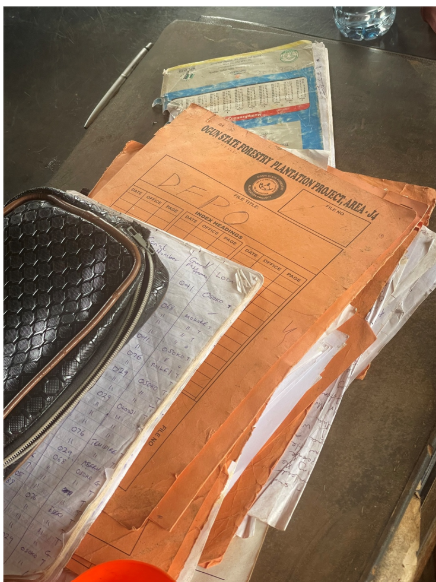
    Evidence of the state’s deep financial entanglement in the forest economy is captured in a document pinned on a wall at Area J4: “OGUN STATE FORESTRY PLANTATION PROJECT, AREA J4. PROJECT ACCOUNT NUMBERS FOR CONTRACTORS”.

    The notice lists official bank accounts for payments tied to different forestry activities: Eco Bank 5452011799 – for Gmelina exploitation; Eco Bank 5452011782 – for 25% FTF (Forestry Timber Fee); Wema Bank 0120291519 – demarcation amount of N20,000 and Wema Bank 0120291935 – a non-refundable amount of N50,000.

    The structured fees, covering exploitation, levies, demarcation, and administrative charges, reveal how forestry exploitation is not only permitted but institutionalised by the state. Contractors, like Ogunjobi, pay millions into these accounts. But cocoa farmers also pay chiefs, ministries, and additional levies, creating a dual system of extraction.

    This fragmentation of authority means that while the state can claim legitimacy through bank receipts, farmers can also claim legitimacy through receipts from chiefs and agricultural ministries. The result is overlapping rights and competing claims to the same forest — a recipe for conflict and unsustainable exploitation.

    The Global Ranger Crisis

    Omo’s challenges mirror a larger crisis across Africa. With human populations expanding and forests shrinking, rangers are the thin green line between survival and extinction for countless species.

    “Rangers are nature’s first line of defense,” said Linus Unah, West Africa Director for Wild Africa. “Without them, our iconic wildlife like lions, elephants, and gorillas could disappear forever.”
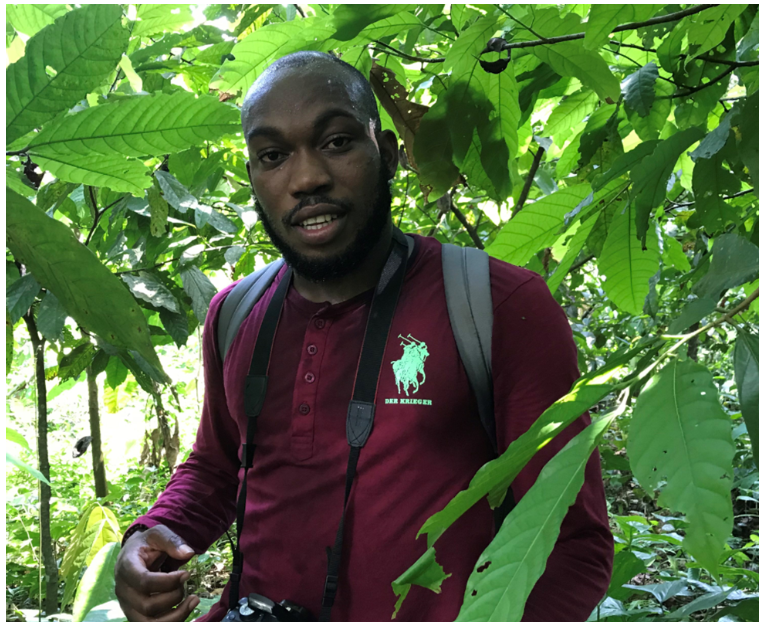
    Linus Unah, West Africa Director for Wild AfricaThe human cost of conservation
    Linus Unah, West Africa Director for Wild AfricaThe human cost of conservation

    Yet, beneath the passion lies sacrifice. Rangers spend weeks away from their families, exposed to harsh weather, loneliness, and sometimes hostility from their own communities.
     

    “Some rangers are ostracised because they arrest neighbours or relatives involved in illegal activities,” Unah explained. “It takes resilience and dedication.”

    Globally, the mental toll of ranger work is only beginning to be recognised. Exposure to violence, animal attacks, and isolation often leads to trauma. Without support systems, many rangers suffer in silence.


    “People celebrate us once a year on World Ranger Day,” said Ogunwole, the former hunter. “But for us, every day is ranger day. We wake up not knowing what we will face.”


    Yet, rangers remain under-resourced. Globally, there are an estimated 280,000 rangers, a fraction of the 1.5 million needed to protect 30 percent of the planet’s land and sea by 2030. Between 2006 and 2021, more than 2,300 rangers died on duty worldwide, 42 percent from criminal activity linked to wildlife crime.


    For Omo’s team, the lack of insurance, medical care, and protective equipment compounds the dangers. “Rangers also have families, they have dependents,” Olabode said. “They deserve life insurance, healthcare, and proper motivation. Without that, the risks are enormous.”

    The human cost of conservation

    Yet, beneath the passion lies sacrifice. Rangers spend weeks away from their families, exposed to harsh weather, loneliness, and sometimes hostility from their own communities.

    Rangers spend weeks away from their families, exposed to harsh weather, loneliness, and sometimes hostility from their own communities.
    Rangers spend weeks away from their families, exposed to harsh weather, loneliness, and sometimes hostility from their own communities.

    “Some rangers are ostracised because they arrest neighbours or relatives involved in illegal activities,” Unah explained. “It takes resilience and dedication.”

    Globally, the mental toll of ranger work is only beginning to be recognised. Exposure to violence, animal attacks, and isolation often leads to trauma. Without support systems, many rangers suffer in silence.


    “People celebrate us once a year on World Ranger Day,” said Ogunwole, the former hunter. “But for us, every day is ranger day. We wake up not knowing what we will face.”

    Nigeria’s Forgotten Elephants

    Elephants once roamed widely across Nigeria. Today, fewer than 400 are thought to remain in scattered pockets across the country, from Yankari Game Reserve in Bauchi to Okomu National Park in Edo. Omo Forest may hold fewer than 100, perhaps Nigeria’s last viable forest elephant population.

    Forest elephants play a critical ecological role. By feeding on fruits and trampling vegetation, they disperse seeds and open pathways that allow forests to regenerate. Scientists call them “gardeners of the forest.” Losing them would unravel Omo’s ecological fabric.

    But Nigeria’s elephants have long been neglected in conservation planning. International headlines often spotlight East Africa’s savannah giants, while their forest cousins fade in obscurity. For Olabode, this invisibility makes the struggle harder.

    “If elephants disappear from Omo, Lagos will be the only megacity in the world with elephants at its doorstep that failed to protect them,” he said quietly.

    A ray of hope

    Despite the odds, Olabode insists the fight is not a losing battle. Awareness campaigns have begun to shift community attitudes, and government officials have shown renewed interest in supporting conservation.

    “We are making progress, even if it is slow,” he said. “With government support and stakeholder collaboration, we can secure this forest.”

    Wild Africa, alongside Nigerian Conservation Foundation, is pushing for stronger laws, ranger support, and integration of conservation into national planning. “It requires political will,” Olabode stressed. “Government must act before it is too late.”

    For rangers like Odamo Yemi, the work is deeply personal. “I love to protect nature, and I love to watch animal behaviour,” he said. “Even if it is risky, it is worth it.”

    What is at stake

    The fate of Omo’s elephants is not just about wildlife. The forest provides clean water, carbon storage, and climate resilience for millions in southwestern Nigeria. Its loss would accelerate flooding, soil erosion, and heat extremes in a region already grappling with climate shocks.

    “Protecting elephants means protecting people too,” Olabode said. “If the forest is gone, where will we go?”

    As dusk settles over Omo, the forest hums with cicadas and distant birdcalls. Somewhere in the shadows, the elephants move quietly, their survival balanced precariously between conservation efforts and human pressures.

    For now, the rangers keep watch, weary but undeterred. Their fight is for elephants, for Omo, and for a future where Nigeria’s last giants are not forgotten.


    This article was produced in partnership with Wild Africa. It was first published on www.businessday.ng
  • Nigeria’s Dwindling Elephant Population Sparks Urgent Conservation Call

    Nigeria’s Dwindling Elephant Population Sparks Urgent Conservation Call

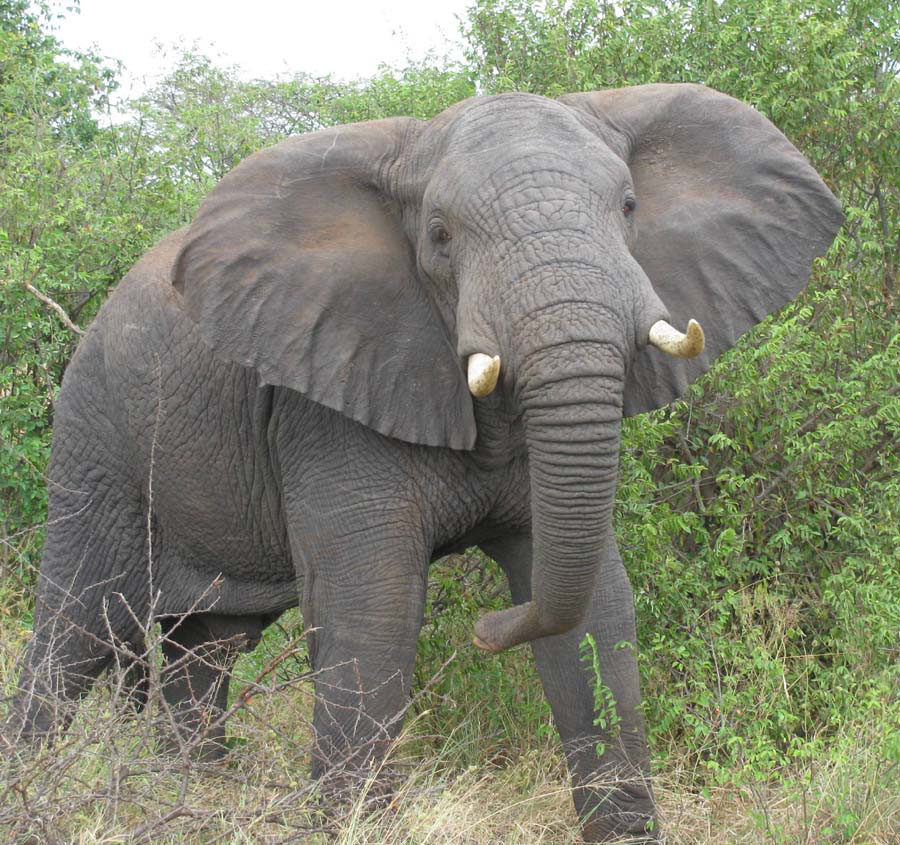
    As the world marked World Elephant Day on August 12, 2025, with the theme “Bringing the world together to help elephants,” wildlife conservationists in Nigeria sounded the alarm over the country’s rapidly declining elephant population. According to reports from conservation groups, the number of elephants in Nigeria has plummeted from over 1,200 to just about 300-400 in the last 30 years.

    Threats to Nigeria’s Elephants

    The main threats to Nigeria’s remaining elephants are habitat loss caused by agriculture, logging, and infrastructure development, pushing elephants into farmlands and villages in search of food and water. This has led to human-elephant conflicts, resulting in fatal incidents. In July, an elephant killed a farmer in Ogun State, highlighting the seriousness of the conflict.

    Conservation Efforts

    Conservation organisation Wild Africa is pushing for Nigeria to step up efforts to protect its remaining elephants. The newly launched National Elephant Action Plan (NEAP) aims to protect habitats by securing and restoring elephant habitats and connecting fragmented ranges through wildlife corridors. The plan also seeks to reduce conflicts by implementing early warning systems and non-lethal deterrents like chilli repellents to minimize human-elephant conflicts.

    Read also: FG launches 10-year plan to combat elephant poaching and preserve wildlife

    Also, the plan aims to boost law enforcement to combat wildlife crime and mitigate habitat degradation. This is particularly relevant as Nigeria considers the Endangered Species Conservation and Protection Bill, which could enhance the country’s capacity to protect its wildlife.

    Mark Ofua, West Africa Representative for Wild Africa, emphasised the need for deliberate planning and stronger law enforcement to protect both elephants and people.

    “When elephants have access to safe habitats and corridors, they’re less likely to come into conflict with communities. But achieving that requires deliberate planning, investment, and stronger law enforcement,” Ofua said.

  • Hope restored as critically endangered chimpanzee gives birth in Chester Zoo    

    Hope restored as critically endangered chimpanzee gives birth in Chester Zoo   

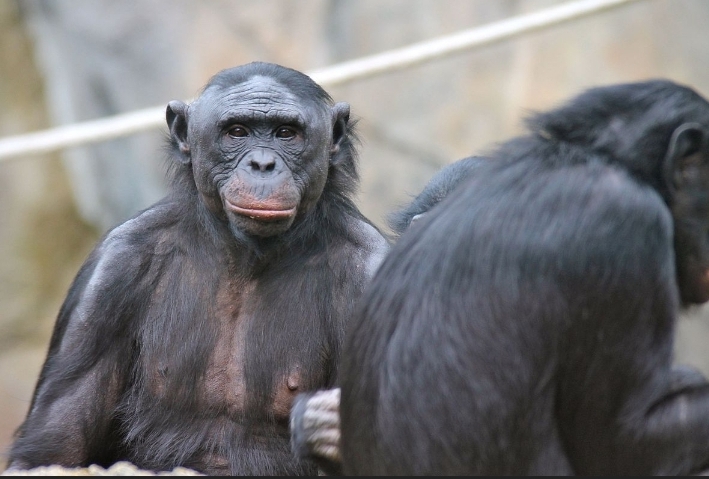
    The birth of the world’s rarest chimpanzee gives reasons for celebration among conservationists across the world who commented, saying that it gives hope to the world’s rarest chimpanzee. 

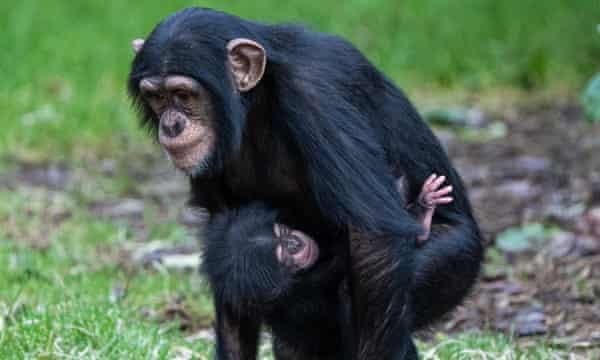
    The critically endangered Western chimpanzee named Zeezee gave birth to a male baby chimpanzee on the 9th of December after an eight-month gestation period. The baby is reported to be in good health and is spending time bonding with its mother and the other 22 members of the Western chimpanzee troop. 

    The Western chimpanzee was the first subspecies of chimpanzee to be declared to be a critically endangered species by the International Union for the Conservation of Nature (IUCN) as far back as 2016 after it experienced an 80% decline in population over the past 25 years. 

    Human activities which include poaching, habitat loss, and habitat fragmentation have also been at the root of the loss of these species. The species have therefore gone extinct in many parts of West Africa such as Benin, Burkina Faso, and Togo. 

    However, around 18,000 Western chimpanzees remain in some parts of Africa. Some of its population can still be found in places like Senegal, Ghana, and Guinea, with the largest population being in Guinea

    Andrew Lenihan the team manager at the zoo’s primate section expressed his excitement when he commented saying “we’re incredibly proud to see a precious new baby in the chimpanzee troop.”

    “Mum ZeeZee and her new arrival instantly bonded and she’s been doing a great job of cradling him closely and caring for him” he mentioned in the press release. 

    Lenihan continued by saying ” a birth always creates a lot of excitement in the group and raising a youngster soon becomes an extended family affair. 

    “You’ll often see the new baby being passed between other females who want to lend a helping hand and give ZeeZee well-deserved rest and that’s exactly what her daughter, Stevie, is doing with her new brother. It looks as though she has taken a real shine to him, which is great to see” he further stated. 

    During the press release, Lenihan observed, “he may not know it but ZeeZee’s new baby is a small but vital boost to the global population of Western chimpanzees, at a time when it’s mostly needed for this critically endangered species.” 

    The newborn will be named after a famous rock star as mentioned in the press release in keeping with an age-old tradition 


  • World’s oldest male gorilla, Ozzie, dies at 61 at Zoo Atlanta

    World’s oldest male gorilla, Ozzie, dies at 61 at Zoo Atlanta

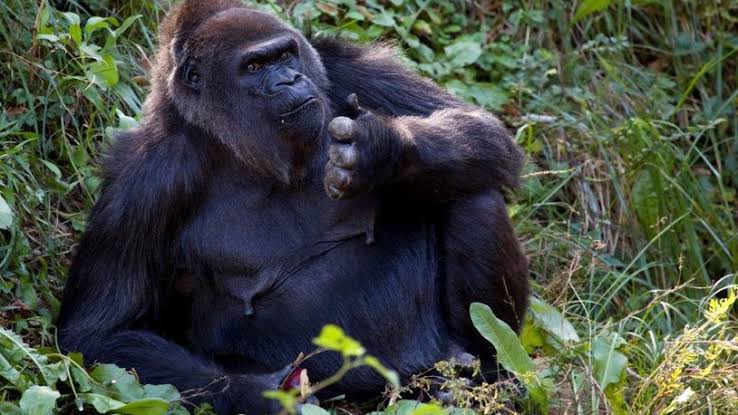
    Ozzie, a western lowland silverback was found dead by his care team on Tuesday morning, the zoo reported in a news release. He was 61.

    While the cause of death isn’t known, Ozzie had been treated for facial swelling, weakness and an inability to eat or drink over the last 24 hours before his death the zoo said.

    Ozzie was one among the 13 gorillas of Zoo Atlanta who tested positive for Covid 19 last year. The officials of the zoo believe that the apes contracted the disease from a zoo worker who was fully vaccinated and was wearing protective equipment. The worker was also said to be asymptomatic.

    The results of the ape’s necropsy which is being carried out by University of Georgia veterinary college will be release upon its completion.

    “This a devastating loss for Zoo Atlanta, while we knew this day would come someday, that inevitability does nothing to stem the deep sadness we feel at losing a legend.” park CEO Raymond King commented.

    The oldest living gorilla is Fatou, who turned 64 last year at the Berlin zoo, while Helen turned 63 on January 1st at the Louisville zoo. Making Ozzie the third oldest gorilla in the world.

    Ozzie was brought to Zoo Atlanta in 1988. He fathered 12 gorillas, enjoyed oranges and cabbage and hated loud music.

    The western lowland gorilla inhabits the rainforest of Central Africa, it’s one of four subspecies of the Great ape. Unfortunately, according to the World Wildlife Fund, a conservation group, poaching and diseases have shrunk it’s population by 60 percent, putting the animals in the critically endangered species category.

  • How a Bayelsa community is working with conservation experts to save the Niger Delta red colobus monkey

    How a Bayelsa community is working with conservation experts to save the Niger Delta red colobus monkey

    About 200 critically endangered Niger Delta red colobus monkeys are beneficiaries of a rare collaboration between a community and a conservation organization. This population of the monkey species is likely the most viable left in the world.

    The Apoi community of Bayelsa State and the Southwest Niger Delta Forest Project of the Foundation for Sustainability of Ecosystem, Wildlife and Climate (FOSEC) joined hands to establish a new 1,000-hectare (2,741-acre) community conservancy in the Apoi Creek Forest.

    The conservancy will be jointly managed by the Apoi community and SW/Niger Delta Forest Project, which has been working there for seven years before a formal Memorandum of Understanding was signed recently. This community-based conservation effort is key to the survival of the species, which is one of the 25 most endangered primates in the world. About three groups of the monkey have territories in the conservancy.

    The MOU between SW/Niger Delta Forest Project and community leaders was signed on September 27. Chief Vinmarh G. Fietabara, chairman of the Council of Chiefs; Mr. Edu Kemeghesuotei, chairman of the Apoi Community Development Committee (CDC) and Mr. Godday S. Awudu, Apoi youth president, all signed the agreement and the entire Apoi community—all of its members—attended the signing ceremony, as well as some members of neighboring communities that share boundaries with the new conservancy.

    Director of SWNiger Delta Forest Project, Rachael Ikemeh Ashegbofe and Chairman, Apoi Council of Chiefs,  Chief Vinmarh G. Fietabara shaking hands after signing the MOU on conservancy creation and management
    Director of SWNiger Delta Forest Project, Rachael Ikemeh Ashegbofe and Chairman, Apoi Council of Chiefs, Chief Vinmarh G. Fietabara shaking hands after signing the MOU on conservancy creation and management

    Director of SW/Niger Delta Forest Project, Rachel Ashegbofe Ikemeh said the presence of the endemic Niger Delta red colobus monkey known locally as the “epieni” was an important factor in the recognition of the forest as a wetland of international importance under the Ramsar Convention in 2008.

    “Recent surveys provided evidence that this forest remains key to the continued survival of the remnant population of the Niger Delta red colobus monkey,” she added.

    Niger Delta red colobus monkeys only live in a dense swamp forest that is extremely difficult to navigate, the species was only discovered and described by science in 1993. Researchers with SW/Niger Delta Forest Project can only reach the forests in dug-out canoes and wading through murky waist-deep water.

    In the 1990s researchers estimated that the species population in the forests was about 10,000. However, the population is currently down to a mere 500 individuals living scattered across an extremely small area. The monkeys’ current range is estimated to be between 200 and 78 square kilometers from a known historical range of 1,500 square kilometers.

    Lack of adequate wildlife protection laws, indiscriminate logging, hunting and oil extraction in the species habitat are a few of the reasons behind its decline. The new Apoi community bylaws are the first-ever protections for the Niger Delta red colobus.

    The SW/Niger Delta Forest Project and the Apoi community are developing a five-year management plan, which will establish formal protection for Niger Delta red colobus, improve land-use planning, adopt sustainable livelihood initiatives for the local community and improve the quality of the marsh forest. The Apoi community has already begun enacting and implementing new bylaws and efforts to demarcate the boundaries of the conservancy are underway.

    The community conservancy is only the second-ever created in Nigeria.

    The organization is taking a community-based approach to this conservation effort which establishes formal protection for the species while also supporting community partners to improve land use planning, adopt sustainable livelihood practices and improve the quality of marsh forest habitat through an all-inclusive management approach to ensure benefits to both biodiversity and the community.

    “We have a really strong partnership and have developed a solid relationship over the last 6 to 7 years, thanks to the continued presence of our team on the ground and the persistent efforts of our project director, so I believe we will tactfully surmount any challenges we may encounter,” said Kosipre Williams, a field officer for SW/Niger Delta Forest Project.

    Since 2013, the SW/Niger Delta Forest Project has monitored two populations of Niger Delta red colobus monkeys in Apoi Creek Forest and Kolotoro-Ongoloba Forest, overlapping Azagbene, Azama and Aleibiri territories. It has also pushed for local, state and international intervention to help the Niger Delta red colobus, which is on the brink of extinction.

    “What Rachel and her team have accomplished, working in close collaboration with the Apoi Community, is truly remarkable, especially when one considers that the Niger Delta region is one of the most complicated and often dangerous regions to work in all of Africa,” said Russ Mittermeier, chief conservation officer for Global Wildlife Conservation. “This species is one of the highest priorities in our soon to be published Red Colobus Action Plan, covering all the species of this most endangered African primate genus.”

    The SW/Niger Delta Forest Project has worked closely with the International Union for Conservation of Nature’s SSC Primate Specialist Group and The Red Colobus Conservation Network and is supported by the Rainforest Trust, Margot Marsh Biodiversity Foundation, Mohammed Bin Zayed Species Conservation Fund, GWC’s Primate Action Fund, Primate Conservation Inc., National Geographic Society and other philanthropies. 

  • Covid19: Experts call for greater protection of great apes

    Covid19: Experts call for greater protection of great apes

    Conservation experts have called for the suspension of all great ape tourism to protect the species from Covid19. They have also called for other protective measures for the great apes.

    The experts recommend that innovative measures are needed to reduce the risk of wild gorillas, chimpanzees and orangutans from encountering the virus.

    SARS-CoV-2, the coronavirus responsible for the current COVID-19 pandemic, is also a threat to our closest living relatives, the great apes, conservationists reveal in a letter in Nature

    Read also: Cross River gorilla conservation gets support from US

    “As leading experts in the conservation and health of these animals, we urge governments, conservation practitioners, researchers, tourism professionals and funding agencies to reduce the risk of introducing the virus into these endangered apes,” the letter co-author by Thomas Gillespie,  Emory University, Atlanta, Georgia, USA, and Fabian Leendertz, Robert Koch Institute, Berlin, Germany. 

    “They can do this by applying the International Union for Conservation of Nature’s best-practice guidelines for health monitoring and disease control in great-ape populations.”

    It is yet unknown if morbidity and mortality associated with SARS-CoV-2 in humans are similar in apes. However, transmission of even mild human pathogens to apes can have severe negative effects on the apes.

    Read also: National Park Service suspends group visit over Covid19

    Many great apes are already facing difficult situation due to habitat loss and poaching.

  • Nigerian conservationist, Ikemeh wins Whitley Award 

    Nigerian conservationist, Ikemeh wins Whitley Award 

    • Rachel Ikemeh honoured for protecting newly discovered chimpanzee group

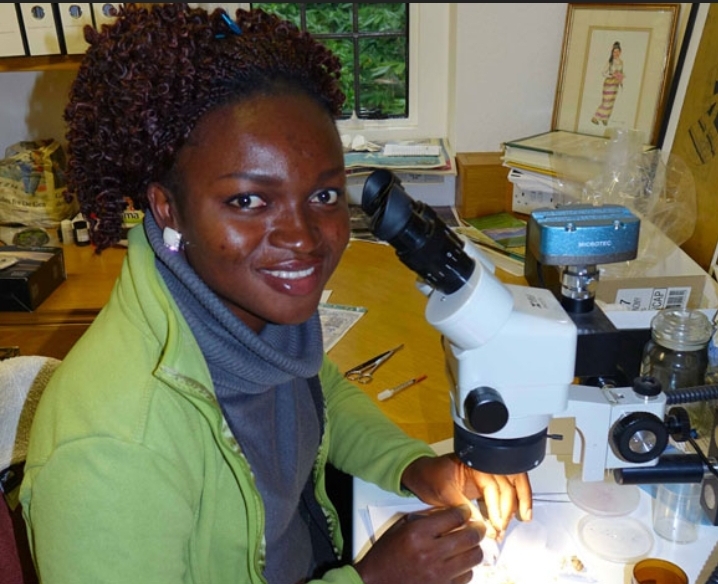
    Leading conservationist Rachel Ashegbofe Ikemeh has won a prestigious Whitley Award worth £40,000 for her work with chimpanzees in her home country of Nigeria.

    The Director and Founder of the SW/Niger Delta Forest Project, Rachel’s research and conservation work addresses the decline of chimpanzees and their habitat. With 80 Percent of forests lost to uncontrolled farming and logging, chimpanzee habitat has been disappearing at an alarming rate. Chimps are also under threat from poachers, hunted for their body parts.

    Read Also: Celebrating conservation champions on IWD 2020

    The Whitley Awards, often referred to as ‘Green Oscars’, are awarded annually to individuals from the Global South by UK-based conservation charity the Whitley Fund for Nature (WFN). Rachel is one of six conservationists to be recognised this year for their achievements in nature conservation.

    Rachel came into the conservation world after accepting an internship at the Nigerian Conservation Foundation, and soon realised she had found her calling. After the Nigerian-Cameroon chimpanzee was declared the most endangered of all chimpanzee groups in 2012, Rachel launched her project in the Idanre Forest cluster and Ise Forest Reserve; refusing to stand by and watch these great apes continue to decline. 

    Read also: Ise Forest Reserve gets conservation area

    Over the past eight years, she and her team have led a genetic study amongst other relevant activities, which in 2018 found that whilst chimpanzee populations in the South West and Niger Delta of Nigeria share ancestry with the Nigeria-Cameroon chimpanzee, they are in fact a distinct group. This exciting discovery reinforced the urgent need to protect this group of chimpanzees, helping Rachel to gain support for her cause.

    Nigerian-Cameroon chimpanzee was declared the most endangered of all chimpanzee groups in 2012…
    Photo: WFN

    Rachel’s approach combines patrolling, education, research and policy reform to protect this newly discovered primate. With her Whitley Award, Rachel aims to work with government to establish about 40,000 ha of conservation areas, and to advocate for revised laws to protect the area’s wildlife. With most wildlife preservation laws in the state created in the 70s, many have become obsolete and are in need of reform. 

    Rachel’s team also works closely with communities in and around forest areas, using public awareness campaigns to educate people about the importance of endangered animals and to discourage poaching. 

    Working against gender stereotypes as a Nigerian woman, Rachel has amazed many people with her choice of career. Her family feared the work was dangerous but they have since come to admire her strength. 

    “The funding will help me and my team to conserve chimpanzees and other wildlife in this fast disappearing forest ecosystem,” said Rachel Ikemeh

    “In a country where women’s voices are not being heard and are often discounted, I am determined to make a difference and be an inspiration to others. Having a daughter has been like a driving force for me. There are so many obstacles for women and I want to use my resilience to show her and many young Nigerian women that they can make the sort of impact that is distinguishable, constructive and timeless despite the obstacles we face,” Rachel said.

    “I am extremely proud to have been recognised by the Whitley Fund for Nature. The funding will help me and my team to conserve chimpanzees and other wildlife in this fast disappearing forest ecosystem.”

    Commenting on the conservationist’s achievements, Edward Whitley, WFN Founder, expressed admiration for Rachel’s strength of character.

    “Rachel’s strength of character and determination should be admired. The work of SW/Niger Delta Forest Project has made important gains for chimpanzee research and conservation, and we look forward to watching Rachel’s career progress as she scales up her work in the years to come,” Whitley said in a press release by WFN.

    Rachel is among six conservationists to receive 2020 Whitley Awards to support their work to conserve some of the planet’s most endangered species and spectacular natural habitats.

    Other winners are Kenya’s Abdullahi Hussein Ali for his work on landscape‐level approach to conserve the hirola antelope;
    Brazil’s Gabriela Rezende who is working on Connecting populations of black lion tamarins in the Atlantic Forest and South Africa’s Jeanne Tarrant who is working on country-wide strategy for South African amphibians.

    The other recipients of the award are Phuntsho Thinley from Bhutan and YokYok (Yoki) Hadiprakarsa from Indonesia

    While normally presented to winners by charity Patron HRH The Princess Royal at an annual Ceremony in London, the 2020 Whitley Awards Ceremony was postponed due to the COVID-19 pandemic. Whilst the winners will receive their funding now, they will be invited to attend a ceremony and related events in London later this year to celebrate their achievements, should circumstances allow. 

    This year’s Whitley Gold Award honours Brazilian conservationist Patrícia Medici for her outstanding dedication to protecting South America’s largest land mammal, the lowland tapir, using it as a flagship for largescale habitat preservation. Patrícia is a world expert in the science of tapir conservation and has dedicated her life to shedding light on this unusual looking, yet little-known species. Against a backdrop of political and environmental instability in Brazil, her work is more important than ever. The Whitley Gold Award enables the expansion of her work to the embattled Amazon. 

  • Nigerian biologist, Tanshi wins Future For Nature Award

    Nigerian biologist, Tanshi wins Future For Nature Award

    Nigerian biologist, Iroro Tanshi who discovered bat species in Nigeria that was last seen 45 years ago is among the three winners of Future For Nature (FFN) Award 2020. Tanshi, beat 120 others to win the prestigious award.

    The award ceremony is scheduled for Friday, May 8th 2020. Tanshi alongside María Fernanda Puerto-Carrillo from Venezuela and Tjalle Boorsma from the Netherlands/Bolivia will receive this prestigious nature conservation prize during the Future For Nature Award Event at Royal Burgers’ Zoo. In the past this internationally renowned prize was presented by icons such as Sir David Attenborough and Dr. Jane Goodall.

    Read also: Celebrating conservation champions on IWD 2020

    The 35-year-old biologist is a dedicated bat specialist. Amongst other achievements, she rediscovered a population of the Short-tailed Roundleaf bat in Nigeria. The last one was seen 45 years ago. Now, she is on a mission to protect the last known stable cave roost. That roost is under threat of fruit bat hunting and wildfires in Nigeria. Her ‘Zero Wildfire Campaign’, which engages local people to protect critical habitats for this bat species is yielding results to help bring back this species from the brink of extinction. In 2019 zero wildfires were reported in the dry season.

    “Her passion and perseverance is now rewarded with the internationally recognised Future For Nature Award,” said Onnika van Oosterbosch, Coordinator Future For Nature in a press release.

  • Cross River gorilla conservation gets support from US

    Cross River gorilla conservation gets support from US

    Some United States (U.S.) based donors have donated field equipment worth about N4 million and 10 motorcycles to the National Parks Service (NPS), to boost the conservation of Africa’s most threatened apes, the Cross River gorillas.

    The donors are the Wildlife Conservation Society (WCS) with funds from the Arcus Foundation, the United States Fish and Wildlife Service, Critical Ecosystem Partnership Fund and the Rainforest Trust.

    READ ALSO: Experts make case for intensified effort in Cross River gorilla conservation

    The donation is aimed at helping to support ranger patrols in the Okwangwo Division of Cross River National Park, a statement issued on Monday by the Country Director of WCS, Nigeria Programme, Andrew Dunn revealed.

    “The equipment also include tents, rucksacks sleeping mats and rain ponchos to allow rangers to camp inside the national park for up to one week and conduct long-distance foot patrols essential for the protection of the endangered species.

    “Three specialised camera-traps were also donated to the National Park Service and WCS is planning to provide specialised training in the use of camera traps in April this year,” Dunn noted.

    READ ALSO: WCS celebrates four years of zero elephant poaching in Yankari

    He added that due to past hunting, it was estimated that only 300 Cross River gorillas survive in the mountains between Nigeria and Cameroon and the most important site for Cross River gorillas in Nigeria was the Okwangwo Division of the Cross River National Park.

    Conservator-General of the NPS, Dr. Ibrahim Goni, commended the WCS for the donation, but urged more support for other parks in the country. Dunn expressed hope that the field equipment would be put to good use adding that additional equipment for the Oban Division of the Cross River National Park would be provided later in the year.

    “The most threatened of all African apes, the Cross River gorilla is listed as critically endangered based on its small population size, their fragmented distribution across a large complex landscape and ongoing threats to their survival from habitat loss and poaching.

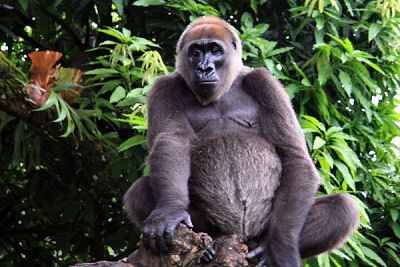
    “About 100 Cross River gorillas are found in Nigeria (with an additional 200 in Cameroon). In Nigeria, Cross River gorillas are restricted to Afi Mountain Wildlife Sanctuary, the Mbe Mountains and the Okwangwo Division of Cross River National Park. “The largest and most important of the three sites is the Okwangwo Division of Cross River National Park, managed by the NPS,” the statement added.

  • Experts make case for intensified effort in Cross River gorilla conservation

    Experts make case for intensified effort in Cross River gorilla conservation

    There are only a hand full of Cross River gorillas left in the world, thus conservation experts are calling on local and international stakeholders to save the mammals from extinction.

    This is a summary of thoughts from a two-day workshop funded by the United Stares Fish and Wildlife Service and the Wildlife Conservation Society (WCS) in Calabar recently. According to conservationists at the workshop, hunting and other such illegal activities have decimated the number of gorillas in the region. It is estimated that only 300 Cross River gorillas survive in the mountains between Nigeria and Cameroun.

    READ ALSO: Conservationists call for end of plastic pollution on World Migratory Birds Day

    In a press statement issued by the Country Director of WCS, Nigeria Programme, Mr. Andrew Dunn, the experts concluded that “the main threats to the survival of the species were identified as hunting and habitat destruction due to farming and logging.”

    In recent years, logging of ebony has become a disturbing activity in the state, adversely affecting the all of the gorilla sites, including Afi Mountain Wildlife Sanctuary, the Mbe Mountains and the Okwangwo Division of Cross River National Park.

    The stakeholders frowned on the continued neglect of Afi Mountain Wildlife Sanctuary, urging the Cross River State Government to ensure that “protection is improved and that it receives the necessary political support.”

    READ ALSO: Sumatran rhino now extinct in Malaysia

    “The most threatened of all African apes, the Cross River gorilla, is listed as ‘Critically Endangered’ based on its small population size, their fragmented distribution across a large complex landscape and ongoing threats to their survival from habitat loss and poaching,” Dunn noted in the statement.

    “Roughly 100 Cross River gorillas are found in Nigeria (with an additional 200 in Cameroun). In Nigeria, Cross River gorillas are restricted to three sites in Cross River State: Afi Mountain Wildlife Sanctuary, the Mbe Mountains and the Okwangwo Division of Cross River National Park. The largest and most important of the three sites is the Okwangwo Division of Cross River National Park, managed by the Nigeria National Park Service.”

    Dr. Inaoyom Imong of the WCS had said, “there is a real crisis facing Afi Mountain Wildlife Sanctuary. There are at least 1,000 illegal farms throughout the sanctuary which are expanding on a daily basis and unless action is taken soon, it is likely that the sanctuary and its gorillas will soon be lost forever. Afi Mountain Wildlife Sanctuary has been neglected for many years and we are calling on the Cross River State Government to urgently prioritise the protection of the sanctuary before it is too late.

    “It was also observed that the enclave communities in the Okwangwo Division of Cross River National Park continue to expand and participants at the workshop felt that their presence is detrimental for the long-term future of the national park. They called on the Federal Government to revisit plans for the voluntary resettlement of the enclaves as soon as possible. Cross River National Park is the richest biodiversity site in the country and recognised as a site of international importance. The gradual decline of such an important national park must be prevented.”Consequently, the participants came out with a “New Conservation Action Plan 2020-2025 to help save Cross River Gorillas: Africa’s Most Threatened Ape.”