A sperm whale that died after being stranded on a Scottish island was found to have 100 kilograms of rubbish in its stomach.
The whale was nearly 46 feet long and weighed around 26 tons – 52,000 pounds – according to Scottish Marine Animal Strandings Scheme (SMASS), a Scottish organization that investigates stranded marine animals.
It washed up on the shore of Seilebost Beach in Scotland’s Isle of Harris, according to Dan Parry, who lives in Luskentyre, Scotland, and is an administrator of a Facebook page to keep the nearby Luskentyre Beach clean.
Fishing nets, bundles of rope, plastic cups, plastic bags and other garbage were found in the whale’s stomach, according to a necropsy done by SMASS.
“All this material was in a huge ball in the stomach and some of it it looked like it had been there for some time,” they wrote on a Facebook post published Sunday.
They wrote that the whale “wasn’t in particularly poor condition,” and they couldn’t confirm that the garbage contributed to its stranding or starvation.
SMASS wrote that it is unclear what resulted in the excess of debris in the whale’s stomach. The trash, they explained, “seemed to have originated from both the land and fishing sectors.”
They added that the discovery of the whale “serves to demonstrate, yet again, the hazards that marine litter and lost or discarded fishing gear can cause to marine life.”
Parry said the whale’s intestines had virtually nothing in them.
“The issue of pollution, plastics and ocean debris is a worldwide issue that needs action,” he told USA TODAY in a Facebook message. “We all need to use less plastic but also get involved in cleaning up what is already out there. Too many people turn a blind eye to it thinking it’s someone else’s problem.”
SMASS buried the whale at the site. “If you go to the beach today, there should be almost no evidence that there was a large sperm whale necropsy undertaken there this weekend,” they wrote.
This isn’t the first time this year a dead whale was found to have garbage in its stomach. A whale found in the Philippines in March had 88 pounds of plastic trash in its stomach.
More than 90% of plastic is not recycled, and millions of metric tons a year pour into the planet’s oceans.
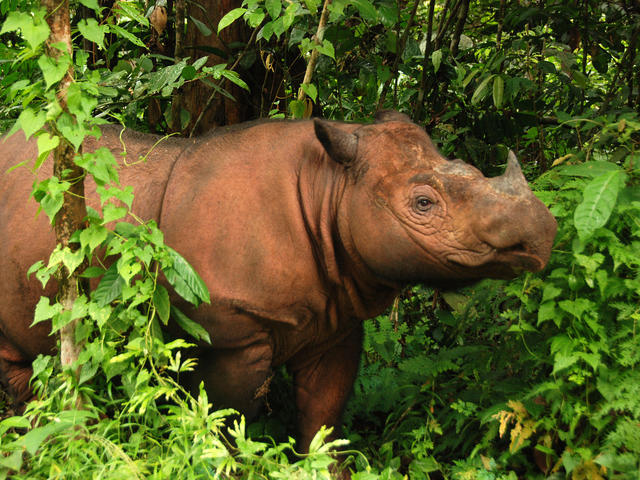
There are officially no more Sumatran rhinos in Malaysia, with the death of the last known representative of the species.
Iman, the last Sumatran rhino in the country was 25 years old when she died on Saturday on the island of Borneo. According to officials she had cancer.
Malaysia’s last male Sumatran rhino died in May this year.
The Sumatran rhino once roamed across Asia, but has now almost disappeared from the wild, with fewer than 100 animals believed to exist. The species is now critically endangered.
Iman died at 17:35 local time (09:35 GMT) on Saturday, Malaysia’s officials said.
“Its death was a natural one, and the immediate cause has been categorised as shock,” Sabah State Tourism, Culture and Environment Minister Christine Liew is quoted as saying.
“Iman was given the very best care and attention since her capture in March 2014 right up to the moment she passed,” she added.
Sumatran rhinos have been hard hit by poaching and habitat loss, but the biggest threat facing the species today is the fragmented nature of their populations.
Efforts to breed the species in Malaysia have so far failed.
Many trees depend on the elephants’ digestive system for their seeds to be effectively propagated and if elephants become extinct, such trees would be prone to extinction. When the forest elephants eat the fruits of certain trees, they break the dormancy of the seeds and when they are excreted, the dispersed seeds germinate and sprout from the dung, giving hope for to combat climate change.
These are some of the revelations made on Monday by conservation experts at one of their community sensitisation programmes on the need to protect elephants in what is left of their natural home range in Nigeria.
The experts, from the Nigerian Conservation Foundation’s Forest Elephant Initiative and Rufford Foundation’s Elephant Conservation and Awareness Project, pointed out that the animals’ intelligence enables them to remember previous encounters with humans and to determine a course of action.
Speaking at Atikiriji Odo, a community in the boundary area of Omo Forest, Ogun State, Dr. Tajudeen Amusa, from the Department of Forest Resources Management, University of Ilorin, helped the community to appreciate the importance of the forest, the role of wildlife, especially forest elephants in maintaining the health of forest and how to live in peaceful coexistence with nature.
Dr. Amusa who has studied elephants throughout Nigeria for more than seven years highlighted the consequences of encroaching into the elephants’ territories, reminding the community that it is a criminal offence to kill elephants since they are protected by both local and international laws.
“The forest elephant is vulnerable to extinction and so, it is hard to kill it and escape dire consequences and punishment from the government,” he said.
He added that planting red pepper around their crops will help protect it from raiding by elephants.
Responding, Baale Atikiriji Odo, Afisu Busari, the Community leader thanked the experts for the initiative. He expressed appreciation to the team for travelling through difficult terrain to reach them with the crucial information and urged them to keep the good work up. The outreach was supported by Nigeria Conservation Foundation (NCF), Wild Planet Trust, Elephant Crisis Fund, Rufford Foundation among others.
According to recent estimates, there are less than 1000 individuals elephants of two different species — the forest elephant and the savannah elephants — in Nigeria. About 350 savannah elephants reside in the Yankari Game Reserve, while a viable population of less than 100 forest elephants reside in Omo Forest Reserve. Others are found in Kamuku Park, Okomu National Park and Osse River Park.
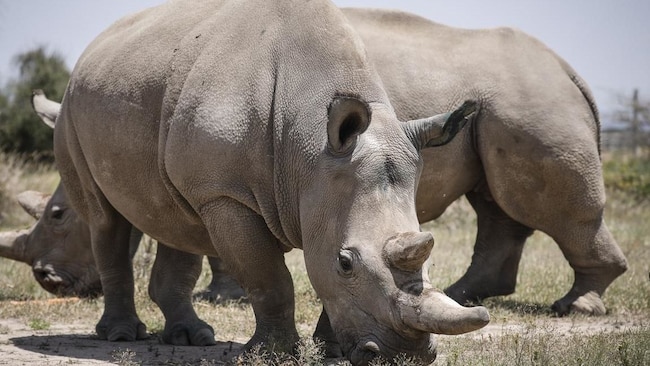
In what may be described as one of the most daring moves to save the Kenya northern white rhino species from extinction, veterinarians and wildlife experts successfully extracted eggs from the last two surviving female.
The eggs will be fertilised with stored sperm and incubated in a surrogate southern white rhino female.
The procedure was carried out Thursday on the last known living northern white rhinos — Najin and Fatu — who are infertile. Ten eggs, five from each, was harvested.
The feat was a joint effort of the Leibniz Institute for Zoo and Wildlife Research, Avantea, Dvur Králové Zoo, Ol Pejeta Conservancy and the Kenya Wildlife Service (KWS).
“We are very happy that after this first procedure on Najin and Fatu that they have recovered very smoothly and they are doing really well and fine today just 24 hours after this first procedure,” said Dr. Robert Hermes, of the Leibniz Institute for Zoo and Wildlife Research.
The world’s last male northern white rhino, Sudan, which was in the center of frantic conservation efforts died in March 2018. Sudan’s death shifted conservation focus to his stored semen and that of four other dead rhinos along with Najin and Fatu who are now constantly under the protection of armed guards.
The ultimate goal is to create a herd of five to 15 animals that would be returned to their natural habitat in Africa. That could take decades.
Sudan got its name from its country of birth as the last of its kind to be born in the wild. It was taken to the Czech zoo and then transferred to Kenya in 2009, along with the only other remaining northern white rhinos, the two females and a male who died in 2014.
They were placed under 24-hour armed guard and fed a special diet. However, despite the fact that they were seen mating, there were no successful pregnancies.
After the elephant, rhinoceros is the second largest land mammal. The white rhinoceros consists of two sub-species – the southern white rhino and the critically endangered northern white rhino.
Loss of habitat and poaching (for horns) are the leading sources of danger to species.
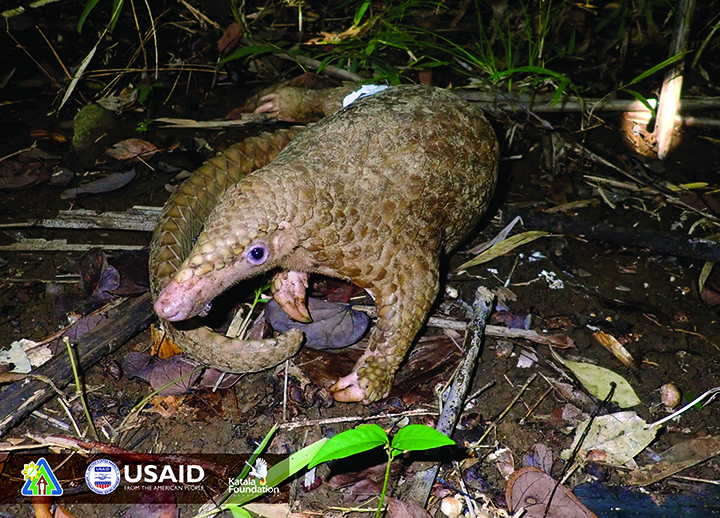
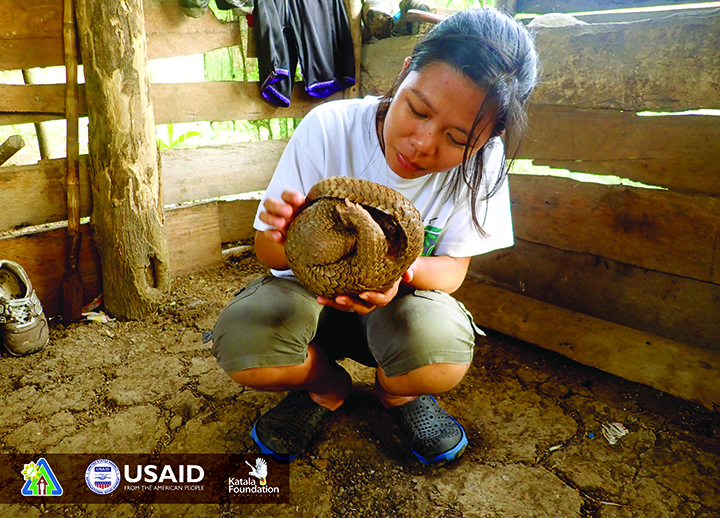
Moved by the uncertainty of the Palawan pangolins’ future, three young research assistants — Shiela, Elvie and JR — from the Katala Foundation Inc., have been braving the wilderness of Southern Palawan for months in search of the elusive pangolins. Jonathan L Mayunga writes about the researchers’ mission…
Carrying nothing but backpack loaded with extra shirts, a towel, water, food, a notebook, pen and the all-important global-positioning satellite device and a satellite phone, plus camera traps, they trek unfamiliar terrains, climb trees, crawl under thick shrubs and tall grasses, cross rivers and streams, night or day, looking for signs—scratch mark, tracks or footprints, even feces left behind by the little-known scaly anteater or pangolin (Manis culionensis de Elera) that can only be found in Palawan.
A researcher of Katala Foundation Inc. shows pangolin
The project was commissioned by the USAID-funded Protect Wildlife Project. The Philippines, an archipelago comprising of 7,641 islands and islets, is one of the megadiverse countries in the world. However, it is also one of the so-called biodiversity hot spots because of the rapid rate of biodiversity loss.
Experts say because of biodiversity loss that’s aggravated by illegal wildlife trade, highly vulnerable endemic species the Philippines is known for may have become extinct even before their discovery.
Previously thought to be the Malayan or Sunda pangolin (M. javanica), the Palawan pangolin remains a mystery even to the indigenous people of Palawan, considered the country’s last ecological frontier. While there is no empirical data that would suggest the accuracy of their claim, as far as the upland communities are concerned, the Palawan pangolins are vanishing.
Commissioned to do research on the Palawan pangolins by the Protect Wildlife Project that is funded by United States Agency for International Development (USAID) in Southern Palawan, conservation efforts are focused on the Palawan pangolins because of the threat of illegal wildlife trade, with the hope of saving the critically endangered species before it becomes extinct.
Nelson Devanadera, executive director of the Palawan Council for Sustainable Development.
The Katala Foundation Inc. is expected to complete the research and come up with policy recommendation to save the vanishing Palawan pangolin by the end of the year.
Mysterious mammal In funding the “Study on the Indicative Presence and Abundance of the Palawan Pangolin in Southern-Central Palawan,” Protect Wildlife Project Communications Manager Lawrence San Diego said the Palawan pangolin is the only pangolin species endemic to a single country.
“The Philippine pangolin is a priority species for conservation of the Protect Wildlife Project,” he said.
This is because the Palawan pangolin is one of the least studied species of pangolin and there is very little scientific information available to properly manage its remaining population.
The study aims to determine the mammal’s rate of exploitation and abundance in the wild to come up with policy recommendation and plan of action that will help protect and conserve this vanishing species.
So far, the study is focused on Victoria-Anepahan Mountain Range, which has a total land area of 510,520.66 hectares. The Victoria-Anepahan Mountain Range straddles Puerto Princesa City, Aborlan, Narra and Quezon towns. The area has been identified as an important habitat for biodiversity and endemic Palawan species, such as the pangolin.
The Palawan Council for Sustainable Development (PCSD) and the Palawan State University are also embarking on research to know more about the diet of the Palawan pangolin, to aid in managing its population and, hopefully, come up with ways to boost its population on the island.
Nelson Devanadera, PCSD executive director, said samples of pangolin’s feces will also be sent to Australia for laboratory testing.
He said knowing the diet and nutrients of the pangolin’s—basically, ants and termites—will help explain why it is now the most sought-after animal because of the belief that its meat and scale have medicinal value, hence, is now being hunted to extinction.
More important, he said, knowing what plant species the ants and termites eat, must be identified in order to protect and conserve them from various threats, and if possible, propagate them in other areas, to help protect and conserve the pangolin.
In the meantime, he said PCSD is working closely with various law-enforcement agencies to prevent illegal wildlife trade, not only of pangolin but other threatened species of Palawan.
What locals know While very little is known about the species, the Palawan State University has held interviews and focus group discussions with upland communities to gather information on sightings and presence of pangolins in their areas, its traditional uses and hunting techniques; and known practices on its collection and trade.
According to local communities, poaching and illegal trade of pangolin meat and scales persist. The meat can fetch for $3 to $5 a kilogram, while the scales can be sold for $130 to $190 a kilo.
While communities are aware that hunting and trade of pangolins are illegal, they continue to persist.
Meanwhile, the field research team from Katala Foundation had so far conducted ground surveys in 12 200-hectare plots in the wilderness of the Victoria-Anepahan Mountain Range, entailing actual search, recording and measurement of pangolins in the wild and observing their forest habitats.
Initial results of the study revealed that from September to December 2018, the team recorded 14 pangolins—two of which are pregnant—in a total surveyed area of 800 hectares.
The ground surveys showed that slash-and-burn farming, charcoal making and timber poaching continue in forest habitats where the pangolins are recorded.
‘Most illegally traded animal’ According to the Environmental Investigation Agency (EIA), pangolins are the most illegally traded animal in the world.
Hunted for their meat and scales for use in traditional medicine, these shy nocturnal mammals may become extinct faster than elephants, tigers, rhinos and other iconic animals, whether in Africa or Asia.
There are eight known species of pangolins, four are found in Africa and four in Asia.
All pangolin species were listed in Convention on International Trade in Endangered Species (Cites) of Wild Fauna and Flora Appendix I in 2016. The inclusion in Appendix I means the pangolins—all eight species including the Palawan pangolin—are threatened with extinction.
Under Cites Appendix I, the trade in specimens of these species are permitted only in exceptional circumstances.
According to EIA as many as 1 million pangolins have been illegally traded within Asia in the past 10 to 15 years.
Organized crime In the Philippines, the Palawan pangolin is also the most illegally traded animal and the perpetrators are well organized. Anti-illegal wildlife trade operatives believe that organized crime syndicates are behind the lucrative pangolin trade and are in cahoots with local communities.
Just last month, authorities arrested two fishermen and a van driver for transporting 10 live pangolins in Barangay Mendez Crossing East, Tagaytay City.
Arrested were Simfroso Cauntay Salazar, 53, driver and a resident of Kilometer 115 Talisay, Calatagan, Batangas; Jorlan Libertino Torrequinada, 39, and Victor Cabuniag Equiza, 40, of P. Mabuhay Abaroan, Roxas, Palawan.
Rogelio Demelletes, a senior management specialist and one of the anti-illegal wildlife trade operatives of the Philippine Operations Group on Ivory and Illegal Wildlife (Task Force Pogi) of the Department of Environment and Natural Resources (DENR) said the fact that two of the suspects are from Roxas town is proof that locals are in cahoots with the members of the syndicate.
Deeper investigation The Task Force Pogi said the investigation on the illegal pangolin trade is without letup.
“We are still conducting a follow-up investigation. What we want is to identify the buyers and catch them,” Demelletes said.
As for the arrested suspects from Tagaytay City, Demelletes said authorities have so far initiated inquest proceedings but cases have yet to be filed.
Asked what will be the next step for the DENR Task Force Pogi and its partner-law-enforcement agencies, he said: “We need to cut down at least one of the participants in the trade cycle.”
Ricardo Calderon, the DENR’s assistant secretary for Staff Bureau and concurrent Director of the Biodiversity Management Bureau (BMB), underscored the importance of combatting the illegal trade on pangolin in Palawan.
He said the DENR continues to strengthen the capacity of law-enforcement agencies, including its own, and is coordinating with concerned government agencies and institutions to stop illegal wildlife trade, with particular focus on the Palawan pangolin.
“We are strengthening our wildlife enforcement in our seaport. In Palawan, we are coordinating with PCSD as they have jurisdiction over Palawan as per Wildlife Act. Wildlife trafficking is now a transnational crime and we have law-enforcement coordination at the regional level among 10 Asean member-states,” he said.
Pangolins are very vulnerable. While they appear to be a sturdy species, these nocturnal, very shy mammals, are sure to die in captivity.
Demelletes said three of the 10 recovered pangolins have already died because of stress.
“In the next few days, the remaining seven may also die because pangolins are hard to feed. But because they are evidence in court, we cannot just return them to Palawan,” he lamented.
As authorities step up the various initiatives to know more about the little-known species, they are also racing against time to prevent the illegal wildlife trade to prevent their extinction.
Vultures are not just birds. They are active players in the seamless flow of the cycle of life. They are the unpaid cleaners of bio-debris who diligently perform their natural task of preventing diseases from spreading through dead animal. If there were no vultures, humans would constantly be plagued with outbreaks of diseases which may potentially emanated from decomposing carcasses. And if humans were to pay for the services of the vulture, the bills would be in billions. Yet, the vultures are under severe threat. Currently in Nigeria and some other parts of Africa, vultures are killed in volts daily and this must stop.
Vulture population is nearing total collapse. From the millions of individual birds a little over a decade ago, the population has dropped to a few hundreds. There are about 30 vulture species throughout the world. Eleven of these species are found in Africa while six are native to Nigeria. Of the 11 in Africa, eight are threatened while five of the six species in Nigeria are on the brink of extinction. Whether we realize it or not there is a state of emergency in this regard. These birds who have, by their mere act of feeding saved the government huge sums of money by preventing outbreak of diseases such as botulism and anthrax are now ending up as mere game, in traditional medicine markets, in constant conflicts with man over habitat and just dead from accidental poisoning.
Naturally, vultures shouldn’t be in this acute situation. According to many traditional folklores, vulture are sacred birds or messengers of the gods helping to take sacrifices to the heavens. For example, the Yorubas of West Africa have it in their oral poetry and incantations that “…akìí pa igún, akìí jẹ́ igún, akìí fi ẹyẹ igún bọ orí”. Meaning “…we don’t kill the vulture, we don’t eat the vulture and we don’t use the vulture for sacrifice. It is like that in many other cultures even beyond Africa. Sadly, Ibadan and Ikare are among the three hubs of vulture sales in Nigeria, joined by Kano, according to a 2017 survey by NCF. The same features that make the popular raptors sacred and protected seem to be working against them in other climes. There are many reports of vulture parts seen in voodoo markets and in possession of traditional healers and sorcerers. Recently a vulture and its owner was “arrested” by police in Maiha, Adamawa state over beliefs that it was associated with ill-luck. The woman who held the vulture captive on the other hand, claimed that it was for protection of her husband who was in jail. Thankfully, the Nigerian Conservation Foundation stepped in to make sure that the vulture is not returned to its tormentor.
Apart from belief related killings vultures are declining in numbers through mass poisoning. It has been found out that residues of nonsteroidal anti-inflammatory drug, diclofenac (sold under several trade names) for the treatment of pains in cattle is one of the leading causes of mass poisoning of vultures. In a bid to prevent sick cows from dying for example, herdsmen usually use this drugs to treat their animals during the long nomadic grazing movements. If the animal eventually dies, and the scavengers feed on it, they die en masse. Also, vultures are common sights in abattoirs. When vultures feed on diclofenac-tainted leftovers from the slaughterhouse, it is usually their last meal. To prevent unintentional mass killings like this, a thorough orientation must given to all in the meat production value chain. Diclofenac, originally developed for human use only, is cheap and very effective for cattle farmers, so the knee-jerk solution of banning the drug may be hard to implement. Rather finding a safe substitute and ensuring it is adopted swiftly by cattle farmers is a viable option.
A multidisciplinary team of expert must work together to end this killings before the consequences become obvious. The Agricultural Extension apparatus of the nation must be called upon to meet this challenge. Animal science associations, cattle rearers associations, the National Orientation agency, Center for Disease Control, and the Environment ministry must join hands with NGOs such as NCF, Birdlife International, A.P. Leventis Ornithological Research Institute (APLORI) among others that have taken it upon themselves to preserve and be the voice of these voiceless birds.
A verification of what ailments vulture parts are believed to cure should also be made and empirical proofs that vulture parts does nothing to treat such disease should be presented. Religion leaders need to assure their followers that the vulture is another unique creature in the universe just like any other and that they are not demons or evil spirits. This way, the public health epidemic waiting to happen if vultures go extinct would be prevented. The government also needs to set up an apparatus that sees to resolving conflicts between wildlife and humans.
There is an ongoing campaign to save the vultures. Everyone has a role to play. Learn facts about the vultures to day and tell it to others. You never can tell, one who needs to know may just be in your network.
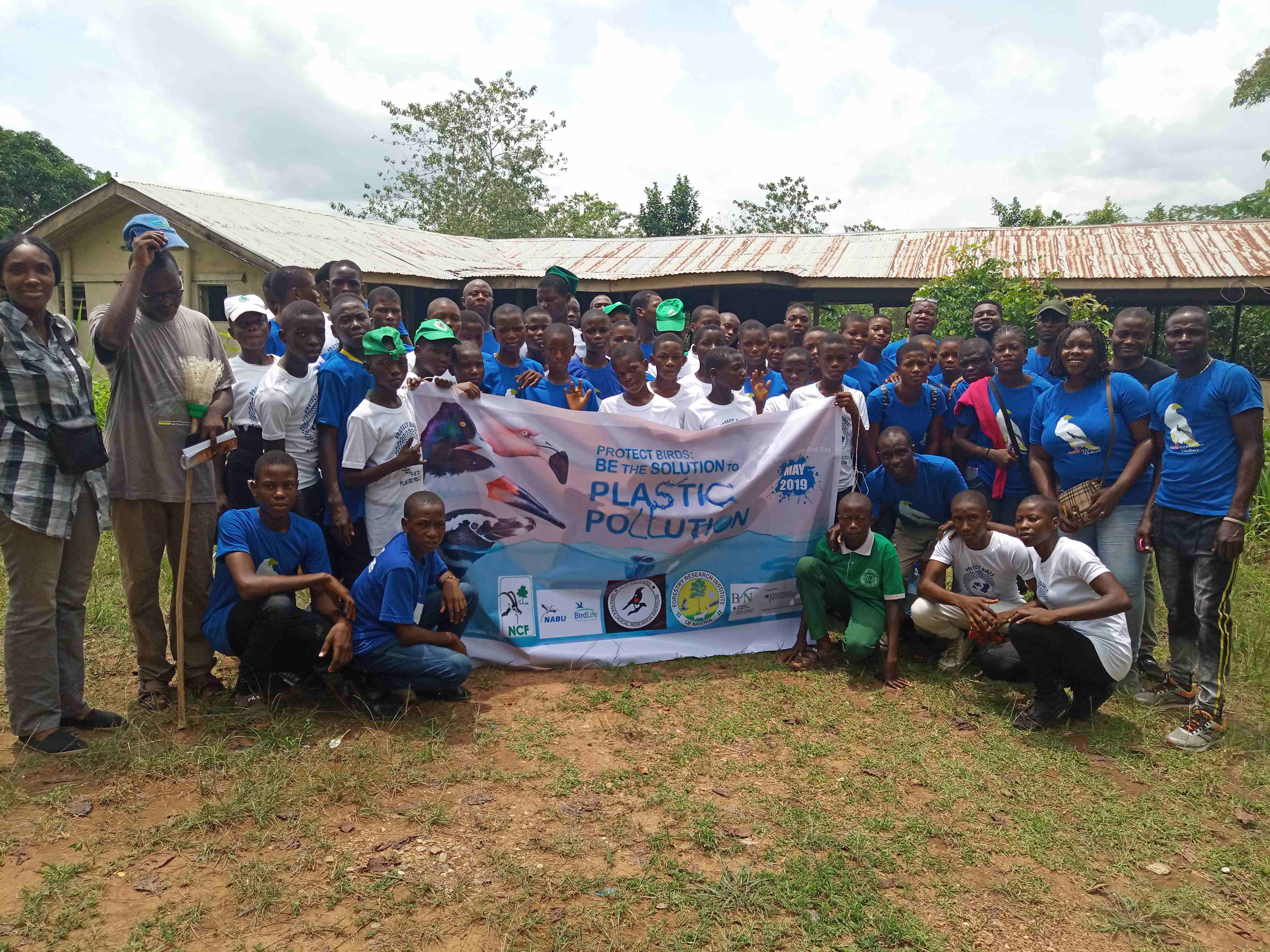
Birds need to be protected because they are vital to life on earth. Protecting birds is not only by preventing hunting and trafficking but also by guarding against the destruction of their habitats. These and many more are some of the points made by members of the Conservation Club of Omo on Wednesday.
The club which comprises of students, teachers, forest rangers and researchers commemorated the event with a multi-session event which hammers on responsible use and disposal of plastics. The worldwide event is themed “Protect Birds: Be the Solution to Plastic Pollution!”
The event was setup in conjunction with Forest Elephant Initiative and Birdlife International.
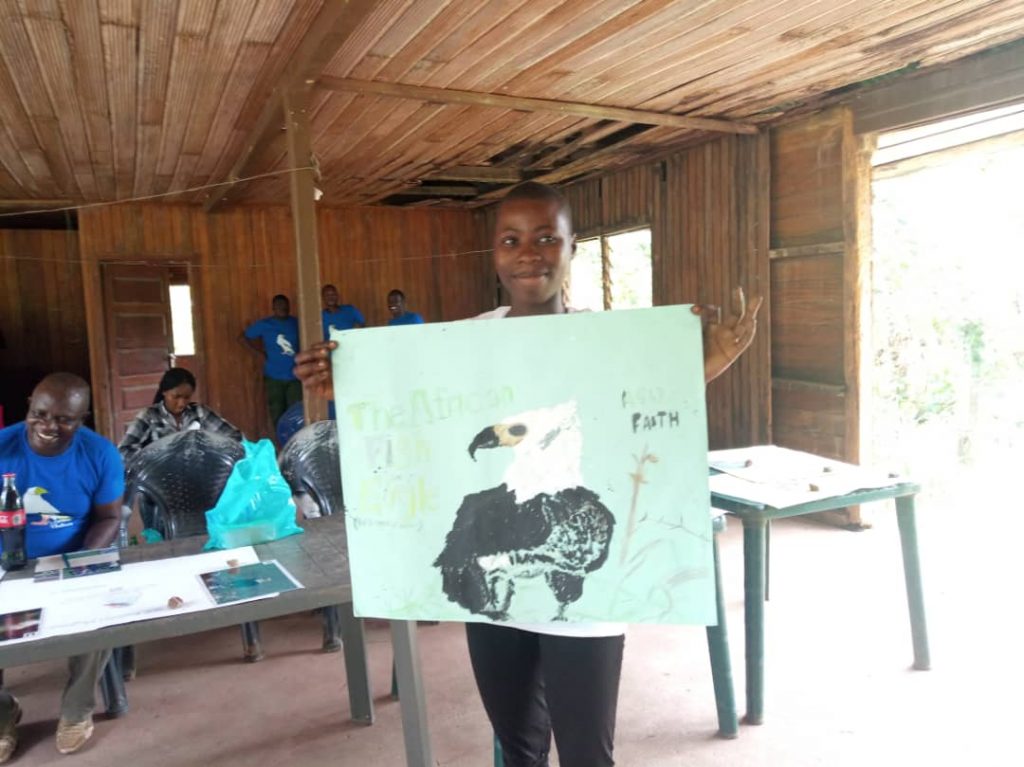
Students were awarded with prizes for a drawing contest that was carried out as a build up to the event. A Conservation TV event which featured pupils from the Conservation Club discussing solutions to the plastic crises was one of the high points of the event. Participants in the event advised the general public to follow the 3Rs – reduce, reuse and recycle of plastic to prevent plastic pollution. Other events were bird watching, poems, songs and community sensitization.
world Migratory Bird Day 2019 at Omo wildlife reserve
world Migratory Bird Day 2019 at Omo wildlife reserve
world Migratory Bird Day 2019 at Omo wildlife reserve
world Migratory Bird Day 2019 at Omo wildlife reserve
world Migratory Bird Day 2019 at Omo wildlife reserve
world Migratory Bird Day 2019 at Omo wildlife reserve
world Migratory Bird Day 2019 at Omo wildlife reserve
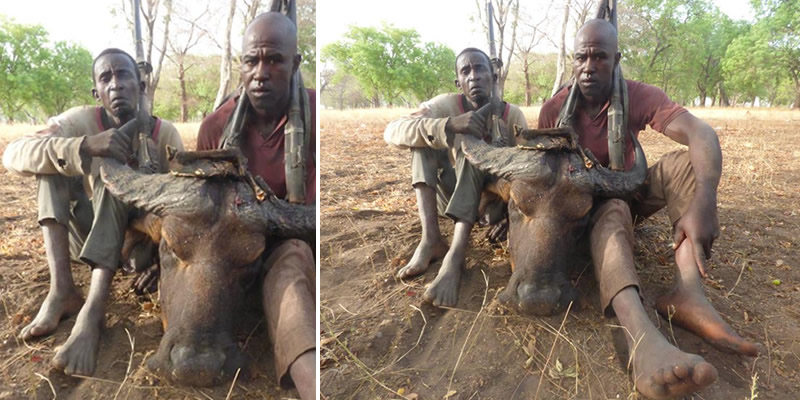
Two yet to be named men were on Tuesday apprehended at the Yankari Game Reserve in Bauchi State for killing a buffalo.
The suspects said to be from Mai Ari area in the state were caught by rangers at the game reserve with the buffalo’s head.
It is expected that the suspects will be charged to court.
Yankari National Park is a large wildlife park located in the south-central part of Bauchi State, in northeastern Nigeria. It covers an area of about 2,244 square kilometres and is home to several natural warm water springs, as well as a wide variety of flora and fauna. Hunting is strongly prohibited within the reserve.