Category: Wildlife

  • Five Species Found only in Africa

    Five Species Found only in Africa

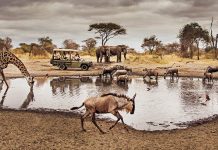
    Continents across the globe are replete with a vast variety of flora and fauna, which are endemic to these different geographical locations. Africa is no exception as it’s filled with a fascinating array of rich plant and animal species. Let’s take a look at some of these fascinating animals.

    (more…)

  • Covid19: Virus circulating in bats for 40 years

    Covid19: Virus circulating in bats for 40 years

    Coronavirus causing, the dreaded Covid19 may have been around for decades among bats. The closest known predecessor of the virus existed in bats 40-70 years ago, researchers from the University of Glasgow noted in a recent research.

    The coronavirus developed potential for a human crossover for some time, the scientists said.

    According to the researchers, the study posed questions on claims that the virus was created in a lab.

    Read Also: Covid19: Tiger tests positive in US zoo

    Prof David Robertson of the University of Glasgow, worked on the study, published in the journal Nature Microbiology.

    “That suggests that these viruses with the potential to emerge in humans have been around for some time,” Robertson said.

    “We really do need to understand where or how the virus has crossed into the human population. If we now believe there is this generalist virus circulating in bats, we need to get better at monitoring that.

    The professor holds that there is a need to keep an eye on the future forms of the disease in order to prevent the pandemic from re-emerging.

    “If these viruses have been around for decades that means that they’ve had lots of opportunities to find new host species,” he said.

    Read also: Nigerian biologist, Tanshi wins Future For Nature Award

    The researchers compared the genetic structure of Sars-CoV-2 with its close relative found in bats, a virus known as RaTG13.

    They then concluded that both the relatives emerged from the same ancestor, but evolved over time.

    Bats are found across the world and can migrate long distances.

    Scientists had earlier fingered snakes and pangolins as hosts that transmitted the coronavirus to people and caused the ongoing COVID-19 pandemic.

    However, the bat has come up in more research than any other species as the host. It is widely believed that the virus may have spread widely among species through improper handling during illegal trafficking.

  • Covid19: Experts call for greater protection of great apes

    Covid19: Experts call for greater protection of great apes

    Conservation experts have called for the suspension of all great ape tourism to protect the species from Covid19. They have also called for other protective measures for the great apes.

    The experts recommend that innovative measures are needed to reduce the risk of wild gorillas, chimpanzees and orangutans from encountering the virus.

    SARS-CoV-2, the coronavirus responsible for the current COVID-19 pandemic, is also a threat to our closest living relatives, the great apes, conservationists reveal in a letter in Nature

    Read also: Cross River gorilla conservation gets support from US

    “As leading experts in the conservation and health of these animals, we urge governments, conservation practitioners, researchers, tourism professionals and funding agencies to reduce the risk of introducing the virus into these endangered apes,” the letter co-author by Thomas Gillespie,  Emory University, Atlanta, Georgia, USA, and Fabian Leendertz, Robert Koch Institute, Berlin, Germany. 

    “They can do this by applying the International Union for Conservation of Nature’s best-practice guidelines for health monitoring and disease control in great-ape populations.”

    It is yet unknown if morbidity and mortality associated with SARS-CoV-2 in humans are similar in apes. However, transmission of even mild human pathogens to apes can have severe negative effects on the apes.

    Read also: National Park Service suspends group visit over Covid19

    Many great apes are already facing difficult situation due to habitat loss and poaching.

  • How machine learning can help fight illegal wildlife trade on social media

    How machine learning can help fight illegal wildlife trade on social media

    The illegal wildlife trade is one of the biggest threats to biodiversity. Demand for species and wildlife products, like rhino horn, elephant ivory and pangolin scales, have triggered an increase in unsustainable harvesting of species. This causes important population declines, threatening the existence of certain species.

    Traditionally, illegal wildlife trade thrived in physical markets. But today it has also moved online. In China, more than half of the trade in elephant ivory items happens on e-commerce platforms. Of this, recent investigations showed that social media platforms are the most popular ways to advertise, source, and trade species and wildlife products.

    Social media offers good conditions for wildlife trafficking to thrive: the platforms are easily accessible and have a high number of users. It’s also good for sellers who can put up photographs and detailed information about the products.

    But monitoring illegal wildlife trade on social media is a challenge. There are a huge number of different groups and profiles that data law enforcers have to investigate. Traders also often use code words to cover illegal transactions. So far, law enforcement efforts by governments, international organisations and NGOs have mainly focused on manually searching social media content for information. This is done on a few key species and wildlife products.

    In our recent study we proposed a system that uses machine learning – a type of artificial intelligence that provides systems with the ability to automatically learn and improve from experience – to investigate illegal wildlife trade on social media platforms. To our knowledge, this is the first time automatic content identification methods have been used to investigate illegal wildlife trade on social media.

    These new methods and data can provide us with fresh insights on illegal wildlife trade at a global scale. Because it’s done by a computer, it’s able to process a huge amount of information in a short space of time. It also caters for a wide range of different species and wildlife products.

    How it works

    The system consists of three stages: mining (examining large databases of information), filtering, and identifying relevant information on illegal wildlife trade on social media.

    The whole system can be automated so that data are mined directly from social media platforms, the content is filtered and only relevant content is kept for further investigations by a computer or a person.

    Neural networks make this all happen. These are a specific set of algorithms – or machine rules – that can be trained to recognise and classify species and wildlife products, like a pangolin or rhino horn, from images contained in social media posts. They can do this while also picking up the images’ settings – like a pangolin in a cage, in a market place.

    Neural networks can also be trained to look for additional information in videos – like specific bird calls in audio – or in text – like the writing style characteristic of illegal transactions or special interest groups, like exotic pet owners.

    Natural language processing, which analyses language, is used to infer the meaning of a text description in social media posts and assess social media users’ preferences, and their sentiment towards species and wildlife products.

    By comprehensively looking at all this content we believe we will unveil patterns in the data that we would not be able to uncover otherwise – for example combinations of specific words and images.

    In a previous study we demonstrated the value of such a system. We trained a deep neural network to determine whether Twitter posts with the word “rhino”, in 19 different languages, contained images of rhinoceros species. In doing so, we were successfully able to automatically identify all images relating to rhinos from Twitter content. This reduced the number of images that a human expert would have to review by over 90%.

    Only a few examples of automatic online content identification exist. In another study, researchers were able to detect illegal elephant ivory items for sale on an e-commerce platform by using metadata.

    Machine learning can be used to save experts’ time when manually classifying content on social media. It can also be used by social media platforms to identify and promptly remove suspicious posts.

    Way forward

    The biggest challenge in developing efficient monitoring algorithms is to create adequate training datasets. For instance, when classifying images algorithms need to be trained to pair images with a corresponding label – like “rhino horn”.

    But for some rare species, and for many wildlife products, there is a complete lack of information that can be used to create training datasets, for example rhino horn powder. In cases like this, we aim for a less accurate result which requires less training data and improve the models with time as more data becomes available.

    The advancement of the system will require working in close collaboration with social media platforms, while respecting ethical and privacy requirements. With time, success in curbing illegal wildlife trade on social media, and other digital platforms, will hopefully help to reduce poaching of species in the wild.

  • Poachers kill rare dazzling white giraffe

    Poachers kill rare dazzling white giraffe

    There is only one white giraffe known to be alive in Kenya after poachers killed the only female white giraffe and her calf at Ishaqbini Hirola Community Conservancy in Ijara, Garissa County, eastern Kenya.

    Conservancy manager Mohammed Ahmednoor said on Tuesday that only skeletons of the rare animals were found after a long search.

    Read also: Sumatran rhino now extinct in Malaysia

    “This is a very sad day for the community of Ijara and Kenya as a whole. Her killing is a blow to the steps taken by the community to conserve rare and unique species, and a wake-up call for continued support to conservation efforts,” said Mr Ahmednoor in a statement.

    In 2017, the rare white giraffe put a remote community conservancy in Ijara, Garissa, on the global map after its discovery.

    The giraffe, described as one of a kind and believed to be the only one in the world, dazzled the local community, scientists and wildlife enthusiasts globally.

    Scientists believed it suffered from a genetic condition called leucism which inhibits skin cells from producing pigment.

    “This is a long-term loss given that genetic studies and research which were a significant investment in the area have now gone down the drain.

    Read also: Kenyan vets harvest 10 white rhino eggs in desperate conservation move

    “Also, the white giraffe was a big boost to tourism in the area,” Ahmednoor added.

    Last August, the Northern Rangelands Trust announced that the female white giraffe had given birth at the Ishaqbini Hirola Community Conservancy.

    The birth of the male white calf brought to three the number of all known white giraffes in the country.

    “After this incident, only a lone bull remains,” Ahmednoor said.

  • Cross River gorilla conservation gets support from US

    Cross River gorilla conservation gets support from US

    Some United States (U.S.) based donors have donated field equipment worth about N4 million and 10 motorcycles to the National Parks Service (NPS), to boost the conservation of Africa’s most threatened apes, the Cross River gorillas.

    The donors are the Wildlife Conservation Society (WCS) with funds from the Arcus Foundation, the United States Fish and Wildlife Service, Critical Ecosystem Partnership Fund and the Rainforest Trust.

    READ ALSO: Experts make case for intensified effort in Cross River gorilla conservation

    The donation is aimed at helping to support ranger patrols in the Okwangwo Division of Cross River National Park, a statement issued on Monday by the Country Director of WCS, Nigeria Programme, Andrew Dunn revealed.

    “The equipment also include tents, rucksacks sleeping mats and rain ponchos to allow rangers to camp inside the national park for up to one week and conduct long-distance foot patrols essential for the protection of the endangered species.

    “Three specialised camera-traps were also donated to the National Park Service and WCS is planning to provide specialised training in the use of camera traps in April this year,” Dunn noted.

    READ ALSO: WCS celebrates four years of zero elephant poaching in Yankari

    He added that due to past hunting, it was estimated that only 300 Cross River gorillas survive in the mountains between Nigeria and Cameroon and the most important site for Cross River gorillas in Nigeria was the Okwangwo Division of the Cross River National Park.

    Conservator-General of the NPS, Dr. Ibrahim Goni, commended the WCS for the donation, but urged more support for other parks in the country. Dunn expressed hope that the field equipment would be put to good use adding that additional equipment for the Oban Division of the Cross River National Park would be provided later in the year.

    “The most threatened of all African apes, the Cross River gorilla is listed as critically endangered based on its small population size, their fragmented distribution across a large complex landscape and ongoing threats to their survival from habitat loss and poaching.

    “About 100 Cross River gorillas are found in Nigeria (with an additional 200 in Cameroon). In Nigeria, Cross River gorillas are restricted to Afi Mountain Wildlife Sanctuary, the Mbe Mountains and the Okwangwo Division of Cross River National Park. “The largest and most important of the three sites is the Okwangwo Division of Cross River National Park, managed by the NPS,” the statement added.

  • Man jailed for trafficking monitor lizards

    Man jailed for trafficking monitor lizards

    A Florida man pleaded guilty to his part in a trafficking scheme in which live water monitor lizards were stuffed into socks and concealed inside electronics to be smuggled from the Philippines to the United States.

    Akbar Akram, 44, pleaded guilty in Tampa federal court Wednesday to one count of wildlife trafficking in violation of the Lacey Act and the Convention on International Trade in Endangered Species Treaty, court records show.

    Akram admitted to illegally importing more than 20 live water monitor lizards from the Philippines in 2016, a U.S. Justice Department statement said. He avoided customs authorities by placing the lizards in socks, which were sealed closed with tape and concealed inside electronic equipment and shipped under a false label. The equipment was transported through commercial carriers to Akram’s associate in Massachusetts.

    As part of his plea, Akram admitted that he knew the monitor lizards he received had been taken in violation of Philippine law and that the import violated U.S. law, according to the statement. Akram also admitted that upon receiving the monitor lizards, he sold some of them to customers in Colorado, Connecticut and Massachusetts.

    Approximately 70 monitor lizard species are characterized by elongated necks, heavy bodies, long-forked tongues, strong claws and long tails. Water monitor lizards are native to South and Southeastern Asia. The yellow-headed water monitor, the white-headed water monitor and the marbled water monitor are found in the Philippines.

  • Experts make case for intensified effort in Cross River gorilla conservation

    Experts make case for intensified effort in Cross River gorilla conservation

    There are only a hand full of Cross River gorillas left in the world, thus conservation experts are calling on local and international stakeholders to save the mammals from extinction.

    This is a summary of thoughts from a two-day workshop funded by the United Stares Fish and Wildlife Service and the Wildlife Conservation Society (WCS) in Calabar recently. According to conservationists at the workshop, hunting and other such illegal activities have decimated the number of gorillas in the region. It is estimated that only 300 Cross River gorillas survive in the mountains between Nigeria and Cameroun.

    READ ALSO: Conservationists call for end of plastic pollution on World Migratory Birds Day

    In a press statement issued by the Country Director of WCS, Nigeria Programme, Mr. Andrew Dunn, the experts concluded that “the main threats to the survival of the species were identified as hunting and habitat destruction due to farming and logging.”

    In recent years, logging of ebony has become a disturbing activity in the state, adversely affecting the all of the gorilla sites, including Afi Mountain Wildlife Sanctuary, the Mbe Mountains and the Okwangwo Division of Cross River National Park.

    The stakeholders frowned on the continued neglect of Afi Mountain Wildlife Sanctuary, urging the Cross River State Government to ensure that “protection is improved and that it receives the necessary political support.”

    READ ALSO: Sumatran rhino now extinct in Malaysia

    “The most threatened of all African apes, the Cross River gorilla, is listed as ‘Critically Endangered’ based on its small population size, their fragmented distribution across a large complex landscape and ongoing threats to their survival from habitat loss and poaching,” Dunn noted in the statement.

    “Roughly 100 Cross River gorillas are found in Nigeria (with an additional 200 in Cameroun). In Nigeria, Cross River gorillas are restricted to three sites in Cross River State: Afi Mountain Wildlife Sanctuary, the Mbe Mountains and the Okwangwo Division of Cross River National Park. The largest and most important of the three sites is the Okwangwo Division of Cross River National Park, managed by the Nigeria National Park Service.”

    Dr. Inaoyom Imong of the WCS had said, “there is a real crisis facing Afi Mountain Wildlife Sanctuary. There are at least 1,000 illegal farms throughout the sanctuary which are expanding on a daily basis and unless action is taken soon, it is likely that the sanctuary and its gorillas will soon be lost forever. Afi Mountain Wildlife Sanctuary has been neglected for many years and we are calling on the Cross River State Government to urgently prioritise the protection of the sanctuary before it is too late.

    “It was also observed that the enclave communities in the Okwangwo Division of Cross River National Park continue to expand and participants at the workshop felt that their presence is detrimental for the long-term future of the national park. They called on the Federal Government to revisit plans for the voluntary resettlement of the enclaves as soon as possible. Cross River National Park is the richest biodiversity site in the country and recognised as a site of international importance. The gradual decline of such an important national park must be prevented.”Consequently, the participants came out with a “New Conservation Action Plan 2020-2025 to help save Cross River Gorillas: Africa’s Most Threatened Ape.”

  • 100kg of garbage found in dead whale’s stomach

    100kg of garbage found in dead whale’s stomach

    A sperm whale that died after being stranded on a Scottish island was found to have 100 kilograms of rubbish in its stomach.

    The whale was nearly 46 feet long and weighed around 26 tons – 52,000 pounds – according to Scottish Marine Animal Strandings Scheme (SMASS), a Scottish organization that investigates stranded marine animals.

    It washed up on the shore of Seilebost Beach in Scotland’s Isle of Harris, according to Dan Parry, who lives in Luskentyre, Scotland, and is an administrator of a Facebook page to keep the nearby Luskentyre Beach clean.

    READ ALSO: Conservationists call for end of plastic pollution on World Migratory Birds Day

    Fishing nets, bundles of rope, plastic cups, plastic bags and other garbage were found in the whale’s stomach, according to a necropsy done by SMASS.

    “All this material was in a huge ball in the stomach and some of it it looked like it had been there for some time,” they wrote on a Facebook post published Sunday.

    They wrote that the whale “wasn’t in particularly poor condition,” and they couldn’t confirm that the garbage contributed to its stranding or starvation.

    SMASS wrote that it is unclear what resulted in the excess of debris in the whale’s stomach. The trash, they explained, “seemed to have originated from both the land and fishing sectors.”

    They added that the discovery of the whale “serves to demonstrate, yet again, the hazards that marine litter and lost or discarded fishing gear can cause to marine life.”

    Parry said the whale’s intestines had virtually nothing in them.

    “The issue of pollution, plastics and ocean debris is a worldwide issue that needs action,” he told USA TODAY in a Facebook message. “We all need to use less plastic but also get involved in cleaning up what is already out there. Too many people turn a blind eye to it thinking it’s someone else’s problem.”

    SMASS buried the whale at the site. “If you go to the beach today, there should be almost no evidence that there was a large sperm whale necropsy undertaken there this weekend,” they wrote.

    This isn’t the first time this year a dead whale was found to have garbage in its stomach. A whale found in the Philippines in March had 88 pounds of plastic trash in its stomach.

    More than 90% of plastic is not recycled, and millions of metric tons a year pour into the planet’s oceans.

  • Sumatran rhino now extinct in Malaysia

    Sumatran rhino now extinct in Malaysia

    There are officially no more Sumatran rhinos in Malaysia, with the death of the last known representative of the species.

    Iman, the last Sumatran rhino in the country was 25 years old when she died on Saturday on the island of Borneo. According to officials she had cancer.

    READ ALSO: Kenyan vets harvest 10 northern white rhino eggs in desperate conservation move

    Malaysia’s last male Sumatran rhino died in May this year.

    The Sumatran rhino once roamed across Asia, but has now almost disappeared from the wild, with fewer than 100 animals believed to exist. The species is now critically endangered.

    Iman died at 17:35 local time (09:35 GMT) on Saturday, Malaysia’s officials said.

    “Its death was a natural one, and the immediate cause has been categorised as shock,” Sabah State Tourism, Culture and Environment Minister Christine Liew is quoted as saying.

    “Iman was given the very best care and attention since her capture in March 2014 right up to the moment she passed,” she added.

    Sumatran rhinos have been hard hit by poaching and habitat loss, but the biggest threat facing the species today is the fragmented nature of their populations.

    Efforts to breed the species in Malaysia have so far failed.