Home Blog Page 24

Ogun halts activities in forest reserves

0

All activities in forest reserves belonging to the Ogun State Government has been suspended. The announcement was made by the Secretary to the State Government, Mr Tokunbo Talabi on Sunday.

According to Talabi, the suspension came into effect immediately.

“The suspension covers logging, timber exploitation, evacuation of logs and forest concession as well as activities in all government and non-governmental open forest areas,” he said in the statement issued to pressmen in Abeokuta.

He said that the step had become necessary to check observed “over exploitation and illegal tree felling” in government forest reserves across the state.

He disclosed that a committee would be set up to investigate all issues affecting the state forest reserves to advise government on a comprehensive policy and process.

The SSG said that this would ensure the sustainability of programmes being implemented in the sector by the government.

Talabi enjoined stakeholders who might be interested in submitting memoranda concerning the issue to do so within two weeks to the office of the Secretary to the State Government at the Governor’s Office in Abeokuta.

NCDC gives details on Yankari yellow fever occurrences

0

No fewer than seven Nigerians have lost their lives to suspected yellow fever contracted after visiting the Yankari Game Reserve in Bauchi State even as Lassa fever has infected two new persons in Edo State but with no fatality.


However, the Nigeria Centre for Disease Control (NCDC) told The Guardian that it could only confirm four cases of Yellow fever in Bauchi but is investigating the deaths. The Centre said that three of the cases of Yellow fever are residents of Alkaleri Local Government Area (LGA) and the fourth case is a tourist who was visiting Kano State and also visited the Yankari Games Reserve in the same LGA in Bauchi State.

READ ALSO: WCS celebrates four years of zero elephant poaching in Yankari

Chief Executive Officer of NCDC, Dr. Chikwe Ihekweazu, explained: “NCDC was first notified on the 29th of August, when we received the report of a confirmed case of Yellow Fever in Kano State from a laboratory in our Yellow Fever laboratory network. Subsequent investigations led by the Kano State Epidemiology Team established that this confirmed case of yellow fever was from a patient who visited the Yankari Game Reserve in Bauchi, in August 2019 with his father. Unfortunately, the father died with similar symptoms before a sample could be collected and tested.

“Subsequently, on the 3rd of September 2019, the Borno State Epidemiology Team reported deaths among students of Waka College of Education in Biu LGA Borno State. These students visited the Yankari Game Resort in August 2019. Of the 95 students that visited the resort, eight of them developed symptoms and six had died as at the time of the report. The others are in a stable condition. Samples from these cases are being tested.

READ ALSO: Two arrested with fresh buffalo head in Yankari

“Intensification of surveillance activities has led to the identification of three more confirmed cases who are all resident in Alkaleri LGA, of Bauchi state. Altogether, we can confirm four cases of yellow fever in people that either live or have visited Bauchi in the last one month.”

The epidemiologist said since the Centre was notified, the NCDC has collaborated with the State epidemiologists of the affected States and the World Health Organisation (WHO) country office to investigate these events. We have also deployed a rapid response team to support Bauchi State to carry out further in-depth investigations, including case finding, risk communications, and support the management of cases. He said samples of the other suspected cases from Bauchi and Borno states are currently being transported to the NCDC National Reference Laboratory in Abuja for further testing.

“Today, we activated our Emergency Operations Centre to coordinate the response to this outbreak,” Ihekweazu said. The epidemiologist said Yellow Fever virus is spread through bites of an infected mosquito and there is no human-to-human transmission of the virus. He said Yellow fever is a completely vaccine preventable disease and a single shot of the yellow fever vaccine protects for a lifetime and the yellow fever vaccine is available for free in all primary healthcare centres in Nigeria as part of the routine childhood immunisation schedule. Ihekweazu encourages every family to ensure that children receive all their childhood vaccines. He said: “In addition to the vaccine, the public is advised to keep their environments clean and free of stagnant water to discourage the breeding of mosquitoes and ensure the consistent use of insecticide treated mosquito nets, screens on windows and doors to prevent access for mosquitoes. Especially, hikers, park visitors and people engaged with activities in the wild are encouraged to be vaccinated against yellow fever. It is important to avoid self-medication- visit a health facility immediately if you feel ill.”

The epidemiologist said a multi-agency Yellow Fever technical working group coordinated by NCDC, has been leading the preparedness and response to yellow fever in Nigeria. He said the NPHCDA is leading efforts to provide an additional opportunity of vaccination through preventive vaccination campaigns across the country.

Iheakweazu reminded healthcare workers and members of the public that the symptoms of yellow fever include yellowness of the eyes, sudden fever, headache and body pain. “If you have these symptoms or notice someone in your community displaying them, please contact your nearest primary healthcare centre,” he said.

Also, the latest weekly epidemiology report on Lassa fever, published over the weekend by the NCDC, noted: “In the reporting week 33 (12th – 18th August, 2019) two new confirmed cases were reported from Edo state, no new death. From 1st January to 18th August, 2019, a total of 3466 suspectedi cases have been reported from 22 states. Of these, 658 were confirmed positive, 18 probable and 2790 negative (not a case).Since the onset of the 2019 outbreak, there have been 145 deaths in confirmed cases. Case fatality ratio in confirmed cases is 22.0 per cent.”

The NCDC said 22 States (Edo, Ondo, Bauchi, Nasarawa, Ebonyi, Plateau, Taraba, FCT, Adamawa, Gombe, Kaduna, Kwara, Benue, Rivers, Kogi, Enugu, Imo, Delta, Oyo, Kebbi, Cross River and Zamfara) have recorded at least one confirmed case across 83 Local Government Areas.

According to the NCDC, 93 per cent of all confirmed cases are from Edo (37 per cent), Ondo (30 per cent), Ebonyi (eight per cent), Bauchi (seven per cent), Taraba (six per cent) and Plateau (five per cent) states; and the predominant age-group affected is 21-40 years.

In the reporting week 33, no new health care worker was affected and a total of eighteen health care workers have been infected since the onset of the outbreak in ten States – Edo (six), Ondo (four), Ebonyi (one), Enugu (one), Rivers (one), Bauchi (one), Benue (one), Delta (one), Plateau (one) and Kebbi (one) with two deaths in Enugu and Edo States.

The NCDC noted that 10 patients are currently being managed at various treatment centres across the country: Six at Irrua Specialist Teaching Hospital (ISTH) treatment Centre, Edo State; three at Federal Medical Centre, Owo, Ondo State; and one at Bauchi.

According to the NCDC, suspected case describes any individual presenting with one or more of the following: malaise, fever, headache, sore throat, cough, nausea, vomiting, diarrhoea, myalgia, chest pain, hearing loss and either: a history of contact with excreta or urine of rodents, history of contact with a probable or confirmed Lassa fever case within a period of 21 days of onset of symptoms; or any person with inexplicable bleeding/haemorrhagia.

Academics, NESREA, EHORECON, parks service, unite against air pollution in Nigeria

0

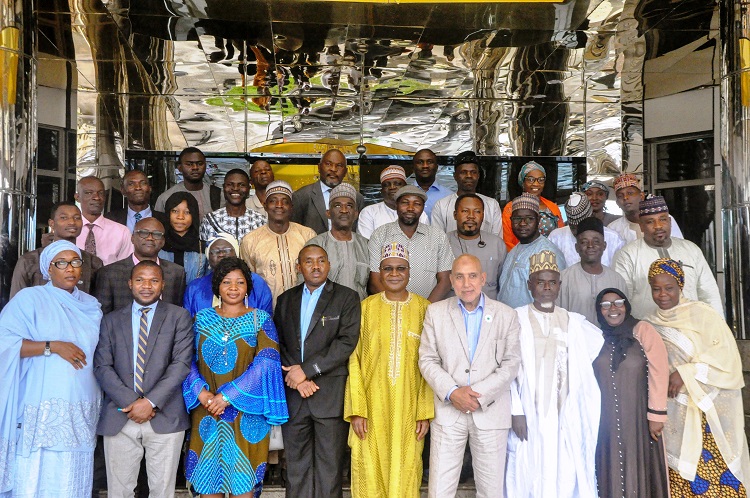
Controlling air pollution seems complex but nothing is impossible; we should all come together to combat it and step towards improving the air around us.” These words were by Professor Emmanuel Ofoezie, the Director of the Institute of Ecology and Environmental Studies, Obafemi Awolowo University. The words also summarise the goal of the gathering of academics and government stakeholders in the environment space at the institute’s 11th Annual Conference on Environment and second Specialised Workshop for Environmental Health Practitioners.

The conference, co-hosted by the Institute of Ecology and Environmental Studies, Obafemi Awolowo University, Ile-Ife, the National Park Services (NPS), and the Environmental Health Officers’ Registration Council of Nigeria (EHORECON), took place at the institute in OAU, Ile-Ife, from September 3 to 5. The theme was “Air pollution.”

Recent researches show that about 92 percent of the people worldwide do not breathe clean air. In addition, air pollution costs the global economy $5 trillion in welfare costs annually and it is worrisome to know that ground-level ozone pollution is expected to reduce staple crop yields by 26 per cent by 2030. Air pollution has killed approximately seven million people in the world and more people are dying daily.

Staff and students of the institute, experts in the field of environment and air pollution from within the university and outside, as well as the National Environmental Standards and Regulations Enforcement Agency (NESREA) participated in the conference.

It is worthy to note that NESREA, formerly known as Federal Environment Protection Agency (FEPA), had its beginnings midwifed at the Institute of Ecology and Environmental Studies.

Background

Since 1973, World Environment Day (WED) has been celebrated as an annual event on June 5 to highlight the importance of a healthy environment to human lives, and solve the issues of the environment by implementing some positive environmental actions by government, organisations and individuals. In line with this, globally, several environment campaigns are organised around a particular chosen theme for the year.

To this end, the Institute of Ecology and Environmental Studies in 2008 inaugurated its Annual Conference on Environment to mark the WED and identify how each year’s theme affects Nigeria and Africa with regards to problems and challenges posed, and the capacity-building needed by each region to address such problems and challenges.

Since then, the conference has become a regular annual event holding a few weeks after June 5 each year.

Professor Ofoezie, in his welcome speech, said, “The major objectives of the annual conference on the environment is to spread awareness among common people about the issues of the environment.” He added that “the conference will also help us identify gaps in existing national policies with a view to providing research evidences which could be used in policy making decisions in Nigeria.”

Transportation as major contributor to air pollution

The fast-growing automobile industry has been a major contributory factor that has helped to speed up industrialisation and provided a safe means of personal transportation.

The VC of OAU, Professor Eyitope Ogunbodede, represented at the event by Professor Victor Olaleye, said in his address that “Transportation is an important component in human daily life. However, while it has significant beneficial effects on the social interaction among humans, it is detrimental to the environment, being one of the major anthropogenic activities that drive air pollution regionally and globally.”

He cited a report by the Organisation of Economic Co-operation and Development (OECD), which stated that the number of vehicles in the world is estimated to be over 800 million and in many places, it is increasing at rates higher than human population growth.

Also, emission from the transport sector is about 20 per cent total greenhouse gas and 80 per cent pollutants.

These, the VC said, are alarming scenarios capable of making the air unfit for breathing.

“No wonder, the global transport related risk factors are estimated to be the most important contributor to public health challenges by 2020.

“Air pollution is a menace and it is therefore necessary to combat this growing hazard,” the VC stated.

NESREA admits to inadequate environmental policy, action

In its presentation at the conference, NESREA, Nigeria’s agency charged with the responsibility of enforcing all environmental laws, guidelines, policies, standards and regulations, admitted that adequate environmental policy and action were lacking, adding that this had consequences.

NESREA Director-General, Professor Aliyu Jauro, said that “Many cities around the world, particularly in developing countries like Nigeria, are experiencing rapid growth. Yet, in the absence of adequate environmental policy and action, this growth is occurring at considerable, and often increasing, economic and social costs.”

In the DG’s keynote address delivered by his representative, Mr Adeosun Adewale, he however stated that the Nigerian government had put in place 33 environmental regulations in “critical areas of the environment.”

Of these, the following are to address air pollution. They are: National Environmental (Control of Vehicular Emissions from Petrol and Diesel Engines) Regulations, 2011; National Environmental (Air Quality Control) Regulations, 2014; and National Environmental (Control of Bush, Forest Fire and open Burning) Regulations, 2011.

Others are National Environmental (Ozone Layer Protection) Regulations, 2009 and National Environmental (Noise Standards and Control) Regulations, 2009.

The DG said, “As part of NESREA’s efforts to support the NDC’s and to implement provisions contained in the National Environmental (Control of Vehicular Emissions from Petrol and Diesel Engines) Regulation 2011 and the National Environmental (Air Quality Control) Regulations, 2014, NESREA is carrying out the following programmes:

“Ban on the importation of two–stroke engines found in low powered applications like motor cycles, mopeds, marine outboard motors, gardening equipment including lawn mowers, leaf blowers, trimmers, chainsaws.

“Acquisition of Air Quality Monitoring Equipment (both mobile stations and hand-held tools) to enable the agency monitor and generate accurate data on the state of the air quality in Nigeria, which will form the basis for policy making.

“Establishment of the National Vehicular Emissions Control Programme (NVECP) and National Generator Emissions Control Programme (NGECP) in partnership with relevant Stakeholders to address the emissions from mobile and stationary sources.”

Professor Jauro said the agency is “almost concluding arrangements for the formal launch of the programmes.”

An expert’s view of the issue

Air quality expert, noise expert and life cycle analyst, Professor Jacob Sonibare, of the Department of Chemical Engineering, OAU presented the lead paper of the conference, simply titled, ‘Air pollution’

In it, he stated that air pollution can be in the indoor or outdoor environment. He said it had been described as the deadliest form of pollution and the fourth leading risk factor for premature deaths worldwide.

Professor Sonibare said associated deaths cost global economy about US$225 billion in 2013, quoting World Bank sources.

He cited a mysterious fog that engulfed some parts of Lagos on October 12, 2005, and the ambient environment of the Warri Petroleum Refinery and the atmosphere around textile industries in Kaduna, as instances of air pollution due to human activities.

In these cases which he and his team of researchers investigated, the offending gases were found to include oxides of nitrogen, carbon monoxide, sulphur dioxide, particulate matter (PM) and Benzene, Toluene and Xylene (BTX).

Indoors, air pollution could arise from cigarette smoking. Heavy metal from furniture, floor finishing and vehicle exhausts were also noted to be pollutants according to studies he mentioned in the paper.

All sources of air pollution, the professor noted, had adverse effects on vegetation and human health.

Conclusion

Professor Sonibare underscored the importance of “monitoring, modelling and controls to adequately manage this all important activity especially those associated with man and the environment.”

He said that “ It can be concluded that continuous studying of this topic will be of great advantage to how air pollution can be controlled to the benefit of all. It is therefore recommended that research efforts be sustained about the topic to ensure that more control measures are developed.”

In his remarks at the conference, the Conservator-General of National Parks Service, Ibrahim Goni, represented by the Conservator of Old Oyo National Park, Henry Ndoma, said that national parks were key to solving the air pollution problem by preserving the nation’s natural forest cover which acts as a carbon sink. Trees are known to be clean air recyclers, taking in carbon dioxide and releasing oxygen for humans to breathe.

“It is because of our activities that you can see a representative sample of Sahel vegetation and other vegetations. We preserve the integrity of natural forests,” he said. “Therefore, the service remains relevant to Nigerians today.”

NESREA commends Gombe government for 3G initiative

0

The National Environmental Standards and Regulations Enforcement Agency (NESREA) in Gombe State has commended the State Government for its recent initiative to tackle environmental degradation in the state.

Acting State Coordinator of Gombe NESREA, Mr Ibrahim Kawu gave the commendation in an interview on Friday.

Kawu who spoke with the News Agency of Migeria said state government’s tree planting effort and establishment of woodlots would help in making up for the depletion of the environment over time, adding that Gombe had lost lots of trees.

READ ALSO: Gombe tackles desertification with 3G tree planting initiative

“I must commend the state government for its seriousness towards addressing the issues of environmental degradation, ” Kawu said.

“The way to go is tree planting and prudent management of wastes in communities.

“This is a conscious effort to combat environmental degradation in the state and it is good for Gombe State looking at the magnitude of desertification, erosion and others.

“Planting four million trees and paying counterparts to secure World Bank loans to tackle erosion in some parts of the state is really encouraging and will resuscitate our environment”.

He decried the poor attitude of residents toward the environment, especially in cutting down trees without replacing them, adding that anyone involved in such activities were not environment friendly.

Kawu, who called on communities to make conscious efforts in supervising trees planted by the state government in their domains, said it was only through this that the impact of environmental challenges could be mitigated.

READ ALSO: Group plants 12,000 trees in Jigawa

“We must always combine with the tree planting effort and proper waste management cultures in rural areas so that what we gain in planting trees are not lost through poor waste disposal,’’ he added.

He called on the state government to do more in the area of sensitising communities on the need for an attitudinal change toward the environment.

“The environmental success of any programme depends on the attitude of the people in the communities where those programmes are being implemented, if you plant and they don’t nurture, then where are we?’’

Ogun Assembly members call for more forest guards in conservation areas

0

Lawmakers from Ogun House of Assembly have highlighted the need for improvement in managing the state’s forest reserves to boost its economy.

Members of the House Committee on Agriculture and Forestry, led by Mr Sylvester Abiodun, the committee chairman also called on the state government to urgently revive the ecotourism sector of the state by overhauling facilities in the conservation areas.

Abiodun made the call last week while on an assessment and budget monitoring tour to the State Forestry Plantation Project in Ijebu East Local Government Area of the state.

The lawmaker condemned the low level of security of the reserves, urging the management to take proactive measures at ensuring effective security to protect economic trees.

He also advised the management team to improve the revenue base of the reserve while ensuring holistic deployment of more forest guards.

The project Manager of the reserve, Mr Waheed Adebosin, said that the 676.2 square metres of agricultural facility required facility upgrade.

He said that the upgrade would maintain the fast-growing reserve for industrial usage and ecosystem preservation.

Adebosin added that N34 million was generated between January and June from road taxes, contractor registration fee and earnings from a plantation scheme, plants and equipment.

Group plants 12,000 trees in Jigawa

0

The Green Network Initiative Forum in Jigawa said on Monday that it has planted 12,748 tree seedlings in some parts of the state to check desertification.

The forum made the revelation during the flag off a fresh round of planting for its 2019 annual tree planting campaign with 500 seedlings at the palace of Emir of Gumel, Alhaji Ahmed Muhammed.

Other seedlings were planted around the palace, some at Gumel main graveyard, some in primary schools, along major roads, while others were given to interested individuals to plant on their farmlands and residences.

The Coordinator of the Forum, Suleiman Tijjani, during the flag-off of the annual tree-planting campaign at Gumel Local Government Area of the state said the group targets strategic locations for its tree planting to ensure success.

“This forum, since its creation in 2016, has been able to plant at least 12,748 assorted tree seedlings in schools, MDAs, health facilities, public buildings and strategic points to check desertification,” Tijjani said.

“The forum has also conducted drain clearance in several parts of Dutse, the state capital in order to ensure a clean environment. So, we are gathered here in Gumel to flag off the 2019 tree planting campaign initiated by this forum.”

He further described tree planting as vital for the environment, urging residents to avoid indiscriminate felling of trees, especially those by the roadsides.

“You see, people must always protect their environment by planting more trees as they beautify as well as protect the environment. So the forum feels it should contribute its quota in protecting and beautifying the environment through the planting of trees, “Tijjani added at the flag off of the campaign tagged ‘One man, one tree’.

“Therefore, the forum will remain committed through action, creating awareness and sensitisation through various means in making the environment clean and green.”

He said that the forum also planned to further plant millions of assorted tree seedlings to assist in controlling erosion and desert encroachment in the state.

The coordinator further stated that the major objectives of the forum were making societies clean and green through planting and protection of trees, environmental sanitation, creating awareness on the importance of trees and environmental sanitation.

“We want also to see that individuals contribute their own quota in complementing governmental efforts in combating the menace of climate change, change in rainfall pattern, desertification, erosion, flooding and diseases associated to untidy environment,” he said.

In his remarks, the Emir of Gumel commended the forum for the gesture, saying that it would go a long way in checking desertification in the area.

“We are extremely happy with this tree-planting campaign. This is because desertification is what we are battling with because of our closeness to Niger Republic.

“We are just 20 kilometres away from Niger republic and we are threatened by desert encroachment. However, these trees planted today will contribute immensely in tackling the menace,” the emir said.

The monarch urged residents to take good care of the seedlings by nurturing them to maturity.

Climate change, root of crisis in Northeast – Environmentalists

0

Coalitions of environmentalists have asked the Federal Government to address the challenges of climate change and environmental degradation in the country, noting that these are the source of humanitarian crises in the North-East and other parts of the country.

The Nigerian Conservation Foundation, Civil Society Network for the Lake Chad Basin in the North East Nigeria, the Humanitarian Forum, UK with the support of the International Islamic Charity Organisation made the call at a two-day workshop in Abuja, themed, ‘Resilience agenda: Natural disasters and climate change – How are we managing risks and crises differently in North-East Nigeria?’

Along with about 20 civil society organisations from the six states in North-Nigeria, representatives of government agencies, UN agencies, international NGOs and security agencies, the gathering examined climate change as a risk factor for disaster.

The Director General of NCF, Dr Muhtari Aminu-Kano said climate change and forms of environmental degradation were at the root of the humanitarian crises in the North-East such as shrinking of the Lake Chad, drought and desertification, deforestation and land degradation.

Along with about 20 civil society organisations from the six states in North-Nigeria, representatives of government agencies, UN agencies, international NGOs and security agencies, the gathering examined climate change as a risk factor for disaster

The President of Civil Society Network for the Lake Chad Basin, Ambassador Shehu Ahmed, emphasised the need for the Federal Government, international organisations and corporate citizens to rise up to help.

“Disasters and climate change impact on lives, livelihoods and economic development. People living in poor and developing countries bear the highest risk for disaster,” Ahmed said.

“Impacts of disasters and climate change set back and undermine development efforts. Climate change is causing an increase in frequency and intensity of certain weather-related disaster events. These are some of the reasons we should take action immediately.”

He stated that disasters and climate change could impact on lives, livelihoods and economic development, adding that people living in poor and developing countries were bearing the highest risk of disasters.

The Country Director of IICO, Abdulwasea Adesina, also made an appeal to the participants not to end the discussion at the workshop but implement all the proposals from different relevant quarters.

Mixed feelings as wildlife trade regulator restricts African elephant export

0

It will become very hard to remove African elephants from their natural habitat for sale to zoos outside of the continent as this kind of trade is now under control of the global wildlife conservation organizations and governments.

This adjustment was made after wildlife experts endorsed a resolution to limit the sale of wild elephants caught in Zimbabwe and Botswana, the leading elephant breeding nations.

Wildlife experts, from countries that are part of an international agreement on trade in wildlife, have endorsed then approved the resolution to limit the sale of live elephants from Africa during their meeting of parties to the Convention on International Trade in Endangered Species (CITES) in Geneva.

But the new resolution also means zoos will no longer be able to import wild-caught African elephants to the United States, China and many other countries beyond the elephants’ natural habitat in Africa.

With the United States voting against it, the resolution was passed by a vote of 87 in favor, 29 against and 25 abstaining. Animal advocates applauded the move, even though some felt it didn’t go far enough.

Renowned primatologist, Jane Goodall, weighed in, too, saying she was “absolutely shocked” at the idea of separating young elephants from their families and shipping them off to zoos.

Conservationists explained the change by giving an example, saying it would allow for an elephant already in France to be shipped to nearby Germany without having to be sent back to Africa first.

“While it is disappointing that it is not an outright ban on trade in live elephants, the new language adds vital independent oversight and scrutiny,” said Audrey Delsink, wildlife director at Humane Society International.

“The capture of wild African elephants for export to zoos and other captive facilities is incredibly traumatizing for individual elephants as well as their social groups,” she said in a statement.

Dozens of celebrities, including actress Judi Dench and comedian Ricky Gervais, had signed a letter to the president of the EU’s executive branch, saying it would be “obscene for the EU to endorse snatching wild baby elephants and condemning these beautiful leviathans to a life of captive misery.”

The EU’s action was part of a debate over language at CITES to restrict trade in live elephants to countries with “in-situ conservation programs” or secure areas in the wild, mostly in Africa.

Botswana and Zimbabwe have the world’s largest populations of African elephants, with estimated 200,000 living in the wild.

Meanwhile, the President of Zimbabwe, Emmerson Mnangagwa has announced that his country is planning to pull out of the UN Convention on International Trade in Endangered Species of Fauna and Flora (Cites).

Mnangagwa and other African officials are of the opinion that the new proposal would deny them some much-needed cash and that they should be free to do what they wished with their elephants.

“The government has been pumping out a lot of money for conservation with no real return, yet our government has competing social needs,” said Tinashe Farawo, spokesman for Zimbabwe Parks and Wildlife Management Authority.

“We view our animals as an economic opportunity, so we should sell our elephants”, he said.

Farawo said that Zimbabwe, Botswana Namibia and other southern African countries would meet for consultations following the CITES meeting.

“We cannot continue to be hamstrung and told what to do with our resources,” Farawo said.

“We cannot continue to allow powerful countries and NGOs to set the agenda when the elephants are ours,” he said.

“We have too many of them, so selling them should not be a problem for anyone. Why should we continue to impoverish our people when we have the resource?”, the Zimbabwean official said.

According to reports by Modern Ghana, there are currently more than 30 wild baby elephants are being held in enclosures in Zimbabwe. They were initially destined for zoos on other continents, mainly in China. The CITES decisions are now in force. Therefore, the exports cannot proceed without contravening the new rules.

SAD! Endangered bird trade flourish on Thailand Facebook group

0

Hornbills and other hornbill parts and products are being offered for sale on Thai-language Facebook groups even though the species is protected by national and international law, according to an international wildlife trade monitoring network.

TRAFFIC has released its latest report titled “Trading Faces” on the illegal online trade in hornbills, surveying Thai-language Facebook posts and closed groups from October 2018 to April 2019.

The report also details the demand for hornbill products and recommendations to tackle the illegal wildlife trade online.

“Eight main types of commodities were offered: whole casques, pendants, belt buckles, rings, necklaces, bracelets, taxidermy items and other individual pieces,” the report found by surveying 32 Facebook groups.

The research indicated some level of cross-border smuggling of such products, with the second-highest seller in the Thai group located in Malaysia and another trader located in Cambodia.

“A six-month online survey from 22nd October 2018 to 19th April 2019 found a minimum of 236 Facebook posts offering a minimum of 546 hornbill parts and products in 32 groups,” it said.

It is indicated that the trade was taking place despite the legal protection of nine species of hornbill under Thai law, such as the “Wild Animal Reservation and Protection Act” as well as international law such as the Convention on International Trade in Endangered Species of Wild Flora and Fauna (CITES).

“As part of Facebook’s continued efforts with the TRAFFIC, World Wildlife Fund (WWF) and International Fund for Animal Welfare (IFAW) facilitated Coalition to End Wildlife Trafficking Online, Facebook introduced a policy in April 2019 to ban the trade of all live animals,” the report said, mentioning efforts by NGOs and cooperation with Facebook on the issue.

To prevent online illegal trade and protect wildlife, the report said the public should continue to be encouraged to report wildlife crime, considering the ease of gaining access to groups that trade wildlife illegally.

Trade in hornbill parts or products is prohibited under Thailand’s Wild Animal Reservation and Protection Act B.E. 2535 (1992) (WARPA), which will be replaced by the revised law passed by the National Assembly on May 24, 2019 and comes into effect on Nov. 20, 2019, according to the report.

TRAFFIC is a leading non-governmental organization working globally on trade in wild animals and plants in the context of both biodiversity conservation and sustainable development.

Gombe tackles desertification with 3G tree planting initiative

0

Volunteers in Gombe State on Wednesday began the planting of four million trees throughout the state to mitigate the menace of desertification.

The initiative tagged ‘Gombe Goes Green, 3G initiative’ was flagged of by the state governor, Inuwa Yahaya.

The governor noted at the flag off in Dukku Local Government Area of the state that over 86, 000 tree seedlings had been planted in nine local government areas and several nurseries established in various communities.

He said deforestation, poor land use and other human activities were some of the major causes of flooding and erosion, which according to him, result in the destruction of agricultural lands, lives and properties of Gombe people.

He stated that the project demonstrated his administration’s commitment to addressing the myriad environmental challenges affecting the State.

“ Through 3G, we will continue to take necessary measures aimed at increasing the adaptive capacity toward reducing the negative impact of flood and erosion on the populace.

“ There will be awareness creation and sensitisation geared toward attitudinal change in relating with the environment; establishment of shelter belt, woodlots and cover crops to reduce impact of water runoff and loss of the top soil.

“Also, there will be campaign on reduction of drainage blockages; proper layout and planning of settlement that allows free flow of water along water ways; and construction of drainage.

“These efforts would help reduce vulnerability to these occurrences, ensure sustained food production and improve the socio-economic wellbeing of the people of Gombe State in the face of unceasing flood and erosion menace.

The governor emphasised that it was an obligation for everyone to give priority attention to, if we must halt desert encroachment and other environmental challenges facing us.

While acknowledging poverty as major reasons for environmental degradation, especially desertification which is largely caused by indiscriminate cutting of trees for firewood, he assured the people of assistance in that regard.

“We are already making concerted effort in seeking partnership with international donor agencies to provide affordable, alternative low energy cooking facilities that would reduce the pressure on our forest,” he said.

He added that the state government had recently paid N500 million as counterpart contribution to the World Bank to access funds for the gully erosions in two sites within Gombe Township.

He called on community leaders and individuals to support the Project in fighting the menace of desert encroachment and erosion by protecting the trees planted as well as planting more at every available space in their environment.

On his part, Alhaji Abdulkadir Rashid II, Emir of Dukku, thanked Gov. Yahaya and pledged his commitment towards ensuring the success of the project in his domain.