Home Blog Page 27

Abu Dhabi prepares for post oil economy with ecotourism development

0

Abu Dhabi has initiated an ecotourism drive to encourage private-sector investment in undeveloped parts of the emirate – particularly its islands and the Mirfa coastal region.

The move is part of the Ghadan 21 programme, announced by Sheikh Mohamed bin Zayed, Crown Prince of Abu Dhabi and Deputy Supreme Commander of the Armed Forces, in 2018. Ghadan 21, which means Tomorrow, is an initiative intended to boost the private sector and prepare Abu Dhabi for a post-oil economy.

The scheme which was underlined at an event on Tuesday formally began in January, with yesterday’s event designed to take place six months into the three-year programme, with the overarching aim of reducing the economy’s reliance on fossil fuels.

“We have a very clear vision to diversify the economy away from oil,” said Rashed Al Blooshi, undersecretary at Abu Dhabi Department of Economic Development.

“As a result we have put very clear steps in place to shift the economy. We have huge potential to do so, and to proceed with that we have come up with these initiatives, with the close cooperation of the private sector.”

The open data programme will enable potential investors and other parties to ask Abu Dhabi Data Authority for information held by the government, which will help them make informed decisions. The move is designed to create an “open data culture”.

WATER, FCPF others move to save Cross River forest

0

A non-governmental organization, Wise Administration of Terrestrial Environment (WATER) has organised an “institutional capacity building workshop to check the massive degrading of rainforest in Cross River state.

The event funded by the Forest Carbon Partnership Facility (FCPF) through the Kenyan based Mainyoito Pastoralist Integrated Development Organisation (MPIDO), was meant to x-ray the participation of communities in REDD+ (Reducing emissions from deforestation and forest degradation) and to seek ways of improve the processes leading to meaningful participation in forest preservation.

WATER Programme Coordinator, Chief Edwin Ogar said the capacity training programme with participants drawn from different communities and organisations in the state, was aimed at identifying the gaps in terms of government, Private sector and NGOs working together with communities. The programme , he stressed was also meant to identify ways to improve the collaboration as forest communities in the state are still far from what is obtainable elsewhere in the world in terms of participation by local communities in development and forest management.

Ogar said only one community is doing something unique to protect her forest with support from outside while the rest of the communities are lagging far behind.

According to him, unknown timber merchants for some time are entering the forests in Boki and Akamkpa axis and tearing away the Afi River Forest Reserve (ARFR) in Abo Ogbagante village which is an important corridor linking the Afi Mountain Wildlife Sanctuary to the Mbe Mountains and the Okwango Division of Cross River National Park.

The capacity training programme, he said is basically is to enable the participants identify those gaps and proffer solutions so that we send those information for WATER partners to use as a tool to ensure that things are done properly here in Nigeria” in terms of forest protection.

Delivering a lecture at the training programme, the Engagement and management Specialist for Reducing emissions from deforestation and forest degradation (REDD+) in Cross River state, Mr. Tony Attah said REDD+ is disturbed with the alarming rate of deforestation following the introduction of forest moratorium in the state.

He stressed that over 140,000 hectares of forest were lost between 2007 and 2014, hence REDD+ readiness to sign in the state and stakeholders strategy developed to safeguard the forest level emission and measurement reporting for verification with over $800,000 put into it.

As a follow up, Attah stated that over $300,000 will be released by REDD+ to develop an investment plan by ensuring that there is effective participation in forest protection and development of community based projects between now and 2020.

Ogoni cleanup: Group frowns at quality of HYPREP’s work

0

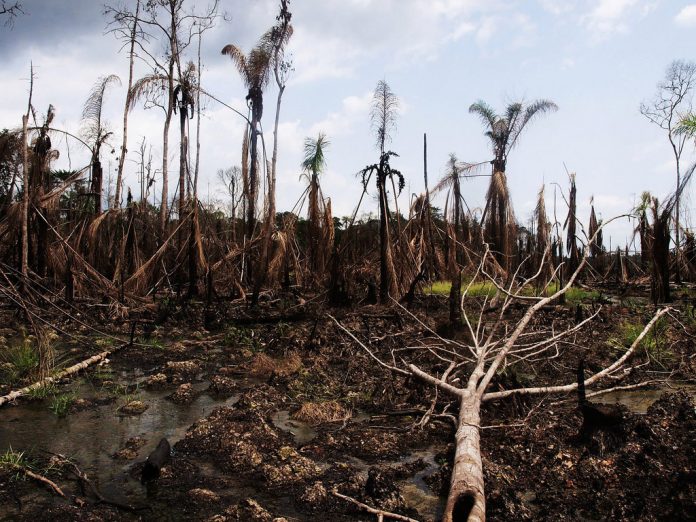
A civil society organisation, the Social Development Integrated Centre (Social Action) has expressed its reservation about contractors and the quality work by the Hydrocarbon Pollution Remediation Project (HYPREP) for the clean-up of the polluted Ogoni environment in Rivers State. The group specifically questioned the identity of the 21 companies that were given contracts for the clean up by HYPREP.

Social Action expressed its concerns in a letter addressed to the HYPREP Coordinator, Dr. Mavin Dekil, requesting to see the list of the contractors, with their lots, job types and specifications.

The letter which invokes the provisions of the Freedom of Information (FOI) Act, also requested for details on the emergency measures, including livelihood projects so far provided by HYPREP for the Ogoni clean-up project in line with the 2011 UNEP Report.


“Permit us therefore Sir, to please request, in line with the provisions of the Freedom of Information Act of 2001, that you kindly avail us with the following information on and around the clean-up/ remediation processes in Ogoni,” the letter dated June 10, 2019 and signed by the Social Action’s Head, National Advocacy Centre, Vivian Belonwu-Okafor, requested.

“Ogoni Clean-up implementation framework (timetable) showing activities’ schedule (inception to date, and in-view). List of the 21 companies so far awarded the Ogoni clean-up contract jobs, indicating their lots, job types, specifications, etc.

“Details on the emergency measures (including the livelihood projects) so far done towards the clean-up, so far provided by HYPREP in line with the 2001 UNEP Report.

“The requested information would provide us better clarity and insight into the activities of your body and strengthen is further as a CSO (Civil Society Organization) working with communities towards both the desired outcomes of your work (clean-up exercise) and the well-being of communities and it’s inhabitants.”

Also speaking with newsmen on Monday in Port Harcourt, Bellonwu, said the group would go to Court if HYPREP does not respond to its requests within the stipulated time.

She said while the government’s intention in establishing HYPREP could be noble, a number of the steps and activities around the report implementation have not helped to shore up citizens’ confidence in the process.

Belonwu-Okafor also expressed serious concern over the slow pace of implementation of the clean-up process. She added during the discussion that that steps taken by HYPREP were not encouraging, insisting that the organisation must include all stakeholders in the activities to ensure transparency and accountability.

She pointed out that despite attempts by governments to clean-up, and indeed, remediate the polluted Ogoni environment in line with the UNEP report recommendations, the HYPREP leadership appears to be sabotaging the efforts of governments and betraying the confidence of the people of Ogoni.


Extinction : 571 plants disappear from existence

0

Many of the plants found in literatures since the 1700’s are no longer in existence. At least 517 of these plants have been confirmed extinct.

The mass wiping off existence, which began somewhere in the mid eighteenth century, was revealed in the first comprehensive attempt to chart worldwide plant extinctions by a team of scientists at Royal Botanical Gardens, Kew.

Loss of habitat due to human activities such as use for farmland has been blamed as the leading cause of the mass extinction.

Before the revelation, it was widely believed among botanists that less than 150 species had gone extinct based on the Red List of Threatened Species. The plant analysis found Hawaii had the most recorded extinctions (79), followed by the Cape provinces of South Africa (37), with Australia, Brazil, India and Madagascar also among the top regions. However, there may well have been as many extinctions in places that have been less well studied.

The research team thinks 571 may even be lower than the actual number of lost plant species. “It is way more than we knew and way more than should have gone extinct,” said Dr Maria Vorontsova, from Kew. “It is frightening not just because of the 571 number but because I think that is a gross underestimate.”

The outlook is grim as the hope of rediscovering these lost plant is very dim. “Only a handful of the 571 lost plants are ever likely to be rediscovered, because the database includes previous rediscoveries and most of the lost species have been extinct a long time, said Aelys Humphreys also from Kew.

Species destroyed include the Chile sandalwood (Santalum fernandezianum) which was only found on one group of Pacific islands, and the St Helena olive tree (Nesiota elliptica), which only lived on the island it is named after.

#SaveTheVultures: They need all the help

0

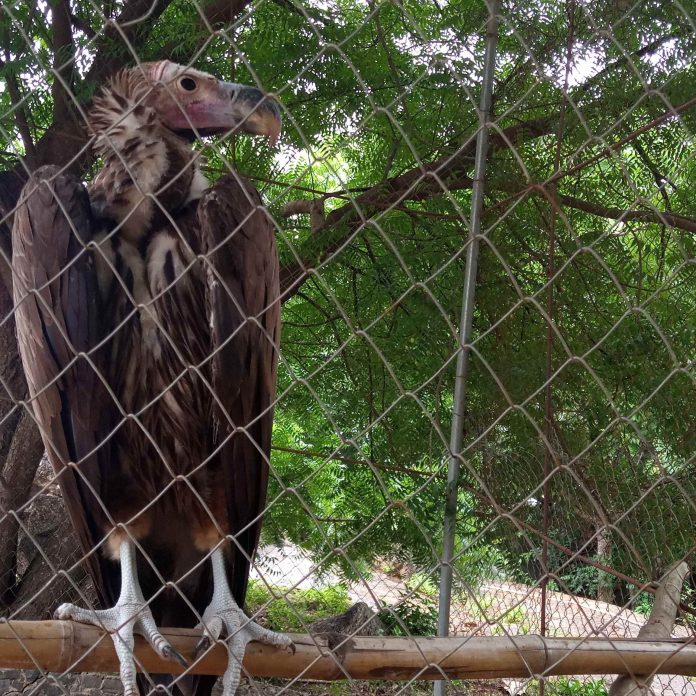
Vultures are not just birds. They are active players in the seamless flow of the cycle of life. They are the unpaid cleaners of bio-debris who diligently perform their natural task of preventing diseases from spreading through dead animal. If there were no vultures, humans would constantly be plagued with outbreaks of diseases which may potentially emanated from decomposing carcasses. And if humans were to pay for the services of the vulture, the bills would be in billions. Yet, the vultures are under severe threat. Currently in Nigeria and some other parts of Africa, vultures are killed in volts daily and this must stop.

Vulture population is nearing total collapse. From the millions of individual birds a little over a decade ago, the population has dropped to a few hundreds. There are about 30 vulture species throughout the world. Eleven of these species are found in Africa while six are native to Nigeria. Of the 11 in Africa, eight are threatened while five of the six species in Nigeria are on the brink of extinction. Whether we realize it or not there is a state of emergency in this regard. These birds who have, by their mere act of feeding saved the government huge sums of money by preventing outbreak of diseases such as botulism and anthrax are now ending up as mere game, in traditional medicine markets, in constant conflicts with man over habitat and just dead from accidental poisoning.

Naturally, vultures shouldn’t be in this acute situation. According to many traditional folklores, vulture are sacred birds or messengers of the gods helping to take sacrifices to the heavens. For example, the Yorubas of West Africa have it in their oral poetry and incantations that “…akìí pa igún, akìí jẹ́ igún, akìí fi ẹyẹ igún bọ orí”. Meaning “…we don’t kill the vulture, we don’t eat the vulture and we don’t use the vulture for sacrifice. It is like that in many other cultures even beyond Africa. Sadly, Ibadan and Ikare are among the three hubs of vulture sales in Nigeria, joined by Kano, according to a 2017 survey by NCF.  The same features that make the popular raptors sacred and protected seem to be working against them in other climes. There are many reports of vulture parts seen in voodoo markets and in possession of traditional healers and sorcerers. Recently a vulture and its owner was “arrested” by police in Maiha, Adamawa state over beliefs that it was associated with ill-luck. The woman who held the vulture captive on the other hand, claimed that it was for protection of her husband who was in jail. Thankfully, the Nigerian Conservation Foundation stepped in to make sure that the vulture is not returned to its tormentor.

Apart from belief related killings vultures are declining in numbers through mass poisoning. It has been found out that residues of nonsteroidal anti-inflammatory drug, diclofenac (sold under several trade names) for the treatment of pains in cattle is one of the leading causes of mass poisoning of vultures. In a bid to prevent sick cows from dying for example, herdsmen usually use this drugs to treat their animals during the long nomadic grazing movements. If the animal eventually dies, and the scavengers feed on it, they die en masse. Also, vultures are common sights in abattoirs. When vultures feed on diclofenac-tainted leftovers from the slaughterhouse, it is usually their last meal. To prevent unintentional mass killings like this, a thorough orientation must given to all in the meat production value chain. Diclofenac, originally developed for human use only, is cheap and very effective for cattle farmers, so the knee-jerk solution of banning the drug may be hard to implement. Rather finding a safe substitute and ensuring it is adopted swiftly by cattle farmers is a viable option.

A multidisciplinary team of expert must work together to end this killings before the consequences become obvious. The Agricultural Extension apparatus of the nation must be called upon to meet this challenge. Animal science associations, cattle rearers associations, the National Orientation agency, Center for Disease Control, and the Environment ministry must join hands with NGOs such as NCF, Birdlife International, A.P. Leventis Ornithological Research Institute (APLORI) among others that have taken it upon themselves to preserve and be the voice of  these voiceless birds.

A verification of what ailments vulture parts are believed to cure should also be made and  empirical proofs that vulture parts does nothing to treat such disease should be presented. Religion leaders need to assure their followers that the vulture is another unique creature in the universe just like any other and that they are not demons or evil spirits. This way, the public health epidemic waiting to happen if vultures go extinct would be prevented. The government also needs to set up an apparatus that sees to resolving conflicts between wildlife and humans.

There is an ongoing campaign to save the vultures. Everyone has a role to play. Learn facts about the vultures to day and tell it to others. You never can tell, one who needs to know may just be in your network.

There is an ongoing campaign to save the vultures

World Environment Day: Air pollution is reducing life expectancy and other quotes

0

The United Nations has revealed the that nine out of 10 people worldwide are exposed to air pollutants above the WHO air quality guidelines leading to severely reduced life expectancy.

It was also revealed that Air pollution kills 7 million people every year, hinders child development, damages economies and contributes to the global climate emergency. The negatives effects of air pollution was revealed by the UN Secretary General, Antonio Guterres in his World Environmental Day message on Wednesday.

The World Environment Day is a day set aside by the UN to encourage worldwide awareness and action for the protection of the environment. It is celebrated on 5th of June in over 100 countries.

Many around the world have also joined their voices to urge all stakeholders to beat air pollution #beatairpollution.

Here are some of the messages below.

Deputy Secretary-General of UN supports fuel free safari to #BeatAirPollution
10 most common plastic items found on European beaches to be banned by 2021

Ogoni cleanup: Remediation commences in 16 sites says Zarma

0
Ogoni Oil spill
Ogoni Oil spill file photo

The Federal Government of Nigeria says it has commenced remediation exercise in 16 sites affected by oil pollution, across the four local government areas in Ogoniland. The immediate past minister of environment, Suleiman Hassan Zarma, made the announcement on behalf of the Federal Government in Abuja during his valedictory press briefing and presentation of the ministry’s four-year achievement.

In 2016, President Muhammadu Buhari launched the clean up of Ogoniland as recommended by United Nations Environment Programme (UNEP), resulting in the set up of a new Hydrocarbon Pollution Remediation Project (HYPREP).  

According to Zarma, that federal government handed over the clean-up of additional five sites to contractors approved by the Federal Executive Council (FEC) last month.

Sulaiman Hassan Zarma

He said that federal government started sensitisation and engagement of communities and stakeholders in all the local government areas since 2016 and that over 21,000 patients were treated through community health outreaches.

“Scooping/delineating of phase 1 remediation sites are ongoing while procurement for phase II remediation have fully commenced,” he noted.

While stating that water facility inventory, sampling and surveys were ongoing in partnership with RSG, he pointed out that the process of rehabilitation of existing water facilities has commenced in Ogoni land.  

He described the flag-off of the Ogoniland clean-up exercise as unprecedented feat that heralds President Buhari’s  determination to restore and maintain the ecosystem, ecological process and preserve biodiversity in Nigeria.

Zarma hinted that NESREA has issued about 804 air quality, waste and toxic substances permit as well as 14 eco-guard certificate to various industries and facilities. He disclosed that the agency developed one additional regulation on healthcare waste control which has been transmitted to the Federal Ministry of Justice and gazetted as a national environmental regulation. The minister disclosed that PMB – led administration under the ‘Change’ mantra has recorded significant progress in securing a quality and conducive environment by promoting the sustainable use of natural resources, likewise in the development of programmes that affect the environment.  

He stated that Nigeria was championing the fight against illegal wildlife trade in the West African region, a situation that led  to the development of a West African Strategy on Combating Wildlife Crimes (WASCWC). According to Zarma, this would be presented at the Conference of Parties (COP) 18 of Convention on International Trade in Endangered Species of Wildlife Flora and Fauna (CITES).

Zarma added that the ministry has developed National Forest Investment Programme (NFIP), expected to run from 2019 to 2023, adding that CITES has consistently served as key revenue earner for government. On the activities of Forestry Research Institute of Nigeria (FRIN), he emphasised that about 10 indigenous tree species were planted on 834.6 hectares of land in 2018 through the National Afforestation Project (NAP). He pointed out that the institute has commenced research into biotechnological approach to mass production and multiplication of endangered and economic tree plant.

He revealed that the National Oil Spill Detection and Response Agency (NOSDRA) has embarked on routine review and activation of the National Oil Spill Contingency Plan (NOSCP), Regional Oil Spill Contingency Plan (ROSCP) and Facility’s Oil Spill Contingency Plan (OSCP). He said that NOSDRA’s laboratories were currently renovated for effective regulation and certification of polluted sites.    

The minister informed the gathering that the National Agency for the Great Green Wall (NAGGW) had produced 4,145,070m assorted forest and fruit tree seedlings for various afforestation, land rehabilitation and restoration projects in the front line states. Great Green Wall is an African Union Initiative covering 11 frontline states of Borno, Yobe, Adamawa, Bauch, Gombe, Jigawa, Kano, Katsina, Zamfara, Sokoto and Kebbi, with focus on afforestation and land restoration.

While stating that NAGGW established  389.96km shelterbelt and 293ha community woodlots, he said it developed a robust framework for the promotion of alternative livelihoods in the frontline states, expected to serve as incentive for community ownership of afforested land. He disclosed that Nigeria Erosion and Watershed Management Project (NEWMAP) supported the development of a framework for adoption of Liquefied Petroleum Gas (LPG) as low carbon alternative to firewood and kerosene. This was aimed at reducing environmental pollution from use of kerosene, likewise to curtail felling of trees used as firewood, noting that NEWMAP started with six participating states at inception and has extended to 21 participating states, Zarma said.

The NEWMAP is a World Bank-assisted project aimed at addressing gully erosion crisis in the south-east and land degradation in the north.

Also speaking at the event, the permanent secretary in the ministry, Mrs Ibukun Odusote, commended Zarma for securing notable accomplishments in climate change issues, including improved access to Global Environmental Facility (GEF), the issuance of Sovereign Green Bond and among others.

She stated that the minister also initiated various environmental policies and programmes targeted at addressing environmental pollution, land degradation, biodiversity and efficient framework for the effective management of the environment. Odusote commended Zarma for addressing various ecological challenges facing different parts of the nation as well as his commitment towards ensuring the establishment of shelterbelts across the country to protect desert encroachment and desertification.

Ecotourism company announces cut in plastic use

0

Wilderness Safaris, an ecotourism company with headquarters in Gaborone, Botswana has announced its plan to eliminate single-use plastics in its operations in Namibia, Zambia and Zimbabwe by providing reusable bottles for guests.

The company made the announcement on Monday, saying it is in line with the environmental action it took in Botswana and in Rwanda. The company has camps and mobile safaris across eight African countries.

According to the company’s Group Sustainability Coordinator Warren Ozorio, decreasing the use of plastic remains a priority, especially plastic bottles.

“Wilderness Safari is also currently paying attention to food waste in our kitchens, and making efforts to produce smart and sustainable menus,” Ozorio added.

The project not only reduces wastes, but also addresses immense logistical challenges in areas where Wilderness Safaris camps are located, the sustainability coordinator said.

He also said the company’s ultimate goal is to become completely plastic-free in all its operations.

“Even though our official campaign was launched in 2018, Wilderness Safaris has been working on waste reduction since we began operating back in the 1980s, and while the reduction of plastic is our main objective – with recycling as a last resort – we are currently also paying attention to food waste in our kitchens, and making efforts to produce smart and sustainable menus. Our ultimate goal is to become completely plastic-free in all our regions”, confirms Ozorio.

Sustainability, ecotourism and life lessons

0

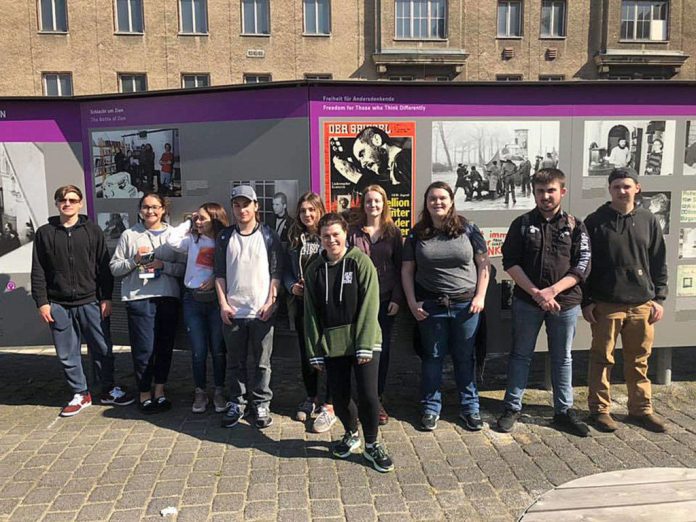
Ten Decatur High School students experienced firsthand progressive sustainability and ecotourism practices on a recent field trip to Germany and Switzerland.

Jordan Lybeck, agricultural sciences teacher at Decatur, and several horticulture and animal science students embarked on a 10-day educational tour of sustainable living in Germany and Switzerland, organized through Education First.

In April, the group traveled to Berlin, Stuttgart, Freiburg and the Lucerne region, exploring historical museums, cultural monuments, and geographic wonders from cities to farmlands.

For many of these students, it was their first time out of the country or even on an airplane, Lybeck said.

“I think in total we traveled about a thousand miles in a couple of days just by train and bus,” Lybeck said.

The students learned about a biosphere reserve, Lybeck said, which is similar to the national parks in the U.S., but in Switzerland, they allow people to farm and live in the park.

“A lot of their ecosystems can’t go on without human intervention, so they allow their farmers to graze cattle up in the hills because they clear the area out, which allows the wildflowers and native plants to grow,” Lybeck said. “It preserves their culture but it also preserves nature and a way of life for people.”

In his classes, the focus is to teach kids how to live more sustainable lives, Lybeck said, so when he received a promotional email about the trip, it was a perfect fit.

One student said Europe shines a light on a reimagined metropolis area, typically thought of as a smog-filled city, instead showing it can be environmentally safe.

“Everyone has a garden. Every building has solar panels; they made each building so that the light would filter in though certain times of the year to warm up the house or cool it down during the summer,” said student Hallie C. “It was just amazing that in a place that you think would be overrunning with sewage and grossness was better than suburban areas.”

“I liked how they have reusable energy sources,” said student Kayden S., explaining the mass use of solar panels and the timber burning mechanisms used as central power sources for heating and electricity. “I think that’s something I could take and apply it to my own life at some point.”

The students also got to experience the Innovation Academy, also called the “Maker’s Space,” where they designed keychains via a computer software, and then saw a 3-D printer laser bring their design to life.

The students also got to work with animation graphics and virtual reality to create their own world, exploring their creation with virtual reality goggles.

They also toured the Holocaust memorial, which was fascinating, yet decripid, dark and creepy, the students agreed. They viewed the Berliner Fernsehturm, a satellite TV tower constructed between 1965 and 1969 by the government of the German Democratic Republic.

Some teaching moments were unplanned.

The group’s departing flight from the United States to Amsterdam landed late, causing them to be delayed for their following flight. Deboarding the plane on the tarmac, the 13-person group ended up getting split into three.

It was Kayden S. who sprinted through the airport, arriving at their second flight in just enough time to speak with the captain and hold the plane for the rest of the Decatur group.

“It’s a good learning experience because you learn how to problem solve and all sorts of logistical things,” Lybeck said of the airport stresses.

While the students may not always remember the random facts they learned from their knowledgeable tour guides, the life experiences of nearly missing a connecting flight, or hearing how wars they had read about in textbooks had firsthand impacted the lives of people they met in various countries — those memories are unforgettable, Lybeck said.

“Sustainability was the theme of the trip, but the life lessons I think are going to stick with them a lot longer,” Lybeck said. “I think sustainability was a big part of it because it relates to the course and what we do here, but I think the cultural differences and life lessons they learned were probably the most important.”

Kebbi welcomes elephant family

0

Late last year, a family of elephants turned up in Zaria Kala-Kala village, Kebbi State. At the report of their sighting, the governor of the state, Atiku Bagudu, ordered their protection pending when they would be handed over to the appropriate authority.

As you can imagine, this was an initially difficult task as the elephants destroyed farms across some local governments while foraging.

According to the state’s commissioner for Agriculture, it was the first time in the state’s history that elephants would besiege their farms. Their issues had always been with the hippopotamus.

However, the governor’s assurance that farmers would be compensated not only avoided a clash with the elephants, but made them welcome guests who have now decided to make the state home.

Recently, the governor hailed farmers living along the fringes of the River Niger in Koko/Besse and Bagudo Local Government Areas for protecting the stray elephants. Apart from protecting the endangered animals, the largest land mammals in the world, the farmers also provide them with feeds from their farms.

“I urge all communities in the state to continue to provide information and support until the animals return to their rightful location,” the governor said.

He used the opportunity to warn the public against poaching of wild animals, adding that whoever inflicted injury on animals would face the full wrath of the law.

But if statements by the First Lady of Kebbi are anything to go by, the elephants are there to stay.

Zainab Bugudu said last week on Twitter: “These awesome elephants that strayed into Kebbi last year are safe and thriving. The mama and baby stay at ‘home’ whilst papa elephant roams the land. He always comes back. Typical.”

She revealed that the elephants had established a range and knew their bounds, negating the need for curtailing their movement.

“The elephants have created a natural ‘zoo’ for themselves,” she said. “They don’t go beyond certain limits; always return. The host community in Zaria Kalakala protects them and can always tell you where they are. They have feeding points. It’s really quite interesting.”

From her comments, you can sense her excitement and her appreciation.

“Indeed, we thank Nature, His Excellency and the receptive host community. I just ooh and aah and share amazing pictures with you.”

The coexistence between the elephants and humans in Kebbi is worth the excitement it generates. Unlike other instances where the animals are either kept in a zoo or have a reserve demarcated for them, this is a natural relationship built on mutual trust which may help resuscitate the dwindling elephant population in Nigeria.

Elephants are a cornerstone of the $34 billion tourism industry across Africa. They play a critical role as ecosystem engineers, providing a way for important soil nutrients to be spread around on a massive scale.

As natural gardeners, and sculptors of Africa’s most iconic landscapes, elephants help to disperse seeds and create spaces for other plant species to grow.

However, they face an uncertain future in Nigeria. Once widespread across the country, elephants have declined by more than 50% in less than 20 years.

Reliable information about many of these small herds is generally lacking. However, it is known that a small herd of elephants survives in the region around Kwiambana Game Reserve in Zamfara State and Kamuku National Park in Kaduna State.

The largest and most important elephant herd remaining in the country is located at the Yankari Game Reserve in Bauchi where an estimated 100-150 elephants survive.

Interestingly, there are two species of elephant in Nigeria. The ones mentioned above are the savannah elephants of northern Nigeria.

The other is the forest elephant in the south. It was recently reported that these southern elephants may be around 200 remaining in the wild.

Like their cousins in the north, the animals face the twin threat of loss of habitat to development on one hand, and being poached for their ivory on the other.

The five sites where forest elephants are reportedly found in southern Nigeria are the Omo Forests in Ogun State, the Okomu National Park in Edo State, the Cross River National Park in Cross River State, the Idanre Forests and Osse River Park in Ondo State and the Andoni Island in Rivers State.

However, only organised conservation work, public support and enlightenment, and good habitat management are capable of saving the elephants from extinction in Nigeria.

Hopefully, the love and care being shown to the elephants in Kebbi will be replicated wherever they are found and might help increasing their population.

If well harnessed, wildlife tourism will be a long overdue complement to Nigeria’s tourism drive which at the moment, stands on the twin pillars of culture and entertainment.

Saving the elephant population is the least the country can do, after seeing the depletion and near extinction of other animals responsible for tourism income in other African countries.

The fact that elephants are peaceful animals, is a reason for their survival next to humans. Unfortunately, the lion for example – due to its nature – can’t find solace in host communities, which has invariably, threatened its population, in the absence of a concerted government effort at conservation.

Lions will soon disappear completely from Nigeria, according to experts. At the moment, there are only two areas in Nigeria home to lions: Kainji Lake National Park in Niger State, in the northwest, where approximately 30 cats live, and Yankari, where researchers believe there might be less than five.

With the example set by the host community in Kebbi State, Nigeria elephants shouldn’t suffer the same fate.