Home Blog Page 8

What Lagos will gain from banning styrofoam ‘take away packs’ and single us plastic materials

0

On Sunday, January 21, 2024 word came out that Lagos State, the economic capital of Nigeria has banned styrofoam and single use platic materials.

Tokunbo Wahab, the state’s commissioner for environment and water resources recounted the menace caused by single use plastics in the state. Because they were non-biodegradable, the plastics clogged sewage channels and waterways, causing flash flood when it rained and costing billions of naira in cleaning up and damages.

There have been outcries from food vendors and others about the issues that will come from the ban, but the upside is still more attractive than the downside.

Banning single-use plastics and styrofoam containers offers multitudes of advantages, spanning environmental, health, and economic benefits. Here are some of the key highlights:

Environmental Advantages:

Reduced Waste: Single-use plastics and styrofoam contribute significantly to global plastic pollution. Banning them drastically curbs the amount of waste accumulating in landfills, oceans, and ecosystems, protecting wildlife and natural habitats.

Minimized Microplastics: These tiny plastic fragments, often resulting from breakdown or improper disposal, pose a major threat to marine life and potentially human health. Bans help prevent their formation and entry into the food chain.

Reduced Carbon Footprint: Plastic production and disposal involves high energy consumption and greenhouse gas emissions. Banning these materials translates to decreased reliance on fossil fuels and a smaller carbon footprint.
Enhanced Recycling: By eliminating single-use options, focus shifts towards reusable and recyclable materials, leading to more efficient waste management and resource utilization.

Health Advantages:

Improved Public Health: Styrofoam can leach harmful chemicals like styrene and benzene when heated or exposed to certain foods. Banning its use reduces risks of these chemicals migrating into food and potentially impacting human health.

Protected Marine Life: Sea turtles, birds, and other marine animals often mistake plastic debris for food, leading to choking, intestinal blockages, and even death. Reducing plastic pollution saves wildlife from these detrimental effects.
Cleaner Water Sources: Microplastics and plastic pollution contaminate our water sources, posing potential health risks to humans and ecosystems. Banning single-use plastics helps mitigate this contamination and safeguard water quality.

Economic Advantages:

Job Creation: Transitioning to reusable and compostable alternatives can create new jobs in manufacturing, distribution, and repair of sustainable products. This fosters economic diversification and green business opportunities.
Reduced Cleanup Costs: Plastic pollution cleanup presents enormous financial burdens to governments and communities. Banning single-use plastics minimizes these costs and redirects resources towards more productive endeavors.

Tourism Revenue: Pristine beaches and healthy ecosystems attract tourists, boosting local economies reliant on tourism. Banning plastic pollution enhances environmental appeal and potentially increases tourism revenue.
Banning single-use plastics and styrofoam containers is not without its challenges, but the numerous advantages in terms of environmental, health, and economic benefits make it a compelling long-term strategy for building a more sustainable and healthy future.
Differences Between Alligators and Crocodiles

0

Do you sometimes get confused as to the differences between alligators and Crocs? You can’t differentiate between them? While they share striking similarities, these creatures have distinct features that set them apart. From their habitats to behaviour and anatomy, discerning between an alligator and a crocodile requires a keen eye and a wealth of knowledge. At the end of this article, we’re going to know the differences between both creatures. Let’s start with

Snout Shape

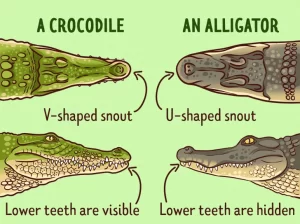
One of their most discernible features is the shape of their snouts (the protruding part of an animal’s face, which includes the nose, mouth, and jaw).  Alligators have a wide, U-shaped snout, which is perfect for their life in freshwater. On the other hand, crocodiles have a more streamlined, V-shaped snout, which helps them survive in saltwater. This difference in snout shape is one unique feature that helps us tell the two apart when we see them.

Image courtesy of brightside.me

Teeth and Bite

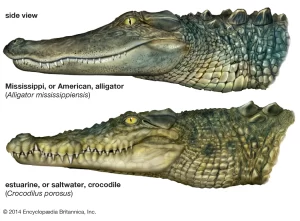
Apart from just looks, you can also tell the difference between alligators and crocodiles from their dental architecture. Alligators have an overbite (you can’t see their lower teeth when they close their jaws). However, crocodiles give a sneak peek of their sharp lower teeth even when their mouths are shut. This gives a warning about the strong bite they can deliver, showing off their hunting skills.

Image courtesy of usatoday.com

Colour and Habitat

Nature dresses each species in unique colours, showing where they prefer to live. Alligators usually have grey or black skin, which helps them stand out in freshwater areas. On the other hand, crocodiles are often olive or tan in colour, helping them blend in perfectly with the brackish waters they live in. These different colours give us a clue about where they like to hang out, helping us understand their habitats better.

Behaviour

The way alligators and crocodiles behave also sets them apart. Alligators are usually seen as calmer and less likely to attack. They tend to be shy and will often back away from a conflict rather than get into a fight. On the other hand, crocodiles are known for their aggressiveness. They’re top predators, always ready to strike with precise skill. These different behaviours affect how they interact with people and their environments, showing the complex patterns in nature’s design.

Size

Size is another way to distinguish between alligators and crocodiles, and it tells us about how they grow. Adult alligators can grow up to 14 feet long, while crocodiles are even bigger, reaching up to 19 feet in length.

Image courtesy of quora.com


In nature, every detail matters. Alligators and crocodiles, while similar in some ways, have their unique traits that make them who they are. They survive in different environments, from calm freshwater rivers to more turbulent saltwater. As caretakers of our planet, it’s our responsibility to appreciate and safeguard these amazing creatures, ensuring they continue to exist for future generations to marvel at.

UN warns against rising illegal wildlife trade in Nigeria

0

The United Nations has spoken out against the unlawful trafficking of wildlife and forest goods, citing inadequate awareness, ineffective laws, and poor enforcement as obstacles to successfully prosecuting wrongdoers.

At this year’s World Wildlife Day commemoration in Abuja on Tuesday, Oliver Stolpe, the Country Representative for the United Nations Office on Drugs and Crime (UNODC), delivered a presentation. The event focused on the theme ‘Connecting People and Planet: Exploring Digital Conservation’ and included the unveiling of the International Consortium on Combating Wildlife Crime (ICCWC) Toolkit Report for Nigeria, presented in collaboration with the UNODC and the UN Food and Agricultural Organization (FAO).

In his statement, he acknowledged the Nigeria Customs Service for their effective work in raising border point seizures, yet highlighted that most seizures related to Nigeria originated from other country’s authorities. He emphasised the importance of improved sharing of information and cooperation with relevant authorities in the countries of origin, transit, and destination. This can lead to intelligence-based operations and potential joint or simultaneous investigations to uncover and dismantle trafficking networks. However, it is also important to enhance interception capabilities. While acknowledging the effective efforts of the Nigeria Customs Service in increasing border point seizures, it was noted that a considerable number of these seizures were linked to authorities in other countries.

According to his remarks, the 2023 UNODC Organized Crime Threat Assessment for Nigeria exposed how Nigeria serves as a major hub for illegal trade in wildlife and forest products, with a focus on pangolin, ivory, and rosewood.

Furthermore, he noted that these products are acquired not only from Nigeria but also from other countries in the region, such as Cameroon, Gabon, the Central African Republic, the Democratic Republic of Congo, Liberia, Cote d’Ivoire, and the Benin Republic. In alignment with data from the UNODC’s World Wildlife Seizures Database spanning the years 2011 to 2020, there are over a thousand records indicating Nigeria’s involvement as a source, transit, or destination country, or where the offender was.

Stolpe highlighted another significant discovery from the research, indicating a rising trend of armed groups engaging in the illicit harvesting and trafficking of rosewood. This disturbing development has led to the tragic loss of nine park rangers’ lives during violent encounters with individuals involved in illegal logging within the Gashaka-Gumti National Park. In a broader context, the findings suggest that illegal logging activities persist, even in the face of the 2018 trade suspension of rosewood from Nigeria.

The UN body urged religious and traditional leaders to collaborate with the government to raise awareness among Nigerians about preserving and safeguarding the country’s diverse biodiversity.

In observance of the World Wildlife Day celebration, Minister of Environment Balarabe Abbas Lawal underscored the crucial role of digital innovation in the conservation of biodiversity and the protection of wildlife.


Connecting People and Planet: Exploring Digital Innovation in Wildlife Conservation

0

In 2024, as we commemorate World Wildlife Day, the international community comes together with the common goal of “Connecting People and Planet: Exploring Digital Innovation in Wildlife Conservation.” In a time where technology reigns supreme, utilizing digital innovation is important to protecting the rich ecosystems of our planet and the diverse range of species that call them home.

The realm of wildlife conservation has been transformed by digital tools and technology. These advancements, such as advanced monitoring systems and artificial intelligence, offer matchless knowledge about the environment. With remote sensing, satellite imaging, and advanced camera traps, researchers can efficiently collect data, improving our comprehension of ecosystems and animal behaviour.

Real-time monitoring is an important element of digital advancements in wildlife preservation. By utilizing connected devices and sensor networks, conservationists can effectively monitor the behaviours and movements of endangered species. This enables them to quickly identify and address potential dangers, such as poaching or habitat destruction. Additionally, sophisticated data analysis plays a significant role in interpreting large amounts of data, assisting scientists in making well-informed decisions for conservation plans.

The rise of digital platforms has provided opportunities for citizens to take part in conservation efforts for wildlife. By utilizing mobile applications and internet-based platforms, people from all over the world can play a role in collecting data, identifying species, and monitoring initiatives. This democratization of scientific involvement cultivates a feeling of worldwide accountability, establishing a community of environmentally aware individuals actively working towards protecting biodiversity.

The impact of digital innovation goes beyond its application in various fields and also influences education and advocacy. Through virtual reality experiences, individuals can fully immerse themselves in the beauty of nature, leading to a stronger bond between people and the environment. These educational resources not only bring attention to endangered species and ecosystems but also instill a sense of duty and care towards them

World Wildlife Day 2024 highlights the vital link between people and the planet using digital innovation for wildlife conservation. In our digital age, let’s use technology to safeguard Earth’s diverse life. Through creative solutions, we connect people and the planet, fostering a sustainable future where biodiversity flourishes and humans live in harmony with nature.

House of Representatives Initiates Landmark Legislation for Endangered Species Conservation and Protection in Nigeria

0

Today, the House of Representatives initiated the initial review of fresh legislation focused on safeguarding and preserving endangered species. The bill, prepared by the Federal Ministry of Environment in Nigeria and advocated by Hon. Terseer Ugbor, Vice Chairman of the House Committee on Environment, aims to strengthen and enhance existing laws for wildlife protection.

This legislative effort primarily aims to tackle the common problem of illicit wildlife trade in Nigeria. The proposal aims to grant law enforcement agencies expanded investigative powers, such as conducting financial investigations and intelligence-based operations. Additionally, it enhances the jurisdiction of courts to expedite legal actions and asset retrieval related to wildlife, while enforcing accountability for businesses involved. The initiative also emphasizes the importance of international cooperation in combating wildlife trafficking.

The sponsor of the bill, Hon. Ugbor, expressed his satisfaction with its approval, highlighting the detrimental effects of wildlife trafficking on the environment and the delicate balance of our planet. He emphasized the significance of the bill in fulfilling our responsibility to future generations and preserving Nigeria’s natural treasures. Aligned with global agreements and conventions, the legislation demonstrates Nigeria’s steadfast dedication to fighting against wildlife trafficking and safeguarding endangered animals such as lions, elephants, gorillas, pangolins, and chimpanzees.

The Africa Nature Investors Foundation (ANI), the Environmental Investigation Agency (EIA), and the Wild Africa Fund (WAF), in collaboration with the UK Illegal Wildlife Trade Challenge Fund and the US Bureau of International Narcotics and Law Enforcement Affairs, have played a significant role in addressing the issue of illegal wildlife trade in Nigeria. According to Tunde Morakinyo, ANI’s Executive Director, the approval of the bill is expected to enhance the country’s efforts in fighting against wildlife crime.

According to Mary Rice, the Executive Director of EIA UK, the implementation of strong laws is important in fighting wildlife trafficking. She urged Nigerian lawmakers to promptly pass this measure. Peter Knights, CEO of WAF, also stressed the importance of this legislation, stating that its swift ratification could position Nigeria as a leader in the region in combating wildlife crime and protecting wildlife throughout Africa. The Endangered Species Conservation and Protection Bill is set to undergo a thorough examination and receive input from both politicians and the public during hearings and future readings, indicating a deliberate effort to ensure its widespread and effective execution.

Wetlands

0

Wetlands may not get much attention, but they’re vital for supporting life on Earth. These waterlogged regions, including marshes, swamps, and bogs, are important for ecological stability. These environments support a wide variety of plants and animals. Recognizing the significance of wetlands is important for understanding their contribution to the overall health of our environment. 

What are wetlands?

Wetlands are areas of land where the ground is either permanently or seasonally saturated with water. They can include various types of ecosystems, like marshes, swamps, and bogs. Wetlands play crucial roles in supporting diverse plant and animal life, providing habitat for many species, and offering important ecological functions such as water filtration, flood control, and carbon sequestration. Some wetland regions in Nigeria include the Hadejia-Nguru Wetlands in northeastern Nigeria, the Omo Forest Reserve in southwestern Nigeria, the Lake Chad Basin, and the Lekki Conservation Centre in Lagos State. 

Wetlands serve as important locations for biodiversity, supporting a variety of flora (referring to all the plant life or vegetation in this region) and fauna (encompassing all the animal life in this region) that have specifically adapted to the wet conditions. The presence of plentiful water and nutrient-rich soils creates the perfect environment for a diverse range of living beings. From amphibians and water birds to a wide array of plant species, wetlands provide a haven for numerous organisms, making a significant contribution to the overall biological richness of our planet.

Ecological Functions of Wetlands?

  • Water Filtration and Quality: Wetlands are essential for the provision of water purification services as they act as natural filters, effectively eliminating pollutants, sediments, and excess nutrients from water. Through the use of vegetation and soils as sponges, wetlands can absorb and trap harmful substances, preventing them from reaching downstream water bodies. This crucial role not only helps protect aquatic ecosystems but also ensures the availability of clean water for human communities.


  • Flood Mitigation and Resilience: Wetlands are essential in reducing the impact of floods on the environment. During times of intense rain or strong storms, wetlands are crucial in absorbing and retaining excess water, thus reducing the risk of flooding in nearby areas. This particular function of wetlands becomes even more important in the face of climate change as the frequency and intensity of these events increase. As a natural defence against floods, wetlands play a significant role in strengthening the resilience of ecosystems and communities.


  • Carbon retention:The carbon cycle on a global scale is significantly impacted by wetlands. Due to the presence of waterlogged conditions, the decomposition of organic matter is slowed down, leading to the storage of carbon in wetland soil. This vital process, known as carbon sequestration or retention, plays a crucial role in mitigating the effects of climate change by offsetting the release of greenhouse gases into the atmosphere. As a result, protecting and restoring wetlands should be a top priority in addressing climate change.


  • Sustainable Livelihoods: Throughout history, wetlands have been a source of sustenance for human communities, providing a variety of resources. Wetland resources such as fish, waterfowl, and plants have played important roles in traditional activities like fishing and farming. It is important to find a balance between human needs and wetland preservation to maintain the sustainable use of these ecosystems, safeguarding their ecological functions and supporting the livelihoods of local communities.

The preservation of wetlands is crucial for maintaining the ecological balance of the Earth and ensuring essential benefits for both the environment and human society. It is essential to prioritize the conservation and restoration of these areas and recognize their importance. By safeguarding wetlands, we not only protect biodiversity but also make a valuable contribution to the long-term sustainability of our planet and the well-being of future generations.

Do Plants Feel Pain?

0

The question of whether plants are capable of feeling pain has long been a topic of interest. To keep it short,  plants do not possess the ability to experience pain like animals do, and this is due to their lack of pain receptors, nerves, and a brain, which results in their functioning being fundamentally different from that of animals. Therefore, the act of harvesting plants such as tomatoes or cutting the leaves from the trees of mangoes, cashews, and all the rest cannot be considered a form of torture. So, how exactly do plants react to their surroundings? Let’s delve into that!

You may or may not be familiar with the sensitive plant that immediately collapses its leaves after being touched or the Venus flytrap with its fast traps. These are some plants that display clear sensory abilities. These abilities can be seen as a way of communicating with the environment and are not a sign of pain but rather serve as a defence mechanism against potential threats, such as herbivores.

Cellular Sensitivity

The responsiveness of plant cells to various external stimuli such as light, temperature, and hormones is known as cellular sensitivity. It plays an important role in the regulation of plant growth, development, and adaptation to environmental changes.

Recent studies have made clear the level of plant sensitivity that allows for responses to specific signals and cues from the surroundings. For example, a mustard plant commonly used in scientific studies has been found to send out electrical signals in response to herbivory. When under attack by caterpillars or aphids, the plant initiates a kind of complex defence mechanism by emitting electrical warnings from leaf to leaf. This mechanism triggers the production of chemical defences, protecting the plant from further damage. While this response reflects a reaction to physical harm, it is important not to equate it to the experience of pain as animals perceive it.

Plants can respond to different environmental triggers, demonstrating their capacity to perceive and adjust. Whether it is in reaction to sunlight, gravity, wind, or even small insect bites, plants showcase various interactions with their surroundings. It is important to note that these responses are not motivated by a desire to avoid pain but rather are essential for the survival and spreading or dispersion of the plant species.

Plants, in contrast to animals, do not rely on their ability to feel pain to survive. Their success and failure are determined by their ability to adapt, reproduce, and thrive in various environments. The fact that plants do not experience suffering does not lessen their importance in the ecological system; instead, it showcases the vast array of life on our planet.

The reason why plants do not experience pain like animals is because they lack pain receptors, nerves, and a brain. Although their reactions to physical stimuli may appear complex, they are driven by survival mechanisms rather than a personal experience of pain. The complex processes of adaptation and sensitivity that plants exhibit highlight the incredible complexity of the natural world and emphasize the importance of acknowledging and comprehending the various ways in which living organisms interact with their surroundings.

Nigeria Makes a Brave Stand Against Ivory Trade

0

In a groundbreaking event held in Abuja, Nigeria took a firm stance against the illicit ivory trade by staging its first ivory-crushing event. Approximately 2.5 tonnes of confiscated elephant tusks and carved ivory were methodically burned in a joint effort by the National Environmental Standards and Regulations Enforcement Agency (NESREA) and the Elephant Protection Initiative Foundation (EPIF).  This strategic action is part of Nigeria’s multidimensional effort to protect its declining elephant population and combat the illegal wildlife trade.

The swift action was taken in response to Nigeria’s recent public destruction of four tons of pangolin scales, which highlights the government’s unwavering commitment to protecting animals. The Minister of State for Environment, Dr Iziaq Adekunle Salako, repeated the country’s dedication and called for global cooperation to address the issue of illegal wildlife trafficking. Despite a worldwide ban implemented in 1989, the trade of ivory remains a major threat to the survival of African elephant populations, leading to a drastic decline.

The latest report on the status of African elephants presents a harsh outlook, as only 400 elephants remain in Nigeria out of an estimated 415,000 on the entire continent. Nigeria, which has a long history of being a major centre for ivory trafficking, has taken proactive measures such as establishing partnerships with other countries, strengthening law enforcement, and increasing public education.

The National Strategy to Combat Wildlife and Forest Crime is being implemented by the government and monitored by NESREA through the Wildlife Law Enforcement Task Force (WLETF), which is a substantial effort. John Scanlon AO, the CEO of EPIF, highlighted the important role of the ivory crush in putting off illegal profits and sending a strong message against trafficking. However, he underscored the urgent need for new legislation, including a pending bill from a previous congressional session, to effectively tackle wildlife trafficking.

Nigeria has observed a rise in seizures and verdicts, which include a prison sentence of four years for possessing pangolin scales and elephant tusks illegally. The government is dedicated to stopping the trafficking of wildlife and has ongoing initiatives like the National Elephant Action Plan (NEAP). The NEAP, set to be launched later this year, was collaboratively developed with organizations such as the Wildlife Conservation Society (Nigeria Programme) and EPIF. Its objective is to allocate funds for elephant protection, enhance anti-poaching measures, and tackle the widespread problem of ivory trafficking.

The Ecological Significance of Trees

0

You might be surprised to learn that many species on our planet have endured up to 5,000 years of silence, witnessing the birth and fall of entire civilizations. They are not mythical creatures or ancient figures from forgotten lore; they are simply trees. Join us in this article into the heart of Earth’s landscapes, where arboreal (pertaining to trees) giants like Methuselah stand as living records of our planet’s past. Prepare to discover the secrets of these silent guardians of time as their stories of persistence and strength unfold in the vastness of our natural world.

As we travel across vast landscapes, certain trees emerge as eternal witnesses, quietly attesting to the enduring fabric of life. Consider Methuselah, mentioned earlier, a Great Basin bristlecone pine in eastern California that proudly displays its 4,853-year-old past through the detailed records contained within its tree rings. This arboreal monster predates the Egyptian pyramids, prompting us to explore the secrets of its incredible longevity.

In this arboreal drama, Methuselah is not alone. Other old trees have left their imprint on time across our planet’s different terrains. These arboreal wonders, like Prometheus and The Senator, have triumphant and tragic stories to tell, each adding to the larger story of Earth’s ancient guardians.

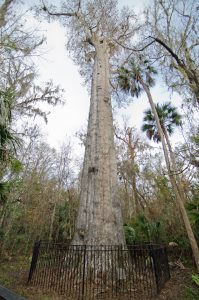
The Senator (2012)
The Senator (2012)

At the core of these stories is an intriguing question: What gives these trees the power to withstand the passage of time? As we unearth the secrets of their lifespan, we gain insights not only into the complicated interplay of adaptation, chance, and resilience but also into the significant ecological contributions that make these old trees essential to the health and balance of our world.

So, what is the key to their continued existence? These old trees have survived illnesses, pests, wildfires, and human activities that have killed many of their contemporaries. These amazing trees have evolved sophisticated chemical defences, making them resilient guardians against pests and illnesses. Unlike animals, where ageing frequently results in cell death, these trees have different cellular dynamics that ensure reduced cell death in critical development regions.

On a larger scale, these trees’ basic yet effective body plan allows for modular development, allowing for the replacement of missing pieces to maintain continued life. Surprisingly, dead wood accounts for up to 95% of the structure of an elderly tree. This seemingly contradictory composition has a purpose: dead wood does not need metabolic activity, which reduces the energy required for maintenance and contributes to the tree’s lifetime. Learn more

But why is it important for these trees to endure over time? The reason lies in their significant ecological contributions. From anchoring soil with extensive root systems to leading in carbon sequestration (carbon sequestration is the vital process where trees absorb and store carbon dioxide, mitigating climate change and maintaining ecological balance.) and supporting biodiversity, these ancient trees are vital in preserving the delicate balance of Earth’s ecosystems.

As we learn more about Methuselah, Prometheus, The Senator, and many more arboreal wonders, we get a greater understanding of the delicate interplay of adaptation, chance, and resilience that allows them to survive. These trees are not mere witnesses to time; they play a crucial role in keeping our world healthy and balanced. Coming together to understand, appreciate, and safeguard younger trees becomes a shared mission, ensuring the preservation of the delicate threads of life woven into the fabric of our natural world.

Picture credits: Future Tree Health, Wikipedia

ConservationsNG: A Journey into Earth’s Stewardship

0

You may have noticed, or perhaps it’s already apparent to you, that this website is entirely devoted to the cause of conservation. It’s evident in our articles, and it’s even embedded in our website’s name – ConservationsNG. But let’s take a moment before the year bids us farewell to truly understand what conservation means and unravel the entire concept behind this remarkable site.

Our home, Earth, is endowed with an abundance of natural resources, including air, minerals, plants, soil, water, and wildlife. Conservation appears as the guardian angel, devoted to the care and protection of these resources, assuring their survival for future generations. This goes beyond basic protection; it entails the delicate effort of conserving the diversity of species, genes, ecosystems, and important environmental services such as nutrient cycling.

Although the terms conservation and preservation are frequently used interchangeably, they serve distinct functions. Conservationists argue for human use of nature that is sustainable, whether for hunting, logging, or mining. In contrast, preservation functions as a fortress, shielding nature from direct human influence.

At its core, conservation is a thoughtful interaction between people and nature—an intricate connection designed to appreciate Earth’s beauty for the long term without causing irreversible harm. This unwavering dedication underscores our role as vigilant stewards, entrusted with responsibly managing and utilizing the planet’s resources to protect the purity of our exceptional home.

Now, let’s dive into the details of conservation, exploring its ins and outs, and grasping why it’s so important. This initial exploration sets the stage for what’s to come. Welcome to ConservationsNG, where the heartbeat of conservation resonates in every article and the call to protect our planet echoes loud and clear.