Tag: Rachel Ikemeh

  • How a Bayelsa community is working with conservation experts to save the Niger Delta red colobus monkey

    How a Bayelsa community is working with conservation experts to save the Niger Delta red colobus monkey

    About 200 critically endangered Niger Delta red colobus monkeys are beneficiaries of a rare collaboration between a community and a conservation organization. This population of the monkey species is likely the most viable left in the world.

    The Apoi community of Bayelsa State and the Southwest Niger Delta Forest Project of the Foundation for Sustainability of Ecosystem, Wildlife and Climate (FOSEC) joined hands to establish a new 1,000-hectare (2,741-acre) community conservancy in the Apoi Creek Forest.

    The conservancy will be jointly managed by the Apoi community and SW/Niger Delta Forest Project, which has been working there for seven years before a formal Memorandum of Understanding was signed recently. This community-based conservation effort is key to the survival of the species, which is one of the 25 most endangered primates in the world. About three groups of the monkey have territories in the conservancy.

    The MOU between SW/Niger Delta Forest Project and community leaders was signed on September 27. Chief Vinmarh G. Fietabara, chairman of the Council of Chiefs; Mr. Edu Kemeghesuotei, chairman of the Apoi Community Development Committee (CDC) and Mr. Godday S. Awudu, Apoi youth president, all signed the agreement and the entire Apoi community—all of its members—attended the signing ceremony, as well as some members of neighboring communities that share boundaries with the new conservancy.

    Director of SWNiger Delta Forest Project, Rachael Ikemeh Ashegbofe and Chairman, Apoi Council of Chiefs,  Chief Vinmarh G. Fietabara shaking hands after signing the MOU on conservancy creation and management
    Director of SWNiger Delta Forest Project, Rachael Ikemeh Ashegbofe and Chairman, Apoi Council of Chiefs, Chief Vinmarh G. Fietabara shaking hands after signing the MOU on conservancy creation and management

    Director of SW/Niger Delta Forest Project, Rachel Ashegbofe Ikemeh said the presence of the endemic Niger Delta red colobus monkey known locally as the “epieni” was an important factor in the recognition of the forest as a wetland of international importance under the Ramsar Convention in 2008.

    “Recent surveys provided evidence that this forest remains key to the continued survival of the remnant population of the Niger Delta red colobus monkey,” she added.

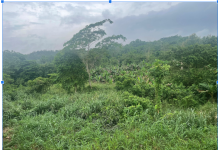
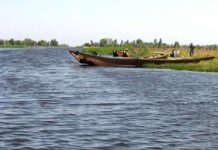
    Niger Delta red colobus monkeys only live in a dense swamp forest that is extremely difficult to navigate, the species was only discovered and described by science in 1993. Researchers with SW/Niger Delta Forest Project can only reach the forests in dug-out canoes and wading through murky waist-deep water.

    In the 1990s researchers estimated that the species population in the forests was about 10,000. However, the population is currently down to a mere 500 individuals living scattered across an extremely small area. The monkeys’ current range is estimated to be between 200 and 78 square kilometers from a known historical range of 1,500 square kilometers.

    Lack of adequate wildlife protection laws, indiscriminate logging, hunting and oil extraction in the species habitat are a few of the reasons behind its decline. The new Apoi community bylaws are the first-ever protections for the Niger Delta red colobus.

    The SW/Niger Delta Forest Project and the Apoi community are developing a five-year management plan, which will establish formal protection for Niger Delta red colobus, improve land-use planning, adopt sustainable livelihood initiatives for the local community and improve the quality of the marsh forest. The Apoi community has already begun enacting and implementing new bylaws and efforts to demarcate the boundaries of the conservancy are underway.

    The community conservancy is only the second-ever created in Nigeria.

    The organization is taking a community-based approach to this conservation effort which establishes formal protection for the species while also supporting community partners to improve land use planning, adopt sustainable livelihood practices and improve the quality of marsh forest habitat through an all-inclusive management approach to ensure benefits to both biodiversity and the community.

    “We have a really strong partnership and have developed a solid relationship over the last 6 to 7 years, thanks to the continued presence of our team on the ground and the persistent efforts of our project director, so I believe we will tactfully surmount any challenges we may encounter,” said Kosipre Williams, a field officer for SW/Niger Delta Forest Project.

    Since 2013, the SW/Niger Delta Forest Project has monitored two populations of Niger Delta red colobus monkeys in Apoi Creek Forest and Kolotoro-Ongoloba Forest, overlapping Azagbene, Azama and Aleibiri territories. It has also pushed for local, state and international intervention to help the Niger Delta red colobus, which is on the brink of extinction.

    “What Rachel and her team have accomplished, working in close collaboration with the Apoi Community, is truly remarkable, especially when one considers that the Niger Delta region is one of the most complicated and often dangerous regions to work in all of Africa,” said Russ Mittermeier, chief conservation officer for Global Wildlife Conservation. “This species is one of the highest priorities in our soon to be published Red Colobus Action Plan, covering all the species of this most endangered African primate genus.”

    The SW/Niger Delta Forest Project has worked closely with the International Union for Conservation of Nature’s SSC Primate Specialist Group and The Red Colobus Conservation Network and is supported by the Rainforest Trust, Margot Marsh Biodiversity Foundation, Mohammed Bin Zayed Species Conservation Fund, GWC’s Primate Action Fund, Primate Conservation Inc., National Geographic Society and other philanthropies. 

  • Nigerian conservationist, Ikemeh wins Whitley Award 

    Nigerian conservationist, Ikemeh wins Whitley Award 

    • Rachel Ikemeh honoured for protecting newly discovered chimpanzee group

    Leading conservationist Rachel Ashegbofe Ikemeh has won a prestigious Whitley Award worth £40,000 for her work with chimpanzees in her home country of Nigeria.

    The Director and Founder of the SW/Niger Delta Forest Project, Rachel’s research and conservation work addresses the decline of chimpanzees and their habitat. With 80 Percent of forests lost to uncontrolled farming and logging, chimpanzee habitat has been disappearing at an alarming rate. Chimps are also under threat from poachers, hunted for their body parts.

    Read Also: Celebrating conservation champions on IWD 2020

    The Whitley Awards, often referred to as ‘Green Oscars’, are awarded annually to individuals from the Global South by UK-based conservation charity the Whitley Fund for Nature (WFN). Rachel is one of six conservationists to be recognised this year for their achievements in nature conservation.

    Rachel came into the conservation world after accepting an internship at the Nigerian Conservation Foundation, and soon realised she had found her calling. After the Nigerian-Cameroon chimpanzee was declared the most endangered of all chimpanzee groups in 2012, Rachel launched her project in the Idanre Forest cluster and Ise Forest Reserve; refusing to stand by and watch these great apes continue to decline. 

    Read also: Ise Forest Reserve gets conservation area

    Over the past eight years, she and her team have led a genetic study amongst other relevant activities, which in 2018 found that whilst chimpanzee populations in the South West and Niger Delta of Nigeria share ancestry with the Nigeria-Cameroon chimpanzee, they are in fact a distinct group. This exciting discovery reinforced the urgent need to protect this group of chimpanzees, helping Rachel to gain support for her cause.

    Nigerian-Cameroon chimpanzee was declared the most endangered of all chimpanzee groups in 2012…
    Photo: WFN

    Rachel’s approach combines patrolling, education, research and policy reform to protect this newly discovered primate. With her Whitley Award, Rachel aims to work with government to establish about 40,000 ha of conservation areas, and to advocate for revised laws to protect the area’s wildlife. With most wildlife preservation laws in the state created in the 70s, many have become obsolete and are in need of reform. 

    Rachel’s team also works closely with communities in and around forest areas, using public awareness campaigns to educate people about the importance of endangered animals and to discourage poaching. 

    Working against gender stereotypes as a Nigerian woman, Rachel has amazed many people with her choice of career. Her family feared the work was dangerous but they have since come to admire her strength. 

    “The funding will help me and my team to conserve chimpanzees and other wildlife in this fast disappearing forest ecosystem,” said Rachel Ikemeh

    “In a country where women’s voices are not being heard and are often discounted, I am determined to make a difference and be an inspiration to others. Having a daughter has been like a driving force for me. There are so many obstacles for women and I want to use my resilience to show her and many young Nigerian women that they can make the sort of impact that is distinguishable, constructive and timeless despite the obstacles we face,” Rachel said.

    “I am extremely proud to have been recognised by the Whitley Fund for Nature. The funding will help me and my team to conserve chimpanzees and other wildlife in this fast disappearing forest ecosystem.”

    Commenting on the conservationist’s achievements, Edward Whitley, WFN Founder, expressed admiration for Rachel’s strength of character.

    “Rachel’s strength of character and determination should be admired. The work of SW/Niger Delta Forest Project has made important gains for chimpanzee research and conservation, and we look forward to watching Rachel’s career progress as she scales up her work in the years to come,” Whitley said in a press release by WFN.

    Rachel is among six conservationists to receive 2020 Whitley Awards to support their work to conserve some of the planet’s most endangered species and spectacular natural habitats.

    Other winners are Kenya’s Abdullahi Hussein Ali for his work on landscape‐level approach to conserve the hirola antelope;
    Brazil’s Gabriela Rezende who is working on Connecting populations of black lion tamarins in the Atlantic Forest and South Africa’s Jeanne Tarrant who is working on country-wide strategy for South African amphibians.

    The other recipients of the award are Phuntsho Thinley from Bhutan and YokYok (Yoki) Hadiprakarsa from Indonesia

    While normally presented to winners by charity Patron HRH The Princess Royal at an annual Ceremony in London, the 2020 Whitley Awards Ceremony was postponed due to the COVID-19 pandemic. Whilst the winners will receive their funding now, they will be invited to attend a ceremony and related events in London later this year to celebrate their achievements, should circumstances allow. 

    This year’s Whitley Gold Award honours Brazilian conservationist Patrícia Medici for her outstanding dedication to protecting South America’s largest land mammal, the lowland tapir, using it as a flagship for largescale habitat preservation. Patrícia is a world expert in the science of tapir conservation and has dedicated her life to shedding light on this unusual looking, yet little-known species. Against a backdrop of political and environmental instability in Brazil, her work is more important than ever. The Whitley Gold Award enables the expansion of her work to the embattled Amazon. 

  • Celebrating conservation champions on IWD 2020

    Celebrating conservation champions on IWD 2020

    It is another March 8, the International Women’s Day, a time specially set aside to appreciate and celebrate women.

    This year’s theme is #EachforEqual and we are commemorating IWD 2020 by celebrating the achievements of three leading women in the field of conservation in Nigeria. These women have given voice to the voiceless flora and fauna of Nigeria. They deserve resounding ovation.

    Meet Rachel Ikemeh, Iroro Tanshi and Stella Egbe in our International Women’s Day special.

    Rachel Ashegbofe Ikemeh


    Rachel Ikemeh

    Rachel is the Project lead/founder of the SW/Niger Delta, a non-governmental organization pioneering conservation actions for a small but unique population of endangered chimpanzees in southwestern Nigeria and for critically endangered Niger Delta Red Colobus monkey across their range – another rare species of primates found only in Bayelsa State, Nigeria. The project’s efforts span over 5,000km2 of highly threatened forest landscape.

    Read Also: Experts make case for intensified effort in Cross River gorilla conservation

    Her contributions and commitments to primate conservation earned her a seat on the International Primatological Society (IPS) Conservation and Education committees. She is the Co-Vice Chair Africa section of the IUCN/SSC Primate Specialist Group and a member of the United Nations Commission on Sustainable Development (UNCSD) Education Caucus. She also co-led  the steering committee that founded the African Primatological Society (APS).

    Rachel is committed to all of these groups and always seeks ways to maximize her associations with these networks and explore opportunities for collaboration to promote African leadership an enhance primate conservation across board.

    the critically endangered Niger Delta Red Colobus monkey…
    Photo: Noel Rowe

    She is an alumni of the Durrell Institute of Conservation and Ecology (DICE), University of Kent, U.K where she studied for a degree in Conservation Project Management. She is a two-time nominee of the Future for Nature Awards and twice long-listed for the Whitley Awards also well-known as the ‘Green Oscars’. She recently became a National Geographic Explorer.

    For more than a decade she has worked in the Guinean Forests of West Africa which is home to over 2,200 unique plant and animal species.  The threatened primates on which she has focused serve as a reference point for the broader assemblage of threatened species and bolster her efforts to engage local communities in their protection.  Rachel offers an excellent example of how to combine a specialized education, training and field experience to serve as a conservation leader. Her purpose driven work provides critical link between the Nigerian government and the people sharing the habitat with some of the world’s most unique but threatened species.  

    Iroro Tanshi

    Iroro Tanshi

    Iroro Tanshi is an award-winning Nigerian bat ecologist and conservationist, whose interest spans research on landscape, community and population ecology of bats that generate evidence for conservation of threatened bat species. She is also passionate about raising the next generation of biologists and conservationists, while developing local infrastructure for research and conservation. 

    Read also: SaveTheVultures: They need all the help

    Her career spans more than a decade during which she has a track record of species protection, worked with policy makers and mentored budding conservationists. Iroro is a lecturer at the University of Benin. She is currently finishing a doctoral program at Texas tech University, Lubbock, USA, where she’s also a teaching assistant. She holds two Masters’ degrees in biodiversity and conservation from the University of Benin, and University of Leeds. As part of her efforts to conserve Nigerian bats and raise capacity of local conservation scientists, she co-founded a Nigerian based NGO – Small Mammal Conservation Organisation (SMACON). She is also a founding member and first co-Chair of Bat Conservation Africa (BCA) – a network of bat researchers and conservationists working to protect African bats. During her leadership of BCA, she helped fund raise to support researchers and institutions with important library resources and organized a workshop to train budding scientists on important bat research skills. Iroro initiated the Bats of Nigeria Project and is a strong critic against wide spread misconduct and sub-par research in Nigerian science.


    Iroro initiated the Bats of Nigeria Project and is a strong critic against wide spread misconduct and sub-par research in Nigerian science.

    Iroro is currently working on conserving foraging habitat and roosting caves of the range-restricted endangered Short tailed roundleaf nosed bat, Hipposideros curtus. The major threats to the species are habitat loss from wildfires and cave disturbance from fruit bat hunting, which in addition to declining population is driving the species to the brink of extinction. The key strategy to reducing these threats to this species is working with local farmers and fruit bat hunters, through collaborating with other NGOs and relevant government agencies.

    Stella Egbe

    Stella Egbe

    Stella is a conservation biologist who has worked extensively on maintenance of habitat integrity to avoid loss of biodiversity which — if it happens — would be detrimental to man and wildlife. She holds strongly that continuous research is the key to understanding the landscape and land use interactions which will provide basic knowledge for sustainable habitat use.

    Read also: APLORI trains young scientists on field ornithology, biostatistics, others

    Balancing the needs of humans while maintaining ecosystem quality in Nigeria is what has kept her forging ahead in the field of conservation. Stella holds strongly that mitigating negative anthropogenic activities, while learning and enjoying all that nature has to offer is a key conservation strategy that should be embedded in the hearts. Stella loves helping new conservationists with fundamentals of field work.

    Stella loves helping new conservationists with fundamentals of field work.
    Photo: birdlife.org

    She has carried out her research at the Afi Mountains and Wildlife Sanctuary, looking at the effects of activities on forest edges using birds as indicators. She has also collaborated on projects with the Royal Society for the Protection of Birds (RSPD), Nigerian Conservation Society (NCF), A. P Leventis Ornithological Institute (APLORI) and so on.